Dust Concentration Detector and Alarm – How to Build a Safety Defense Line for Your Factory?
In industrial production, dust explosion is a major hazard threatening life and property safety. In industries such as coal mining, chemicals, grain processing, and pharmaceuticals, once the concentration of flammable and explosive dust suspended in the air reaches a certain level and encounters an ignition source, a catastrophic explosion can occur. Therefore, the dust concentration detector and alarm has become an indispensable safety device for these workplaces.
So, faced with different industrial dust risks and complex working conditions, how do you choose the right dust concentration detector and alarm for your factory? This article will provide you with systematic answers.
I. Dust concentration detector with audible and visual alarm: How to achieve real-time on-site warning?
Problem: On-site personnel cannot detect excessive dust concentration in time
During production, the rise in dust concentration is often gradual. Without real-time monitoring and immediate alarm, operators may unknowingly enter hazardous areas, and once an ignition source is present, the consequences can be catastrophic.
Solution
Dust concentration detector with audible and visual alarm is designed specifically to solve this problem. When the on-site dust concentration reaches the preset alarm threshold, the device simultaneously triggers a high-decibel buzzer and a flashing red warning light, ensuring that on-site personnel can receive the alarm promptly no matter where they are in the workshop.
Core Advantages
-
Integrated audible and visual design: Sound ≥100dB, flashing light highly visible – clearly identifiable even in noisy environments
-
Two-level adjustable alarm: Can set pre-alarm and high alarm levels separately to meet different safety requirements
-
Fast response: Alarm response time ≤2 seconds after detecting excessive concentration
-
On-site warning: Alerts are issued locally without relying on a central control room
Applicable Scenarios
-
Underground coal mining faces
-
Chemical production workshops
-
Dust collector outlets in grain processing plants
-
Wood processing workshops
-
Crushing and mixing operations in pharmaceutical factories
II. Explosion-proof dust detector for workshop: How to ensure monitoring safety in hazardous areas?
Problem: Ordinary dust detectors are themselves a safety hazard in hazardous areas
In underground coal mines, chemical plant hazardous areas, and dust explosion risk zones, ordinary electronic devices can cause explosions due to electrical sparks. If a non-explosion-proof detector is used, the device itself becomes an "ignition source."
Solution
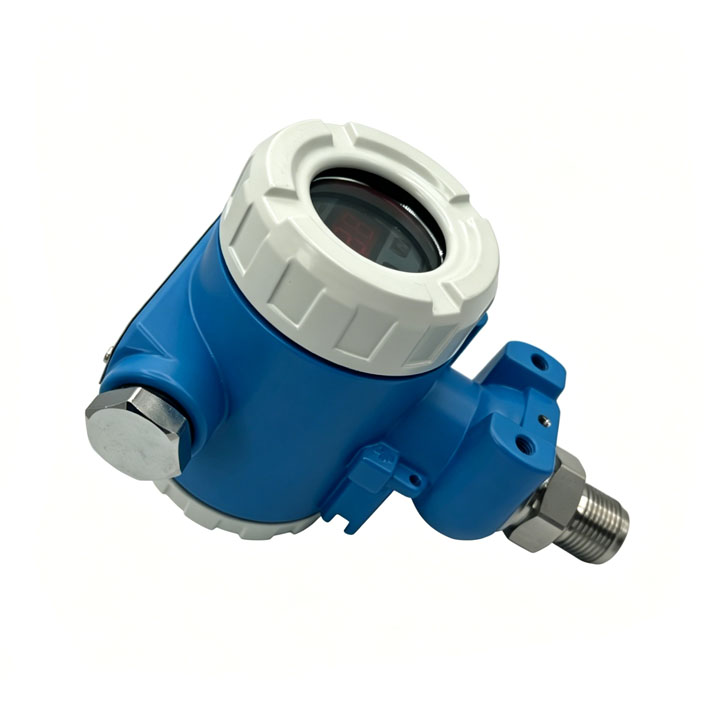
Explosion-proof dust detector for workshop is specifically designed for flammable and explosive environments. It has nationally certified explosion-proof ratings to ensure safe operation in hazardous areas.
Core Advantages
-
Authoritative explosion-proof certification: ExdⅡBT6 or ExdⅡCT6 flameproof rating, suitable for gas and dust hazardous areas
-
Intrinsically safe circuit design: Limits electrical energy to prevent spark generation
-
Rugged housing: Cast aluminum or stainless steel explosion-proof enclosure, impact-resistant and corrosion-resistant
-
Mining option: Available with MA mining safety certification for underground coal mine use
Applicable Scenarios
-
Underground coal mining faces and transport roadways
-
Chemical plant flammable and explosive workshops
-
Dust explosion hazard areas (e.g., aluminum/magnesium powder processing)
-
Gas stations, paint spray booths
-
Grain silos, feed mills
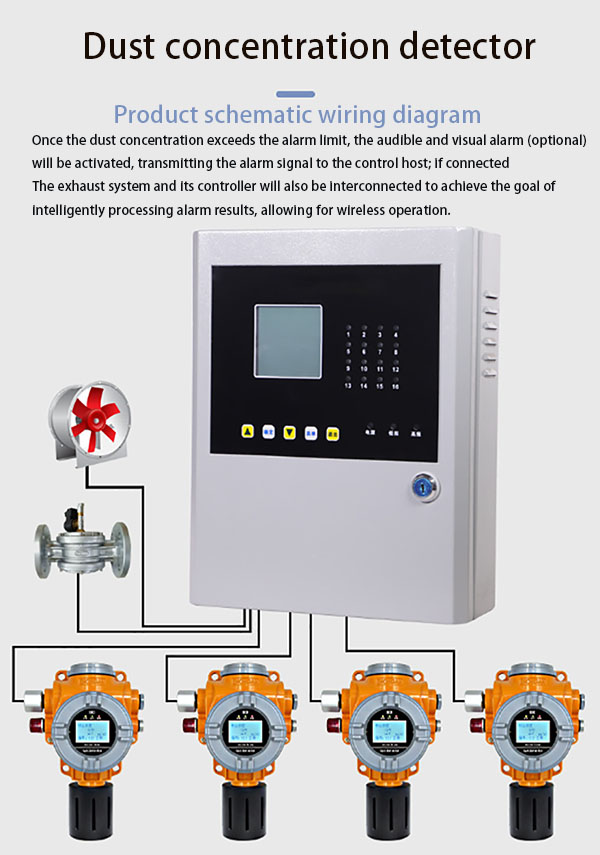
III. Dust concentration alarm for grain processing plant: How to handle the special dust in the grain processing industry?
Problem: Grain dust is flammable and explosive, making monitoring difficult
Dust generated in the grain processing industry (flour mills, feed mills, rice mills, grain silos, etc.) is not only high in concentration but also flammable and explosive. In addition, grain dust particles are fine and sticky, easily adhering to sensor probes and causing measurement inaccuracies.
Solution
Dust concentration alarm for grain processing plant is specially optimized for grain dust characteristics, featuring anti-adhesion probe design and optional automatic cleaning function to ensure long-term stable operation.
Core Advantages
-
Anti-adhesion probe: Special surface treatment to reduce grain dust adhesion
-
Optional automatic cleaning: Periodic purge function available to keep probe clean
-
Wide range design: 0-100mg/m³ covers common concentration ranges in grain processing
-
Standard explosion-proof: Meets grain dust explosion protection safety requirements
Applicable Scenarios
-
Flour mill milling and packaging workshops
-
Feed mill crushing, mixing, and pelleting operations
-
Grain silo loading and unloading areas
-
Rice mill husking and polishing workshops
-
Food additive production lines
IV. What common problems can a dust concentration detector and alarm solve?
Problem 1: Inability to monitor workshop dust concentration in real time
Traditional dust monitoring methods rely on manual sampling and laboratory analysis, which have a lag and cannot reflect real-time changes in on-site dust concentration.
Solution: An online dust concentration detector and alarm can continuously monitor on-site dust concentration 24/7, display real-time data, and provide immediate alarm when abnormalities occur.
Problem 2: Alarm output cannot interface with existing control systems
Many enterprises already have DCS or PLC control systems, and the dust alarm needs to send signals to the central control room for unified monitoring.
Solution: Supports multiple signal output methods including 4-20mA analog output, RS485 communication, and relay switch output, enabling seamless integration with various control systems.
Problem 3: Installation method does not match the site conditions
Dust monitoring points vary across different production lines. Some require in-duct measurement, while others need placement in enclosed spaces.
Solution: Supports multiple installation methods including duct-type, wall-mounted, and insertion-type, allowing flexible selection based on site conditions.
Problem 4: Environmental factors cause inaccurate measurements
High temperature, high humidity, corrosive gases, and other environmental factors can affect sensor accuracy and service life.
Solution: Offers customized options including high-temperature resistance, anti-condensation design, and corrosion-resistant materials to adapt to complex working conditions.
V. Working principles of dust concentration detectors and alarms
The mainstream dust concentration detection technologies currently available include the following:
Electrostatic Induction Method
-
Working principle: Uses the weak electrostatic signal generated by friction between dust particles and the probe, which is amplified and output as an electrical signal proportional to concentration
-
Applicable scenarios: Baghouse filter leak monitoring, in-duct dust concentration detection
-
Selection advice: Fast response, low maintenance – suitable for most industrial scenarios
Light Scattering Method
-
Working principle: Laser or infrared light illuminates dust particles, and the scattered light intensity is measured to calculate dust concentration
-
Applicable scenarios: Ambient air dust monitoring, workshop air quality detection
-
Selection advice: High accuracy, suitable for low-concentration environmental monitoring
Charge Induction Method
-
Working principle: Measures the charge induced as dust particles pass through the probe, with signal strength proportional to dust concentration
-
Applicable scenarios: High-humidity, high-viscosity dust conditions
-
Selection advice: Strong anti-interference capability, suitable for complex conditions
AC Coupling Technology
-
Working principle: Strong anti-interference capability, suitable for sites with high electrostatic interference
-
Applicable scenarios: Steel, cement, chemical, and other industries
-
Selection advice: Suitable for high electrostatic interference environments
Recommended selection: For the vast majority of industrial dust monitoring scenarios, the electrostatic induction dust concentration detector and alarm is the mainstream choice due to its fast response, low maintenance, and strong adaptability.
VI. Quick selection guide
Your condition: Dust monitoring in general workshop environment
-
Recommended product: Dust concentration detector with audible and visual alarm
-
Key configuration: Audible and visual alarm, 4-20mA output, wall-mounted or duct installation
Your condition: Dust monitoring in chemical plant hazardous area
-
Recommended product: Explosion-proof dust detector for workshop
-
Key configuration: ExdⅡBT6 explosion-proof, relay output, stainless steel probe
Your condition: Dust monitoring in flour mill/feed mill
-
Recommended product: Dust concentration alarm for grain processing plant
-
Key configuration: Anti-adhesion probe, automatic cleaning, explosion-proof certification
Your condition: Dust collector leak monitoring
-
Recommended product: High-sensitivity electrostatic induction dust monitor
-
Key configuration: 0-10mg/m³ range, fast response, duct installation
Your condition: High-temperature duct dust monitoring
-
Recommended product: High-temperature resistant dust concentration alarm
-
Key configuration: High-temperature probe, extension tube installation, corrosion-resistant material
Your condition: Need to interface with DCS/PLC system
-
Recommended product: Dust detector with RS485 communication
-
Key configuration: Modbus RTU protocol, 4-20mA output
VII. Frequently Asked Questions
Q1: How loud is the alarm on the Dust concentration detector with audible and visual alarm?
A: Generally reaches 100dB or more, comparable to an ambulance siren, and can be clearly heard even in noisy workshop environments. Volume can be customized based on site requirements.
Q2: Can the Explosion-proof dust detector for workshop be used in underground coal mines?
A: Yes, but in addition to the explosion-proof rating, it must also have MA mining safety certification. Please confirm before purchase that the product meets the requirements for underground coal mine use.
Q3: How does the Dust concentration alarm for grain processing plant solve the probe adhesion problem?
A: This product uses anti-adhesion surface treatment technology to reduce grain dust adhesion. For high-viscosity dust, an optional automatic purge device is available to periodically clean the probe with compressed air.
Q4: How are the alarm thresholds set on a dust concentration detector and alarm?
A: Alarm thresholds should be set according to national occupational health standards (e.g., GBZ 2.1-2019) or the enterprise's own safety management requirements. Generally, two levels are set: a pre-alarm level and a high alarm level, both adjustable on-site or remotely.
Q5: Does the sensor require regular calibration?
A: Yes. It is recommended to perform zero calibration and span calibration every 6-12 months. For grain processing plants, due to high dust viscosity, a shorter calibration interval is recommended.
Q6: Are there special installation requirements for explosion-proof dust detectors?
A: Installation must comply with explosion-proof electrical equipment installation codes. Junction boxes must be properly sealed, and cables must use explosion-proof flexible conduits or armored cables. It is recommended that installation be performed by a certified electrician.
Q7: Can the dust concentration detector and alarm be linked to dust collection equipment?
A: Yes. Through the relay output interface, the alarm signal can be connected to the dust collector fan control system to automatically start dust collection equipment when dust concentration exceeds the limit.
Q8: How do I know when the sensor needs cleaning?
A: When zero drift increases significantly, sensitivity decreases, or abnormal fluctuations occur, probe dust accumulation may be the cause. For grain processing plants, it is recommended to check probe cleanliness monthly.
Q9: Can the three products be used together
A: Yes. Within the same factory, different areas can be equipped with different products based on risk levels. For example, use Explosion-proof dust detector for workshop in hazardous areas, Dust concentration alarm for grain processing plant in grain processing workshops, and Dust concentration detector with audible and visual alarm in general areas, together building a graded safety monitoring system.
VIII. Conclusion
The dust concentration detector and alarm is an important defense line for industrial safety. When selecting, consider the following factors based on industry characteristics, explosion-proof requirements, and installation environment:
-
General workshops: Choose a basic dust detector with audible and visual alarm for on-site warning
-
Hazardous areas: Must use an explosion-proof dust detector to ensure the device itself is safe
-
Grain processing industry: Requires a specialized alarm optimized for grain dust characteristics to solve both adhesion and explosion-proof challenges
When building a complete industrial safety monitoring system, it is recommended to configure different types of products according to the risk levels of different areas within the factory, achieving graded protection and precise monitoring.
If you need a one-on-one solution design for your specific working conditions, please contact the Kunlun Zhongda technical team. We will provide you with a complete solution from sensor selection to system integration.
Digital Display Intelligent Temperature Controller Selection – Why Does Your Heating System Always Fail to Control Temperature Accurately?
Is Post-Maintenance of Temperature Transmitters Really Important? Kunlun Zhongda Explains Six Key Maintenance Points
Related blog