A Guide to Selecting Hessman High-Definition Digital Display Integrated Temperature Sensors for Corrosive Media in Chemical Plants
In chemical production processes, temperature measurement is a critical factor in ensuring process safety and product quality. However, when faced with complex media environments such as strong acids, strong alkalis, high-temperature steam, and corrosive gases, ordinary temperature sensors often fail to perform—suffering from accuracy drift, housing corrosion, or unstable signals, ultimately leading to equipment shutdowns or even safety accidents.
The Hessman high-definition digital display integrated temperature sensor, with its integrated design, high-definition digital display, 4-20mA standard signal output, and corrosion-proof and explosion-proof features, has become the ideal choice for temperature monitoring in chemical plants.
So how do you select the right model for different media and working conditions? This article provides a systematic guide.
I. Why Do Chemical Plants Need a Hessman Integrated Plug-in Temperature Sensor?
Chemical plant temperature measurement faces four core challenges: chemical corrosion (strong acids and alkalis eroding the housing), high temperature and pressure (harsh reaction conditions), electromagnetic interference (from variable frequency drives and other equipment affecting signals), and limited installation space (dense piping and compact equipment layouts). Ordinary temperature sensors often fail rapidly in these environments.

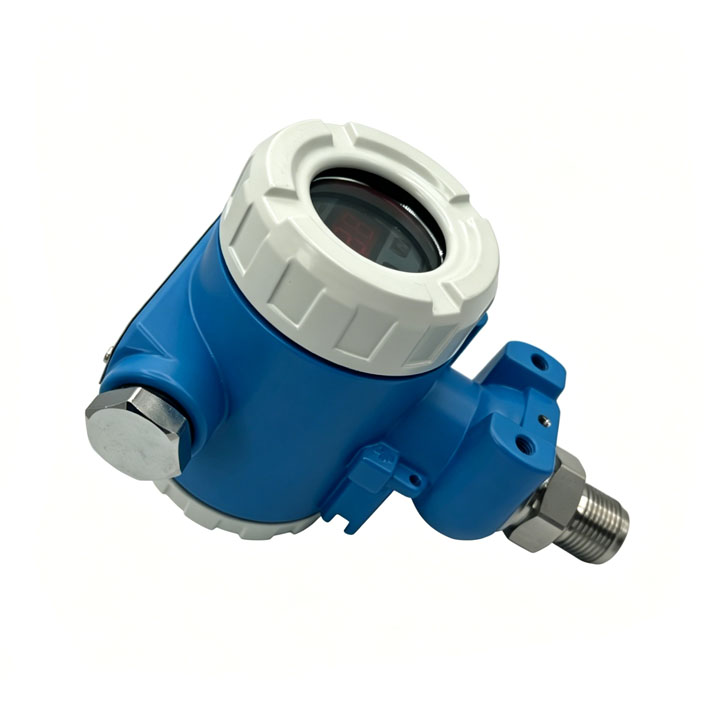
The Hessman integrated 4-20mA digital display plug-in temperature sensor integrates the sensing element, signal processing circuit, high-definition digital display, and Hirschmann connector into one unit, offering the following core advantages:
-
Integrated design: Sensing, signal conversion, and display are integrated, eliminating the need for external display instruments
-
High-definition digital display: On-site temperature readings for easy inspection and troubleshooting
-
Hirschmann connector: Standard industrial interface for plug-and-play installation and convenient maintenance
-
4-20mA standard signal output: Compatible with most DCS/PLC control systems
-
Corrosion-proof and explosion-proof design: Adapted for corrosive media and flammable/explosive environments in chemical plants
This product adopts an integrated plug-in design with 4-20mA standard signal output and a high-definition digital display for on-site reading, designed specifically for industrial temperature monitoring applications.
II. What On-Site Challenges Does a Compact Mechatronic Pipeline Temperature Transmitter Solve?
In chemical plants, pipelines crisscross and equipment is compactly arranged. Traditional split-type temperature sensors (sensor + transmitter + display instrument installed separately) are often too large to install, or require on-site modifications that increase construction difficulty and cost.
The Compact and miniature mechatronic pipeline temperature transmitter integrates temperature sensing, signal processing, and electrical connections into a compact housing, allowing flexible installation in tight spaces while maintaining high accuracy and stability.
-
Compact and miniature size: Significantly reduced volume compared to traditional split-type products, suitable for dense pipeline environments
-
Mechatronic integration: Deep integration of sensing and signal conversion, reducing intermediate connection points and improving reliability
-
Flexible installation: Supports multiple thread specifications and insertion depths to adapt to different pipeline conditions
-
No performance compromise: Accuracy and stability maintained at industrial-grade levels despite reduced size
In chemical plant environments with dense piping and limited installation space, the Compact and miniature mechatronic pipeline temperature transmitter is the ideal choice for pipeline temperature monitoring.
III. The Accuracy Advantages of an Imported-Chip High-Definition Digital Display Precision Temperature Measurement Industrial-Grade Sensor
In chemical reactions, temperature deviations can lead to product quality issues, process upsets, or even safety accidents. Ordinary chips are prone to temperature drift over long-term operation, affecting measurement reliability.
The Imported chip high-definition digital display precise temperature measurement industrial-grade sensor uses a high-precision imported sensing chip, offering excellent long-term stability, temperature drift control, and anti-interference capability.
-
High-precision imported chip: Superior long-term stability and low annual drift rate compared to ordinary chips
-
Temperature drift control: Maintains high accuracy across a wide temperature range, adapting to chemical plant temperature fluctuations
-
Anti-interference capability: Stable signals in environments with strong interference from variable frequency drives and large motors
-
High-definition digital display: On-site visual reading for easy inspection and troubleshooting
-
Industrial-grade protection: Corrosion-proof, explosion-proof, and waterproof design for harsh environments
In chemical plants operating 24/7, the Imported chip high-definition digital display precise temperature measurement industrial-grade sensor's long-term stability directly affects the reliability of measurement data and the service life of the equipment.
IV. Seven Key Selection Criteria
Criterion 1: Wetted Material – The First Line of Defense Against Corrosion
The probe and protective tube directly contact the media, making material selection critical for corrosion resistance.
-
Ordinary water, oil, weak acids and alkalis → 304 stainless steel
-
Moderately corrosive media (dilute sulfuric acid, dilute hydrochloric acid) → 316L stainless steel
-
Strong acids, strong alkalis, chloride-containing media → Hastelloy C276 / titanium alloy / tantalum diaphragm
-
Fluorine-containing media (hydrofluoric acid) → Monel alloy / Teflon coating
Criterion 2: Protection Rating – Preventing External Environmental Erosion
Chemical plant sites often have liquid splashing, dust, and high humidity, making the housing protection rating critical.
-
Ordinary indoor environments → IP65
-
Splashing and washdown areas → IP67
-
Long-term humid environments with corrosive gases → IP68
Criterion 3: Explosion-Proof Rating – A Safety Red Line
Chemical plants are classified as flammable/explosive environments, so temperature sensors must carry appropriate explosion-proof certification.
-
General hazardous areas → ExdⅡBT6 (flameproof)
-
Higher safety requirements → ExiaⅡCT6 (intrinsically safe)
Criterion 4: Output Signal – Compatibility with Control Systems
The Hessman integrated 4-20mA digital display plug-in temperature sensor's standard configuration is 4-20mA two-wire output, compatible with most DCS/PLC systems. Some models offer RS485 (Modbus RTU) digital communication as an option.
Criterion 5: Insertion Depth and Thread Specifications – Adapting to On-Site Piping
-
Insertion depth: The probe should be positioned at the center of the pipe (typically 1/3 to 1/2 of the pipe diameter)
-
Thread specifications: M20×1.5, M27×2, 1/2 NPT, G1/2, etc.
-
Flange connections: Recommended for large-diameter pipes or high-pressure applications
Criterion 6: Chip and Accuracy – The Core of Measurement Reliability
-
General process control → Class 0.5 accuracy (±0.5% FS)
-
Critical process control → Class 0.2 or Class 0.1 accuracy
Criterion 7: Installation Space – Compact Design for Tight Environments
In dense piping and space-constrained areas, prioritize the Compact and miniature mechatronic pipeline temperature transmitter.
V. Selection Guide for Different Corrosive Media
Media Type: Weak acids and alkalis
-
Typical Media: Acetic acid, citric acid
-
Recommended Probe Material: 304 stainless steel
-
Recommended Protection Rating: IP65
-
Explosion-Proof Requirement: ExdⅡBT6
Media Type: Moderate corrosion
-
Typical Media: Dilute sulfuric acid, dilute hydrochloric acid
-
Recommended Probe Material: 316L stainless steel
-
Recommended Protection Rating: IP66
-
Explosion-Proof Requirement: ExdⅡBT6
Media Type: Strong acids
-
Typical Media: Concentrated sulfuric acid, concentrated hydrochloric acid
-
Recommended Probe Material: Hastelloy / tantalum
-
Recommended Protection Rating: IP67
-
Explosion-Proof Requirement: ExiaⅡCT6
Media Type: Strong alkalis
-
Typical Media: Sodium hydroxide
-
Recommended Probe Material: 316L / nickel alloy
-
Recommended Protection Rating: IP67
-
Explosion-Proof Requirement: ExiaⅡCT6
Media Type: Chloride-containing media
-
Typical Media: Chloride solutions
-
Recommended Probe Material: Titanium alloy / tantalum
-
Recommended Protection Rating: IP67
-
Explosion-Proof Requirement: ExdⅡBT6
Media Type: Fluorine-containing media
-
Typical Media: Hydrofluoric acid
-
Recommended Probe Material: Monel / Teflon coating
-
Recommended Protection Rating: IP68
-
Explosion-Proof Requirement: ExiaⅡCT6
VI. Core Advantages of Hessman Integrated Temperature Sensors
Installation Method
-
Traditional Split-Type: Sensor + transmitter + display instrument installed separately at multiple points
-
Hessman Integrated: Integrated design, single-point installation
On-Site Display
-
Traditional Split-Type: Requires external display instrument or relies on control room
-
Hessman Integrated: Built-in high-definition digital display for on-site reading
Wiring Complexity
-
Traditional Split-Type: Multiple wiring segments, prone to errors with multiple failure points
-
Hessman Integrated: Hirschmann connector for plug-and-play, simple wiring
Maintenance Cost
-
Traditional Split-Type: Multiple components, scattered failure points, complex maintenance
-
Hessman Integrated: Single module, easy maintenance
Anti-Interference Capability
-
Traditional Split-Type: Affected by wiring, signals prone to attenuation
-
Hessman Integrated: Integrated design, stronger anti-interference
VII. Frequently Asked Questions
Q1: What is the difference between the Hessman integrated temperature sensor and ordinary temperature sensors?
A: The Hessman integrated 4-20mA digital display plug-in temperature sensor integrates the sensing element, signal processing circuit, high-definition digital display, and Hirschmann connector into one unit. It does not require an external display instrument or transmitter, offering easier installation, simpler wiring, and more convenient maintenance. It is particularly suitable for chemical plant applications where installation space and maintenance efficiency are critical.
Q2: Which is better for chemical plants: 4-20mA signal or RS485 signal?
A: 4-20mA is the mainstream choice for chemical plants. It offers strong anti-interference capability, is suitable for long-distance transmission, and is compatible with most DCS/PLC systems. RS485 is suitable for applications requiring data logging and remote monitoring.
Q3: How do I determine whether a material is suitable for my media?
A: Check the product's material certificate and third-party test reports to confirm that the material composition matches the specifications. It is also recommended to provide media composition, concentration, temperature, and other parameters to the manufacturer for professional evaluation.
Q4: How often should temperature sensors in chemical plants be calibrated?
A: Calibration is generally recommended every 6-12 months. In environments with strong corrosion, vibration, or severe temperature fluctuations, the calibration interval should be shortened to 3-6 months.
Q5: Does a compact design sacrifice accuracy?
A: No. The Compact and miniature mechatronic pipeline temperature transmitter reduces size while maintaining performance; core accuracy and stability are not compromised.
Q6: What are the advantages of the Hirschmann connector?
A: The Hirschmann connector is an industrial standard interface with features such as waterproofing, dust protection, anti-reverse insertion, and quick plug-and-play, greatly simplifying on-site wiring and later maintenance.
Q7: What are the advantages of an imported chip?
A: The Imported chip high-definition digital display precise temperature measurement industrial-grade sensor uses an imported chip that offers superior long-term stability, temperature drift control, and anti-interference capability compared to ordinary chips, making it ideal for critical positions in chemical plants operating 24/7.
Q8: What is the practical value of a temperature sensor with digital display in chemical plants?
A: On-site digital display allows inspection personnel to quickly determine whether temperature is abnormal without needing a handheld programmer or checking the control room screen, greatly improving inspection efficiency and emergency response speed. The intuitive high-definition display is particularly valuable during nighttime or emergency situations.
VIII. Conclusion
Selecting the right temperature sensor for corrosive media in chemical plants is a task that allows no shortcuts. A systematic evaluation from seven dimensions—wetted material, protection rating, explosion-proof rating, signal output, insertion depth, chip accuracy, and installation space—is essential to ensure long-term stable operation in harsh environments.
This Hessman high-definition digital display integrated temperature sensor combines three core advantages in one: integrated plug-in design for easy installation and maintenance, compact mechatronic structure enabling deployment in tight spaces, and high-precision imported chip ensuring long-term reliability. It is a professional solution tailored for chemical plants and other industrial applications.
Choose the right product, and one investment provides years of peace of mind. Choose the wrong one, and frequent replacements will drive up costs.
If you need one-on-one selection guidance for specific media and working conditions, please contact the Kunlun Zhongda technical team. We will provide a complete solution from material selection to installation and commissioning based on your actual requirements.
Why Does Your Soil Testing Always Fall Short? How This All-in-One Sensor Solves the Five Major Challenges of Temperature/Moisture/pH/Conductivity/Acidity-Alkalinity/NPK in One Go
Digital Display Pressure Transmitter Output Signal Unstable? Troubleshoot from These 4 Directions
Related blog