How to Choose a Solar Soil Temperature and Humidity Sensor for Agricultural Greenhouses? – A Practical Guide to Avoiding Selection Traps
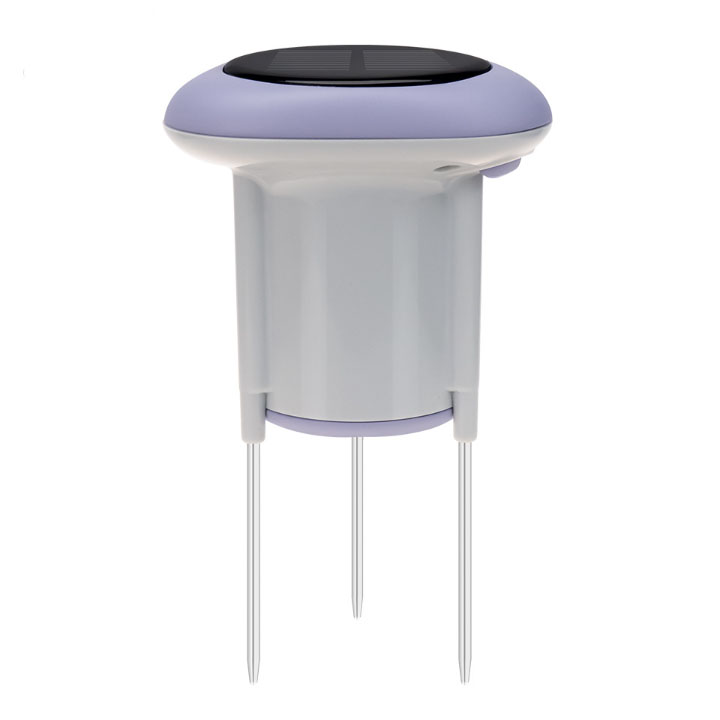
In modern agricultural greenhouse cultivation, soil temperature and humidity are core factors affecting crop yield and quality. However, many growers face a common confusion: with so many soil testing devices on the market, how do you choose the right one? Choosing the wrong product not only wastes money but can also lead to incorrect watering and fertilization decisions due to inaccurate data, resulting in reduced yields or even total crop failure.
This article will systematically explain the key points for selecting a solar soil temperature and humidity sensor for agricultural greenhouses, helping you avoid selection traps and get the right product on the first try.
I. Why Do Agricultural Greenhouses Need a Real-time monitoring temperature and humidity intelligent soil detector sensor?
In traditional greenhouse cultivation, many growers rely on "touch" or "experience" to judge soil moisture levels. This method is not only highly inaccurate but also cannot provide continuous monitoring or record historical data. When extreme weather or irrigation system failures occur, problems are often only discovered when crops begin to wilt—too late.
This Real-time monitoring temperature and humidity intelligent soil detector sensor can:
-
Monitor soil moisture and temperature changes in real time, providing accurate information about the crop's growing environment
-
Require no wiring, using solar power to eliminate the need for power outlets
-
Provide traceable historical data, helping analyze crop growth patterns
-
Send abnormal alarms, notifying managers immediately when temperature or humidity exceeds thresholds
For agricultural greenhouses, a reliable soil monitoring system is like having a "24/7 personal attendant" for your crops. This Real-time monitoring temperature and humidity intelligent soil detector sensor is exactly what you need.
II. Six Key Selection Criteria for the Potted garden testing new smart solar soil tester
Whether used for potted gardens or large agricultural greenhouses, this Potted garden testing new smart solar soil tester follows the same selection logic. Here are six key selection criteria:
1. Power Supply: Solar Self-Powered Is the First Choice
Greenhouse environments are complex, with high wiring costs and difficult maintenance. Solar self-powered solves this problem completely. As long as there is light, it works continuously—no battery replacement and no external power needed.
Selection Advice: This Potted garden testing new smart solar soil tester is equipped with a high-efficiency solar panel and a built-in rechargeable battery, ensuring 3-7 days of continuous operation even on cloudy or rainy days.
2. Measurement Accuracy: Humidity Resolution ≤0.1%RH, Temperature Resolution ≤0.1°C
Soil temperature and humidity directly affect watering and fertilization decisions. Insufficient accuracy can lead to misjudgment.
Selection Advice: This Potted garden testing new smart solar soil tester offers humidity resolution ≤0.1%RH and temperature resolution ≤0.1°C, ensuring reliable and accurate data.
3. Communication Method: Wireless Transmission Is Essential
Agricultural greenhouses are large and complex. Wired solutions are difficult to install and maintain.
Selection Advice: This Potted garden testing new smart solar soil tester supports wireless transmission, with options for WiFi, ZigBee, or LoRa depending on the distance from the greenhouse to the control room.
4. Waterproof and Dustproof Rating: At Least IP65
Greenhouses have high humidity and may use sprinkler irrigation, so sensors need good waterproofing.
Selection Advice: This Potted garden testing new smart solar soil tester has an IP67 waterproof rating, allowing short-term immersion and withstanding sprinklers and humid environments.
5. Multi-Parameter Detection: Temperature, Humidity, and Conductivity
For precision agriculture, knowing soil moisture alone is not enough. Understanding soil nutrients (electrical conductivity/EC value) is equally important.
Selection Advice: This Potted garden testing new smart solar soil tester supports three-in-one detection of temperature, humidity, and EC value, providing comprehensive soil condition data.
6. Easy Installation: Plug and Play
Greenhouses may require many sensors. Complex configuration would significantly increase deployment time and labor costs.
Selection Advice: This Potted garden testing new smart solar soil tester comes pre-paired from the factory—plug and play, greatly reducing deployment difficulty.
III. What Greenhouse Pain Points Can the Smart solar soil moisture and temperature sensor Solve?
The core value of this Smart solar soil moisture and temperature sensor lies in accurately solving four major greenhouse pain points:
Pain Point 1: Watering by Guesswork—Either Too Much or Too Little
The biggest confusion for many growers is "how much water does this crop actually need?" Too little, and the crop dries out; too much, and roots rot.
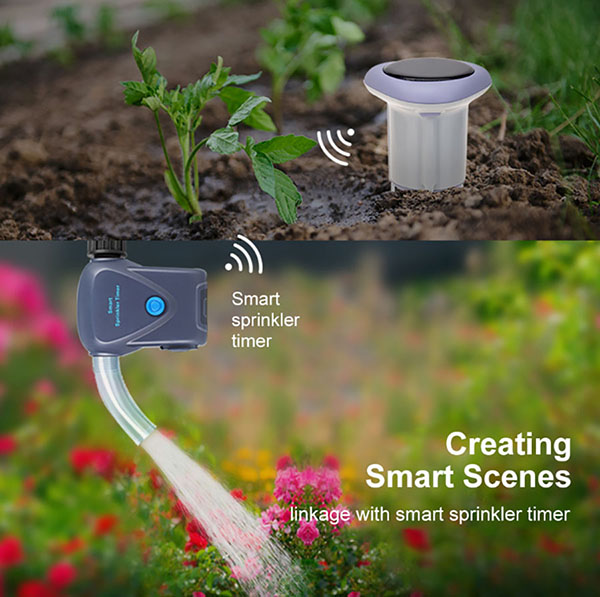
Solution: This Smart solar soil moisture and temperature sensor monitors soil moisture in real time. When moisture drops below a set threshold, the system can trigger automatic irrigation equipment for precise watering.
Pain Point 2: Abnormal Soil Temperature Cannot Be Detected in Time
In summer, greenhouse temperatures can soar above 50°C, while cold winter temperatures can also inhibit crop growth.
Solution: This Smart solar soil moisture and temperature sensor monitors soil temperature in real time and sends alerts when temperatures become abnormal, allowing you to take timely shade or insulation measures.
Pain Point 3: Frequent Battery Replacement or Difficult Wiring
Ordinary soil detectors use dry batteries that need replacement every few months. Wired solutions are costly and difficult to maintain.
Solution: This Smart solar soil moisture and temperature sensor uses solar self-powered technology—deploy once, use long-term, completely eliminating battery replacement and wiring hassles.
Pain Point 4: Unable to Check Soil Status Remotely
Traditional detectors require you to walk up to the device to read the data, which is very inconvenient for large greenhouses.
Solution: This Smart solar soil moisture and temperature sensor supports wireless remote viewing, allowing you to check soil conditions anytime from your phone.
IV. Three in One: Three Names, Three Core Capabilities of the Same Product
Many users get confused by the different product names. In fact, the Real-time monitoring temperature and humidity intelligent soil detector sensor, the Potted garden testing new smart solar soil tester, and the Smart solar soil moisture and temperature sensor are the same product.
It simultaneously possesses three core capabilities:
-
Real-time monitoring → So it can be called the Real-time monitoring temperature and humidity intelligent soil detector sensor
-
Suitable for potted and small-planting applications → So it can be called the Potted garden testing new smart solar soil tester
-
Solar self-powered + temperature and humidity detection → So it can be called the Smart solar soil moisture and temperature sensor
You don't need to worry about which one to buy—they are the same product. Just search using any of these keywords depending on your usage scenario and focus, and you will find this product.
V. Common Selection Mistakes for Agricultural Greenhouses
Mistake 1: Only Looking at Price, Ignoring Accuracy
Many growers buy cheap sensors for a few dozen dollars. These products often have poor accuracy and short lifespans—data drifts after a short time.
Correct Approach: Choose a product with high accuracy and good stability like this three-in-one sensor. The initial investment is slightly higher, but it saves money in the long run.
Mistake 2: Ignoring Battery Life on Cloudy or Rainy Days
Some solar sensors have small batteries that can't last even one cloudy day.
Correct Approach: This sensor has a large-capacity battery, supporting 3-7 days of cloudy/rainy operation, ensuring continuous monitoring during extended overcast periods.
Mistake 3: Overlooking Waterproof Rating
Ordinary electronic devices lack waterproofing. Greenhouses have high humidity and sprinklers, making them prone to damage.
Correct Approach: This sensor has an IP67 waterproof rating, withstanding sprinklers and humid environments.
Mistake 4: Not Understanding Your Own Needs
Many users don't know exactly what type of sensor they need.
Correct Approach: Clarify your usage scenario—greenhouse or potted plants? Need real-time monitoring or periodic checks? Need irrigation integration or just data logging? This three-in-one sensor is suitable for most scenarios—a "can't-go-wrong choice."
VI. Frequently Asked Questions
Q1: Is this sensor suitable for large agricultural greenhouses?
A: Yes. Although one name focuses on "potted garden testing," this product is also suitable for large agricultural greenhouses. Its features—solar self-powering, wireless transmission, and high-precision detection—fully meet the needs of large-scale greenhouse cultivation.
Q2: Can it work on cloudy or rainy days?
A: Yes. It has a built-in rechargeable battery. The solar panel charges the battery on sunny days, and the battery powers the sensor on cloudy/rainy days, providing 3-7 days of continuous operation.
Q3: How deep should the sensor be buried?
A: Generally, it should be buried in the main root distribution zone of the crop, typically at a depth of 10-30 cm. The exact depth can be adjusted based on the crop type.
Q4: How large an area can one sensor cover?
A: Soil temperature and humidity vary spatially; one sensor can only represent data from its specific location. It is generally recommended to deploy one sensor every 200-500 square meters.
Q5: How do I view the sensor data?
A: Data can be viewed through a mobile app or computer software, supporting real-time data, historical trend curves, and report exports.
Q6: Can it be integrated with an automatic irrigation system?
A: Yes. This sensor supports integration with smart irrigation systems. When soil moisture drops below a set threshold, it can automatically activate watering equipment.
Q7: What is the difference between this sensor and ordinary soil detectors?
A: Ordinary detectors are usually handheld, battery-powered, and lack remote functionality. This sensor features solar self-powering, wireless remote monitoring, real-time data upload, and historical data recording—it is truly a "smart agricultural device."
VII. Conclusion: Choose Right Once, Enjoy Peace of Mind for Three Years
When selecting a solar soil temperature and humidity sensor for agricultural greenhouses, don't just look at price. Pay attention to five core indicators: accuracy, battery life, communication, waterproofing, and multi-parameter detection.
-
Precisely know when to water, avoiding drought or waterlogging
-
Detect abnormal temperature changes in time, preventing heat damage or frost damage
-
Accumulate historical data to optimize planting plans
-
Reduce manual inspections and improve management efficiency
-
Operate with solar self-powering—no wiring, no battery replacement
Choose the right sensor, and take your agricultural greenhouse management from "gut feeling" to "data-driven." This three-in-one product is your "can't-go-wrong choice."
Digital Display Pressure Transmitter Output Signal Unstable? Troubleshoot from These 4 Directions
Digital Display Intelligent Temperature Controller Selection – Why Does Your Heating System Always Fail to Control Temperature Accurately?
Related blog