A Complete Guide to Pipeline Temperature Measurement: How to Choose the Most Suitable Sheathed RTD for Water Systems

You are designing a new water system or upgrading an existing one. The specifications call for accurate, reliable temperature measurement at multiple points along the pipeline. You open the catalog and find dozens of options. RTDs. Thermocouples. Sheathed vs unsheathed. Threaded vs compression fittings. How do you choose?
This guide will answer the questions you are probably already asking. We will walk through the key decisions, from sensor type to installation method, so you can select the right sensor for your water system the first time.
What Is This Sensor and Why Do You Need It?
This is a single device that combines three essential features. It is a Threaded Seal Temperature Sensor that mounts securely to your pipeline without leaks. It uses a Sheathed RTD installation method that protects the sensing element and simplifies mounting. And it is designed to serve as a Thermocouple for Food Industrial applications when configured with a thermocouple element.
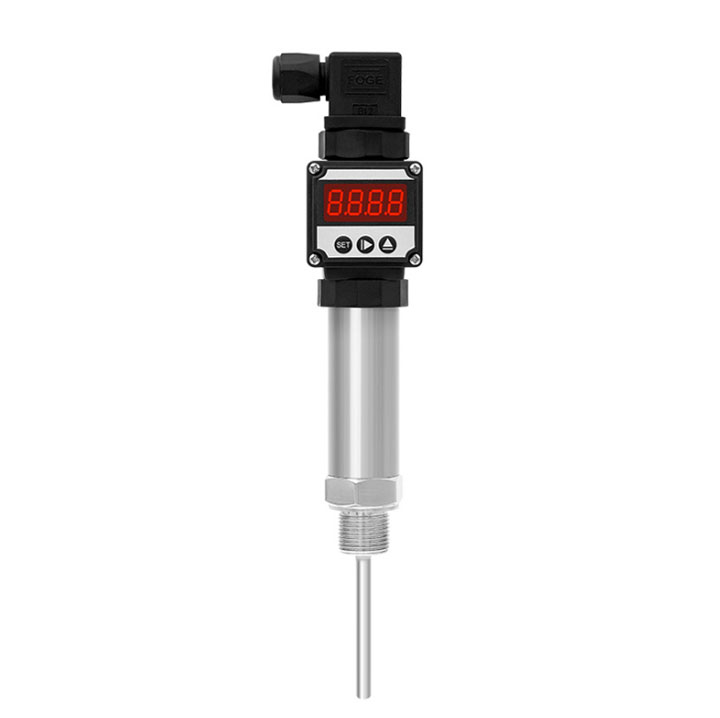
As a Threaded Seal Temperature Sensor, this device has threads machined directly onto the sheath. These threads screw into a matching threaded port on your pipeline or into a thermowell. The Threaded Seal Temperature Sensor uses a gasket, O-ring, or thread sealant to create a watertight seal. This prevents water from leaking out of the pipe and also prevents moisture from seeping into the sensor.
The Sheathed RTD installation method is built into this device. The sensing element is fully enclosed in a metal sheath, which protects it from mechanical damage, moisture, and corrosion. The Sheathed RTD installation method also simplifies mounting because the sensor slides directly into a thermowell or threaded port without additional protection.
For food industry applications, this device can be configured as a Thermocouple for Food Industrial. The Thermocouple for Food Industrial version uses a Type K thermocouple element for fast response and wide temperature range. The sheath is polished to a smooth finish to prevent bacterial growth, making this Thermocouple for Food Industrial suitable for CIP washdown environments.
If you are asking "What is the best sensor for my water or food system?" the answer is this Threaded Seal Temperature Sensor with Sheathed RTD installation method, also available as a Thermocouple for Food Industrial for food applications.
What Type of Sensor Element Should You Choose for This Device?
This device is available with two different sensing elements: an RTD or a thermocouple. The choice depends on your application.
For most water systems, the RTD version of this Threaded Seal Temperature Sensor is the better choice. An RTD uses platinum as the sensing element, offering excellent accuracy of ±0.15°C to ±0.3°C and very low drift over time. The Sheathed RTD installation method protects the delicate platinum element inside the metal sheath.
For food industry applications or high-temperature water systems, the thermocouple version of this device serves as a Thermocouple for Food Industrial. A Thermocouple for Food Industrial uses two dissimilar metals welded together, offering a wider temperature range from -200°C to +1260°C. The Thermocouple for Food Industrial also responds faster than an RTD, which is important for food processing where temperatures change rapidly during cooking or cooling.
The Sheathed RTD installation method works the same way for both versions. Whether you choose the RTD or the Thermocouple for Food Industrial, the sensor mounts the same way using the Threaded Seal Temperature Sensor design.
If you are asking "Should I use an RTD or a thermocouple for my system?" the answer is the RTD version of this Threaded Seal Temperature Sensor for most water applications, and the Thermocouple for Food Industrial version for food processing or high-temperature water.
How Does the Threaded Seal Work?
The Threaded Seal Temperature Sensor feature of this device is what makes it leak-proof. The threads are precision machined to standard NPT, BSP, or metric sizes. When you screw this Threaded Seal Temperature Sensor into a matching port, the threads create a mechanical connection.
To create a watertight seal, you apply PTFE tape or thread sealant to the threads before installation. The sealant fills microscopic gaps between the threads. For higher pressure systems, this Threaded Seal Temperature Sensor can also use an O-ring or gasket at the base of the threads.
The seal is critical for two reasons. First, it prevents water from leaking out of the pipe. Second, it prevents moisture from seeping into the sensor along the threads. A leaky seal would allow water to reach the sensing element, causing drift or failure.
The Sheathed RTD installation method works together with the Threaded Seal Temperature Sensor feature. The sheath protects the sensing element from the inside, while the threaded seal protects from the outside.
If you are asking "How do I prevent leaks at my temperature sensor mounting point?" the answer is to use this Threaded Seal Temperature Sensor with proper thread sealant.
What Is the Sheathed RTD Installation Method?
The Sheathed RTD installation method refers to how this sensor is constructed and mounted. A sheathed sensor has the sensing element fully enclosed in a metal tube, or sheath. This sheath protects the element from mechanical damage, moisture, and corrosion.
The Sheathed RTD installation method for this device is straightforward. The sensor slides directly into a thermowell or into a threaded port. Because the element is already protected by the sheath, no additional protection is needed.
For a Thermocouple for Food Industrial, the Sheathed RTD installation method is the same. The thermocouple element is also enclosed in a metal sheath. The smooth surface of the sheath on the Thermocouple for Food Industrial version is polished to prevent bacterial growth, making it suitable for food processing environments.
The Sheathed RTD installation method offers several advantages. First, it allows you to remove the sensor without shutting down the pipeline if you use a thermowell. Second, the sheath protects the sensor from pressure surges and water hammer. Third, the sealed construction prevents moisture ingress.
If you are asking "How should I mount my temperature sensor to the pipe?" the answer is to follow the Sheathed RTD installation method using this Threaded Seal Temperature Sensor.
Do You Need a Thermowell with This Sensor?
A thermowell is a hollow tube that is welded or threaded into the pipeline. This Threaded Seal Temperature Sensor slides into the thermowell. The tip of the sensor is protected by the thermowell while still being close to the flowing water.
Using a thermowell with this Threaded Seal Temperature Sensor has two advantages. First, it allows you to remove the sensor without shutting down the pipeline or draining the water. Second, it provides an extra layer of protection for the sheath.
For most water systems, a thermowell is optional but recommended. For high-pressure systems or systems that cannot be shut down frequently, a thermowell is essential.
The Sheathed RTD installation method works perfectly with a thermowell. The smooth sheath of this sensor slides easily into the thermowell. The Threaded Seal Temperature Sensor screws into the top of the thermowell, creating a leak-proof seal.
For a Thermocouple for Food Industrial, thermowells are also common. Food processing lines often run continuously, and removing a sensor for maintenance without stopping production is a major advantage.
If you are asking "Do I need a thermowell for my water system?" the answer is yes for high-pressure or continuous operation systems.
What Probe Length Do You Need?
Probe length is the distance from the mounting threads to the tip of the sensor. The probe must extend far enough into the pipeline to be fully immersed in the flowing water.
For pipes smaller than 50mm (2 inches) in diameter, the probe of this Threaded Seal Temperature Sensor should reach the centerline of the pipe. For larger pipes, the probe should extend to one third of the pipe diameter.
A probe that is too short will read the pipe wall temperature, not the water temperature. A probe that is too long may contact the opposite pipe wall or create an obstruction.
For the Thermocouple for Food Industrial version, probe length is equally important. The Thermocouple for Food Industrial must reach into the product stream to get an accurate reading. Food processing pipes are often larger, requiring longer probes.
If you are asking "How long should my sensor probe be?" the answer depends on your pipe diameter. Use the centerline rule for small pipes and the one-third rule for large pipes.
How Do You Install This Threaded Seal Temperature Sensor Correctly?
Proper installation ensures long sensor life and accurate readings. Follow these steps for this Threaded Seal Temperature Sensor.
First, clean the threaded port or thermowell. Remove any debris, old sealant, or corrosion. The threads must be clean for proper engagement. This is the first step of the Sheathed RTD installation method.
Second, apply thread sealant or PTFE tape to the threads of this Threaded Seal Temperature Sensor. Do not apply sealant to the first thread to prevent contamination of the system.
Third, screw this Threaded Seal Temperature Sensor into the port by hand until it is finger tight. Then tighten with a wrench. Do not overtighten. A standard torque for 1/2 NPT threads is 20 to 30 Newton-meters.
Fourth, connect the sensor leads to your controller. For the RTD version of this Threaded Seal Temperature Sensor, polarity does not matter. For the Thermocouple for Food Industrial version, polarity matters. The positive lead is yellow for Type K, and the negative lead is red.
Fifth, test for leaks. Pressurize the system and check for water seepage around the threads. If you see any leaks, tighten this Threaded Seal Temperature Sensor slightly more.
If you are asking "How do I install a temperature sensor without causing leaks?" the answer is clean threads, proper sealant, and correct torque.
How Do You Select the Right Sheath Material?
The sheath material must resist corrosion from your specific water chemistry. For most water systems, 316L stainless steel is sufficient for this Threaded Seal Temperature Sensor. It resists corrosion from fresh water, chilled water, hot water, and treated water with corrosion inhibitors.
For seawater or brackish water, 316L stainless steel may corrode over time. Choose Hastelloy C276 or titanium for this Threaded Seal Temperature Sensor in these applications. These materials resist pitting and crevice corrosion from chlorides.
For the Thermocouple for Food Industrial version, 316L stainless steel is the standard choice. Food processing uses water that is often treated but not highly corrosive. The smooth surface finish of the Thermocouple for Food Industrial is more important than exotic alloys.
The Sheathed RTD installation method works with any sheath material. The installation steps are the same whether you choose stainless steel, Hastelloy, or titanium.
If you are asking "What sheath material will survive in my water?" the answer is 316L for fresh water, Hastelloy for seawater or high-chloride water.
What Accuracy Can You Expect?
The RTD version of this Threaded Seal Temperature Sensor offers excellent accuracy. A Class B Pt100 has an accuracy of ±0.3°C at 0°C. A Class A Pt100 has an accuracy of ±0.15°C at 0°C.
For most water systems, Class B accuracy is sufficient. HVAC systems, domestic hot water, and process water typically require ±1°C accuracy. This Threaded Seal Temperature Sensor with RTD element exceeds this requirement.
The Thermocouple for Food Industrial version offers accuracy of ±0.75% or ±2.2°C. For food processing, this is usually sufficient. Some critical food applications require higher accuracy, in which case the RTD version of this Threaded Seal Temperature Sensor is a better choice.
The Sheathed RTD installation method does not affect accuracy. Proper installation ensures good thermal contact between the sensor and the water.
If you are asking "How accurate does my temperature sensor need to be?" the answer is Class B RTD for most water systems, Class A for critical applications, and thermocouple for high-temperature or fast-response needs.
What Is the Difference Between Grounded and Ungrounded Versions?
This Threaded Seal Temperature Sensor is available with grounded or ungrounded junctions. The Sheathed RTD installation method is the same for both.
In a grounded sensor, the sensing element is electrically connected to the sheath. It responds faster because heat transfers directly from the sheath to the element. However, a grounded sensor is susceptible to electrical noise.
In an ungrounded sensor, the sensing element is isolated from the sheath. It is slower but electrically isolated, rejecting noise that would affect a grounded sensor.
For most water systems, the ungrounded version of this Threaded Seal Temperature Sensor is the better choice. Water temperatures change slowly, so the slower response is rarely an issue. The noise rejection is valuable in industrial environments.
For the Thermocouple for Food Industrial version, grounded junctions are more common. Food processing requires fast response for cooking and cooling steps. The electrical environment in a food plant is usually clean enough for grounded sensors.
If you are asking "Should I choose a grounded or ungrounded sensor?" the answer is ungrounded for noisy industrial environments, grounded for clean environments where fast response is needed.
Technical Specifications
-
Product Type: Threaded Seal Temperature Sensor with leak-proof threaded mounting
-
Construction: Sheathed RTD installation method with fully enclosed metal sheath
-
Food Industry Version: Thermocouple for Food Industrial with Type K element and polished finish
-
Sheath Material: 316L stainless steel, Hastelloy C276, or titanium
-
Thread Sizes: 1/8 NPT, 1/4 NPT, 1/2 NPT, M8, M10, M12, BSP
-
Sealing: PTFE tape or thread sealant for Threaded Seal Temperature Sensor
-
Probe Length: 50mm to 500mm standard
-
Temperature Range: -50°C to +200°C for RTD version; -200°C to +1260°C for Thermocouple for Food Industrial
-
Accuracy: Class B ±0.3°C, Class A ±0.15°C for RTD; ±0.75% for Thermocouple for Food Industrial
-
Response Time: τ63 < 5 seconds for ungrounded, < 2 seconds for grounded
-
Junction Type: Grounded or ungrounded
Frequently Asked Questions
Q: What is this product? Does it have multiple names?
A: This is one product. It is a Threaded Seal Temperature Sensor because of its leak-proof threaded mounting. It follows the Sheathed RTD installation method for protection and easy mounting. And it can serve as a Thermocouple for Food Industrial when configured with a thermocouple element for food applications.
A: This is one product. It is a Threaded Seal Temperature Sensor because of its leak-proof threaded mounting. It follows the Sheathed RTD installation method for protection and easy mounting. And it can serve as a Thermocouple for Food Industrial when configured with a thermocouple element for food applications.
Q: Which version should I choose for my water system?
A: For most water systems, choose the RTD version of this Threaded Seal Temperature Sensor. It offers better accuracy than the Thermocouple for Food Industrial version for typical water temperature ranges.
A: For most water systems, choose the RTD version of this Threaded Seal Temperature Sensor. It offers better accuracy than the Thermocouple for Food Industrial version for typical water temperature ranges.
Q: Can I use the Thermocouple for Food Industrial version in a non-food water system?
A: Yes. The Thermocouple for Food Industrial version works in any water system. However, for most water systems, the RTD version of this Threaded Seal Temperature Sensor offers better accuracy.
A: Yes. The Thermocouple for Food Industrial version works in any water system. However, for most water systems, the RTD version of this Threaded Seal Temperature Sensor offers better accuracy.
Q: How tight should this Threaded Seal Temperature Sensor be?
A: Tighten until the seal contacts the port, then add one to two more turns. Do not overtighten. This Threaded Seal Temperature Sensor that is too tight can damage the threads or distort the sheath.
A: Tighten until the seal contacts the port, then add one to two more turns. Do not overtighten. This Threaded Seal Temperature Sensor that is too tight can damage the threads or distort the sheath.
Q: What is the typical lifespan of this sensor in a water system?
A: A quality Threaded Seal Temperature Sensor with proper Sheathed RTD installation method can last 10 to 15 years in clean water.
A: A quality Threaded Seal Temperature Sensor with proper Sheathed RTD installation method can last 10 to 15 years in clean water.
Q: Can I use this sensor for CIP temperature monitoring in a food plant?
A: Yes. The Thermocouple for Food Industrial version with smooth sheath and sanitary fitting is ideal for CIP temperature monitoring. The Thermocouple for Food Industrial must be rated for the CIP temperatures and chemicals.
A: Yes. The Thermocouple for Food Industrial version with smooth sheath and sanitary fitting is ideal for CIP temperature monitoring. The Thermocouple for Food Industrial must be rated for the CIP temperatures and chemicals.
Conclusion
Choosing the right temperature sensor for your water system does not have to be complicated. This single device is your solution. It is a Threaded Seal Temperature Sensor that mounts securely without leaks. It follows the Sheathed RTD installation method for protection and easy installation. And it can serve as a Thermocouple for Food Industrial for food processing applications.
Stop guessing which sensor to buy. Use this guide to make an informed decision.
Contact Kunlun Zhongda today. Get expert advice on selecting the right Threaded Seal Temperature Sensor with Sheathed RTD installation method as a Thermocouple for Food Industrial for your application. Let us help you achieve accurate, reliable pipeline temperature measurement.
Technical Service Hotline: 13220160485
Online Consultation: 24/7 professional customer service on official website
Online Consultation: 24/7 professional customer service on official website
View more from YouTube.
How to achieve digital and precise monitoring of pipeline temperature? The complete guide to industrial-grade RS485 pipeline temperature transmitters.
How to build a solid safety line for hazardous area monitoring? An in-depth analysis of the Exd II C T6 Gb explosion-proof RS485 temperature and humidity sensor.
Related blog