Boiler Pipeline Dedicated Flange Sanitary Temperature Sensor: Reliable Temperature Measurement for Your Critical Processes
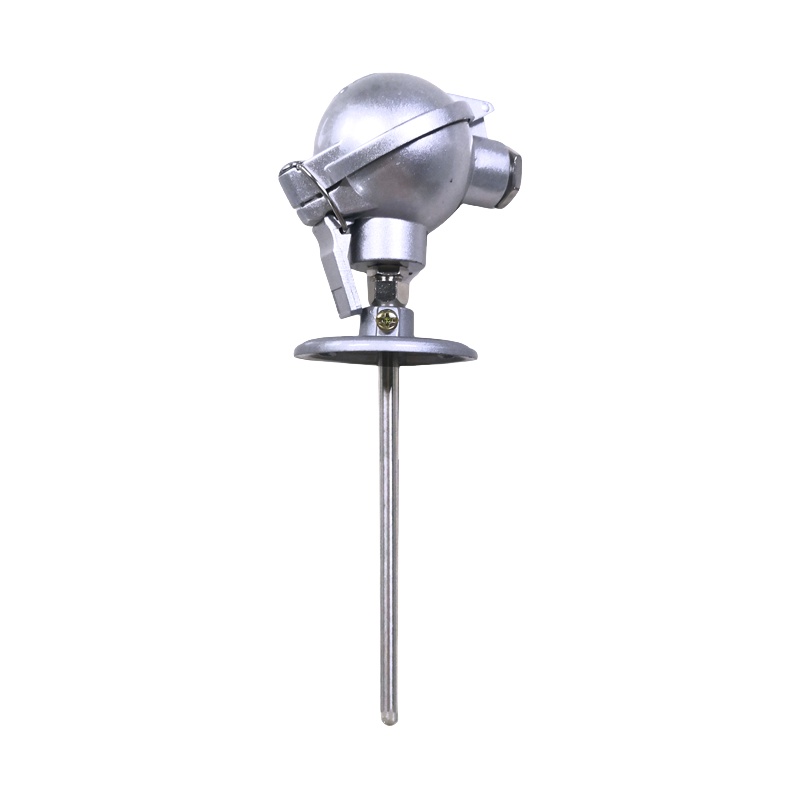
Have you ever encountered this situation? Temperature sensors on your boiler pipeline keep failing. Steam leaks cause readings to drift. Moisture seeps into the sensor during cleaning. Flange gaskets age and create safety hazards. Every sensor replacement requires shutdown, depressurization, and pipeline draining. Half a day is gone by the time you finish.
If these problems give you headaches, you need to understand what a boiler pipeline dedicated flange sanitary temperature sensor is.
Why Is Temperature Measurement on Boiler Pipelines So Difficult?
Boiler pipelines operate in extremely harsh conditions. Let us look at the challenges you face every day.
First, high temperature. The media flowing through boiler pipelines may be high temperature steam, thermal oil, or superheated water, often exceeding 200°C. Under such high temperatures, the internal electronic components of ordinary sensors age rapidly, and insulation materials become brittle and crack.
Second, pressure. Boiler systems typically operate at high pressures, ranging from a few kilograms to tens of kilograms per square centimeter. The sensor mounting interface must withstand this pressure. Any leakage can cause a safety accident.
Third, condensate and moisture. Boiler pipelines generate significant condensate during start and stop cycles. This condensate can seep into the junction box along the sensor probe, causing signal drift or short circuits.
Fourth, cleaning requirements. In food and pharmaceutical industries, boiler pipelines provide pure steam or process water. These pipelines require regular CIP cleaning. The sensor must withstand cleaning agents and high temperature water flow.
Fifth, vibration. The feed pumps and circulation pumps of boilers transmit vibration to the pipelines. This vibration loosens terminal connections on ordinary sensors and causes thermocouple wire fatigue and breakage.
If you are asking "Why do sensors on my boiler pipeline keep failing?" the answer is that ordinary sensors are not designed for these harsh conditions. You need a sensor specifically designed for boiler pipelines.
What Is This Sensor?
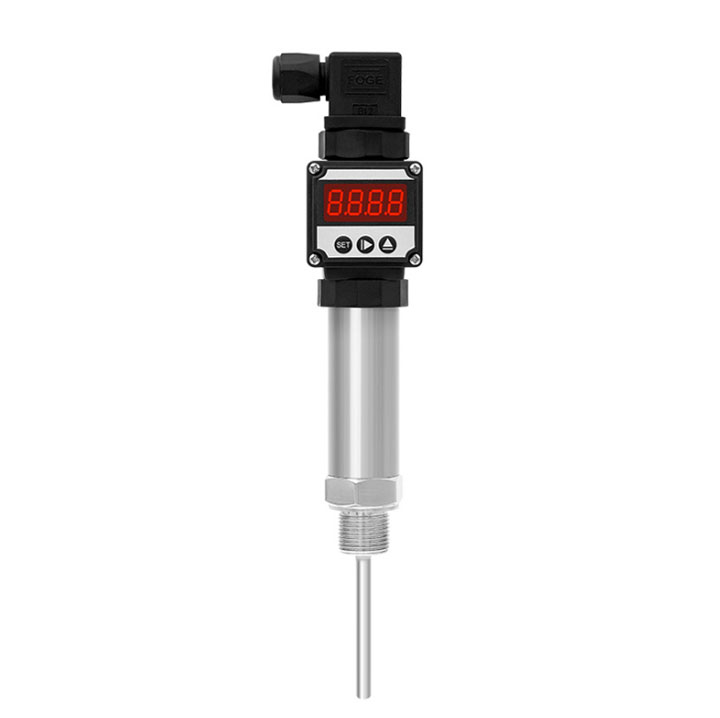
This is a single device that combines multiple features. It is a Protective Tube Temperature Probe because the sensing element is fully enclosed in a sealed protective tube. It can also be called a Sanitary Flange Temperature Sensor because it can be configured with a sanitary clamp flange for food and pharmaceutical applications. At the same time, it is a Flange Thermocouple Industrial Temperature Sensor because it can be configured with an industrial flange and thermocouple element for heavy industrial applications.
The same core, different configurations, meeting different needs. Let us look at each feature.
Feature 1: Protective Tube Temperature Probe
The core of this sensor is a Protective Tube Temperature Probe. The sensing element is fully enclosed in a rugged metal protective tube, completely isolated from the external environment.
Why is a Protective Tube Temperature Probe needed? Because the environment of boiler pipelines is too harsh. Condensate seeps in along the probe. Corrosive media attack the sensing element. Vibration causes internal solder joints to fatigue. With a Protective Tube Temperature Probe, the sensing element is completely isolated from the outside world. Only heat can transfer through.
The protective tube of this sensor uses 316L stainless steel as standard, which withstands steam, hot water, and weak alkaline water commonly found in boiler systems. For more corrosive conditions, Hastelloy or titanium can be selected.
The tube wall thickness is 1.5mm to 2mm. This thickness provides sufficient mechanical strength without excessively sacrificing response speed. Thermal conductive filler material between the sensing element and the inner wall of the protective tube ensures rapid heat transfer.
The Protective Tube Temperature Probe of this sensor is fully sealed at both ends. The sensing element is potted inside the tube, preventing any moisture ingress. The cable exit is molded or sealed with a compression gland. Even if condensate forms on the pipeline surface, it will not seep into the sensor.
If you are asking "Can a protective tube really solve moisture problems?" the answer is yes. The Protective Tube Temperature Probe of this sensor is the correct solution to fundamentally solve moisture problems on boiler pipelines.
Feature 2: Sanitary Flange Temperature Sensor
For boiler pipelines in food, pharmaceutical, and bioengineering industries, sanitary requirements are mandatory. This sensor can be configured as a Sanitary Flange Temperature Sensor.
As a Sanitary Flange Temperature Sensor, it uses a Tri clamp fitting. This fitting mates with a sanitary ferrule welded onto the pipeline, with an FDA approved silicone or PTFE gasket between them.
The surface of this sensor is mirror polished to a roughness of 0.5 micron Ra or better. The smooth surface does not trap dirt, bacteria cannot adhere, and cleaning is very convenient. This is the core value of the Sanitary Flange Temperature Sensor.
The internal Protective Tube Temperature Probe uses 316L stainless steel, matching the pipeline material and avoiding galvanic corrosion. The complete sensor assembly can undergo CIP cleaning with the pipeline without disassembly.
If you are asking "What sensor should I use for boiler pipelines in a food plant?" the answer is this sensor configured as a Sanitary Flange Temperature Sensor, which contains a reliable Protective Tube Temperature Probe. This is the industry standard configuration.
Feature 3: Flange Thermocouple Industrial Temperature Sensor
For conventional industrial boilers, power station boilers, and thermal power plants, sanitary surface finishes are not required, but higher pressure and temperature resistance are needed. This sensor can be configured as a Flange Thermocouple Industrial Temperature Sensor.
As a Flange Thermocouple Industrial Temperature Sensor, it uses a flanged connection. Common flange standards include ANSI, DIN, and JIS. The flange provides a large sealing surface that, combined with spiral wound or graphite gaskets, reliably seals high pressure media.
This sensor is typically used with a thermowell. The thermowell is welded to the flange, and the Protective Tube Temperature Probe slides into the thermowell. The advantage of this design is that the sensor can be replaced without depressurizing or draining the pipeline.
As a Flange Thermocouple Industrial Temperature Sensor, it contains a thermocouple element that provides wide range measurement capability from -200°C to +1260°C, covering all temperature measurement needs of boiler pipelines.
If you are asking "What sensor should I use for high pressure steam pipelines?" the answer is this sensor configured as a Flange Thermocouple Industrial Temperature Sensor, which contains a durable Protective Tube Temperature Probe.
How to Choose Between the Two Configurations?
The same core product, two flange configurations. Your choice depends on your specific application.
Choose the Sanitary Flange Temperature Sensor configuration when:
-
Your industry is food, beverage, dairy, pharmaceutical, or bioengineering
-
The media in the pipeline is pure steam, water for injection, or process water that contacts products directly or indirectly
-
The pipeline requires regular CIP cleaning
-
The connection must be crevice free to prevent bacterial growth
-
The sensor needs to be removed frequently for gasket inspection or probe cleaning
Choose the Flange Thermocouple Industrial Temperature Sensor configuration when:
-
Your industry is chemical, power generation, thermal supply, or petrochemical
-
The media in the pipeline is industrial steam, thermal oil, or boiler feed water that does not contact food or pharmaceuticals
-
Pressure is high, typically exceeding 1.6MPa
-
Temperature is high, exceeding 150°C
-
You need a rugged sensor that can withstand vibration
Regardless of which configuration you choose, the sensor core is the same Protective Tube Temperature Probe. The only differences are the flange interface type and the sensing element type.
What Should You Pay Attention to During Installation?
Regardless of which configuration you choose, correct installation is key to ensuring measurement accuracy and sensor longevity.
Insertion depth is important. The sensing tip of the sensor must extend far enough into the pipeline to be fully immersed in the flowing media. A general rule is to insert the probe to a depth of 5 to 10 times the pipe diameter. For small diameter pipes (DN50 or less), insertion to the centerline is recommended. For larger pipes, insertion to one third of the diameter.
Choose the correct flange gasket. For steam pipelines, use stainless steel spiral wound or graphite gaskets. For hot water pipelines, use non asbestos or PTFE gaskets. For food grade pipelines, use FDA approved silicone or PTFE gaskets.
Seal the junction box properly. Boiler rooms are humid environments. The junction box cover must be tightened securely, and the cable entry must use a waterproof gland. Even though the sensor already has a Protective Tube Temperature Probe, the terminals inside the junction box still need to remain dry.
What Practical Problems Does This Sensor Solve?
Let us list some real pain points and usage scenarios.
Problem 1: Pure steam pipeline sensors frequently fail due to moisture damage.
Pure steam pipelines operate at temperatures above 121°C. Cooling after shutdown creates a vacuum that draws humid air into the junction box. The solution is to choose the Sanitary Flange Temperature Sensor configuration with a fully sealed Protective Tube Temperature Probe, along with an anti condensation junction box.
Pure steam pipelines operate at temperatures above 121°C. Cooling after shutdown creates a vacuum that draws humid air into the junction box. The solution is to choose the Sanitary Flange Temperature Sensor configuration with a fully sealed Protective Tube Temperature Probe, along with an anti condensation junction box.
Problem 2: Sensor readings are inaccurate after CIP cleaning in a food plant.
During CIP cleaning, high temperature alkali and acid solutions alternately flush the pipeline. The probe surface of ordinary sensors may have microscopic cracks. Cleaning fluid seeps in and affects insulation. The solution is to choose the Sanitary Flange Temperature Sensor configuration with a mirror polished probe surface and a sealed Protective Tube Temperature Probe.
During CIP cleaning, high temperature alkali and acid solutions alternately flush the pipeline. The probe surface of ordinary sensors may have microscopic cracks. Cleaning fluid seeps in and affects insulation. The solution is to choose the Sanitary Flange Temperature Sensor configuration with a mirror polished probe surface and a sealed Protective Tube Temperature Probe.
Problem 3: Flange gaskets on high pressure steam pipelines leak frequently.
Ordinary flat flanges leak easily under high temperature and high pressure. The solution is to choose the Flange Thermocouple Industrial Temperature Sensor configuration with RTJ ring joint flanges or male female flanges, combined with spiral wound gaskets.
Ordinary flat flanges leak easily under high temperature and high pressure. The solution is to choose the Flange Thermocouple Industrial Temperature Sensor configuration with RTJ ring joint flanges or male female flanges, combined with spiral wound gaskets.
Problem 4: Sensor response is too slow on boiler feed water pipelines.
While the protective tube wall thickness ensures longevity, it also slows response speed. The solution is to choose the reduced tip option for the Protective Tube Temperature Probe, where the tip wall thickness is reduced, cutting response time from over 10 seconds to under 3 seconds.
While the protective tube wall thickness ensures longevity, it also slows response speed. The solution is to choose the reduced tip option for the Protective Tube Temperature Probe, where the tip wall thickness is reduced, cutting response time from over 10 seconds to under 3 seconds.
Technical Specifications
-
Product Positioning: Boiler pipeline dedicated, one core with three descriptive features
-
Core Protection: Protective Tube Temperature Probe fully sealed construction
-
Sanitary Configuration: Configurable as Sanitary Flange Temperature Sensor, Tri clamp connection
-
Industrial Configuration: Configurable as Flange Thermocouple Industrial Temperature Sensor, flanged connection
-
Protective Tube Material: 316L stainless steel, Hastelloy, Inconel, titanium
-
Protective Tube Wall Thickness: 1.5mm to 2mm standard, reduced tip optional
-
Sensing Element: Pt100 RTD or Type K, J, T thermocouple
-
Measurement Accuracy: ±0.15°C for RTD, ±0.75% for thermocouple
-
Temperature Range: -50°C to +250°C standard, up to +600°C for high temperature version
-
Sanitary Surface Finish: 0.5 micron Ra mirror polish (sanitary configuration)
-
Industrial Flange Standards: ANSI 150 to 2500, DIN, JIS
-
Sanitary Fitting Size: 1 to 4 inch Tri clamp
-
Protection Rating: IP67, fully potted
-
Response Time: τ63 <10 seconds standard, <3 seconds reduced tip
Frequently Asked Questions
Q: What is this product? Does it have three names?
A: Yes. This is one product, but it can be described from three perspectives. It contains a Protective Tube Temperature Probe that protects the sensing element. When used in the food and pharmaceutical industry, it is called a Sanitary Flange Temperature Sensor. When used in heavy industry, it is called a Flange Thermocouple Industrial Temperature Sensor. The same core, different configurations and names.
A: Yes. This is one product, but it can be described from three perspectives. It contains a Protective Tube Temperature Probe that protects the sensing element. When used in the food and pharmaceutical industry, it is called a Sanitary Flange Temperature Sensor. When used in heavy industry, it is called a Flange Thermocouple Industrial Temperature Sensor. The same core, different configurations and names.
Q: Which configuration should I use for boiler pipelines in a food plant?
A: You need the Sanitary Flange Temperature Sensor configuration. It uses a sanitary clamp fitting and a mirror polished surface. The internal Protective Tube Temperature Probe remains the same.
A: You need the Sanitary Flange Temperature Sensor configuration. It uses a sanitary clamp fitting and a mirror polished surface. The internal Protective Tube Temperature Probe remains the same.
Q: Which configuration should I use for high pressure steam pipelines in a chemical plant?
A: You need the Flange Thermocouple Industrial Temperature Sensor configuration. It uses an industrial flange and a thermocouple element. The internal Protective Tube Temperature Probe remains the same.
A: You need the Flange Thermocouple Industrial Temperature Sensor configuration. It uses an industrial flange and a thermocouple element. The internal Protective Tube Temperature Probe remains the same.
Q: How long does the Protective Tube Temperature Probe last?
A: Under normal boiler pipeline conditions, a quality Protective Tube Temperature Probe can last 5 to 10 years or more. Whether you use it in the Sanitary Flange Temperature Sensor or Flange Thermocouple Industrial Temperature Sensor configuration, the lifespan is the same.
A: Under normal boiler pipeline conditions, a quality Protective Tube Temperature Probe can last 5 to 10 years or more. Whether you use it in the Sanitary Flange Temperature Sensor or Flange Thermocouple Industrial Temperature Sensor configuration, the lifespan is the same.
Q: Can I replace just the probe without replacing the flange?
A: Yes. The Protective Tube Temperature Probe can be removed from the flange assembly and replaced separately. The flange does not need to be removed from the pipeline. This significantly reduces maintenance costs.
A: Yes. The Protective Tube Temperature Probe can be removed from the flange assembly and replaced separately. The flange does not need to be removed from the pipeline. This significantly reduces maintenance costs.
Technical Service Hotline: 13220160485
Professional Technical Consultation: 24/7 Online Service on Official Website
Professional Technical Consultation: 24/7 Online Service on Official Website
View more from YouTube.
Seeking the ultimate solution to industrial temperature measurement challenges? The threaded fixed-lead thermocouple sensor guide provides a comprehensive analysis for you.
How to measure temperature in complex working conditions? Integrated insertion sensors achieve precise monitoring.
Related blog