How to Choose the Most Reliable 4-20mA Pressure Sensor for Water Supply Systems? An Industrial Application Guide
Introduction
In modern water supply systems, accurate and reliable pressure measurement is critical for pump control, leak detection, pipeline protection, and energy management.
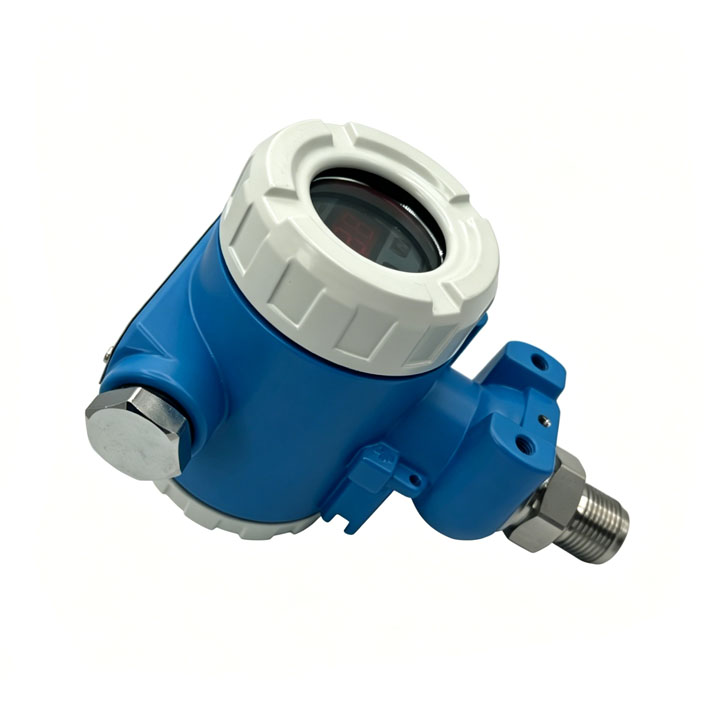
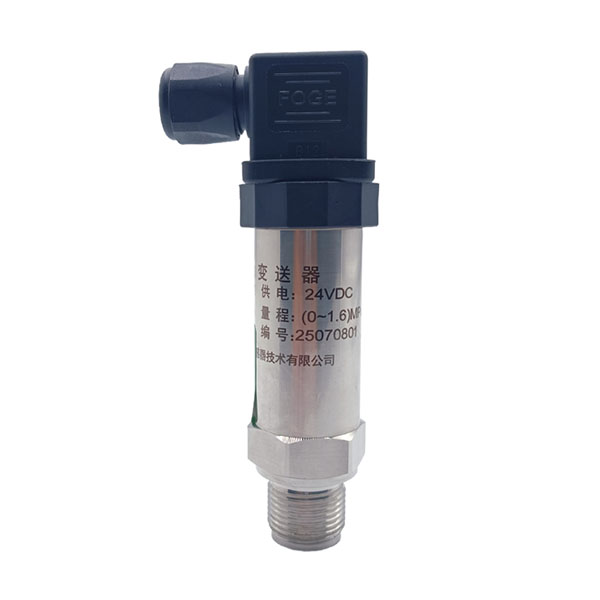
A pressure sensor that delivers consistent, stable 4-20mA output can mean the difference between efficient operation and costly downtime. The Cylindrical Pressure Sensor introduced in this article (which also serves as an Industrial Process Control Pressure Sensor and a Water Supply Pressure Sensor) is specifically designed for water supply systems, combining industrial-grade precision with durability.
Why 4-20mA Remains the Gold Standard for Water Supply
Before diving into sensor selection, it is important to understand why the 4-20mA analog output remains the preferred choice for water supply systems. Unlike voltage-based signals, which degrade over long cable runs, the 4-20mA current loop maintains signal integrity over hundreds of meters. The live-zero feature allows the control system to distinguish between a true zero reading and a broken wire or sensor fault. This fault detection capability is invaluable for critical water supply infrastructure where uninterrupted operation is essential.
Key Selection Criteria for Water Supply Pressure Sensors
When evaluating pressure sensors for water supply applications, consider the following technical parameters:
1. Pressure Range and Overload Capability
Water supply systems typically operate within 0-10 bar, while booster stations may require 0-16 bar or higher. The selected Water Supply Pressure Sensor should have a measuring range that covers your maximum expected pressure with an additional 20-30% safety margin.
Overload protection is equally important — a reliable Water Supply Pressure Sensor should withstand at least 1.5 times the full scale without permanent damage. This Cylindrical Pressure Sensor excels in overload protection, and its compact form factor allows easy installation in tight pipeline spaces.
2. Wetted Materials and Corrosion Resistance
Water quality varies significantly — from potable water to treated wastewater, each contains different levels of chlorides, chemicals, or abrasive particles. A Cylindrical Pressure Sensor with a stainless steel diaphragm offers excellent corrosion resistance for most water applications. For aggressive media or high-chloride environments, consider versions with Hastelloy diaphragms. The compact cylindrical form factor of a Cylindrical Pressure Sensor allows easy installation in tight pipeline spaces, making it ideal for pump stations and manifold assemblies.
3. Accuracy and Long-Term Stability
For basic pressure monitoring, accuracy of ±0.5% full scale is generally acceptable. However, for flow calculation or precise pump control, an Industrial Process Control Pressure Sensor with ±0.25% or ±0.1% accuracy is recommended. Long-term stability is equally critical — a high-quality Industrial Process Control Pressure Sensor should exhibit annual drift of less than ±0.1% of full scale, minimizing calibration frequency and maintenance costs.
4. Output Signal and Electrical Compatibility
The industry standard 4-20mA loop-powered output is universally compatible with PLC analog input cards, SCADA systems, and building automation controllers. When selecting a Water Supply Pressure Sensor, verify that the loop supply voltage matches your control system. Some advanced Cylindrical Pressure Sensor models also offer HART communication protocol superimposed on the 4-20mA signal, enabling digital configuration and diagnostics.
5. Environmental Protection and Installation
Water supply environments are often wet, dusty, or subject to temporary flooding. A Water Supply Pressure Sensor should carry an IP65 or IP67 ingress protection rating. For outdoor installations, consider sensors with integrated lightning protection and wide operating temperature compensation. The Cylindrical Pressure Sensor design, with its smooth, weld-free housing, minimizes crevices where moisture or contaminants could accumulate.
Application-Specific Recommendations
Pump Station Pressure Monitoring
For pump suction and discharge pressure monitoring in water booster stations, use a Water Supply Pressure Sensor with a pulsation damper to protect the diaphragm from water hammer effects. The compact size of the Cylindrical Pressure Sensor makes it ideal for installation in space-constrained pump head areas.
Filter Differential Pressure Monitoring
When monitoring filter differential pressure to determine backwash timing, a high-accuracy Industrial Process Control Pressure Sensor is recommended. This ensures precise detection of pressure drop across the filter media, optimizing backwash cycles and reducing water waste.
Chemical Dosing System Pressure
For chemical dosing applications where aggressive chemicals are injected into the water stream, a Cylindrical Pressure Sensor with a flush diaphragm design prevents clogging and simplifies cleaning. This sensor can be installed directly on the dosing line without requiring additional adapters or manifolds.
Installation Best Practices
-
Mounting orientation: For liquid applications, install the Cylindrical Pressure Sensor with the process connection upward or horizontally to prevent air bubbles from trapping against the diaphragm.
-
Pulsation dampening: For reciprocating pump discharge lines, use a pulsation snubber or install the Industrial Process Control Pressure Sensor on a small diameter tubing coil to smooth pressure fluctuations.
-
Electrical grounding: Properly ground the sensor housing and cable shield to prevent electromagnetic interference from variable frequency drives.
-
Zero trimming: After installation and before pressurization, perform a zero trim on the Water Supply Pressure Sensor to eliminate any installation offset error.
Conclusion
Selecting the right 4-20mA pressure sensor for your water supply system requires careful evaluation of pressure range, wetted materials, accuracy, environmental protection, and electrical compatibility. The Cylindrical Pressure Sensor offers compact, space-saving installation for tight locations. The Industrial Process Control Pressure Sensor delivers industrial-grade precision and long-term stability for demanding process control applications. The Water Supply Pressure Sensor provides reliable, cost-effective monitoring for general water distribution.
Ultimately, the most reliable sensor is one that matches your specific application requirements while offering long-term stability and ease of maintenance. By following the guidelines in this article, you can confidently choose a 4-20mA pressure sensor that will provide years of trouble-free operation in your water supply system.
Need assistance selecting the right pressure sensor for your water supply application? Contact our engineering team for personalized recommendations and technical support.
Free Technical Hotline: 13220160485
View more from YouTube.
PT100 Wiring Configurations Explained: How to Choose Between 2-Wire, 3-Wire, or 4-Wire Temperature Sensors for Industrial Applications?
A New Standard in Industrial Environmental Monitoring: How LCD Temperature and Humidity Transmitters Enhance Facility Management Efficiency
Related blog