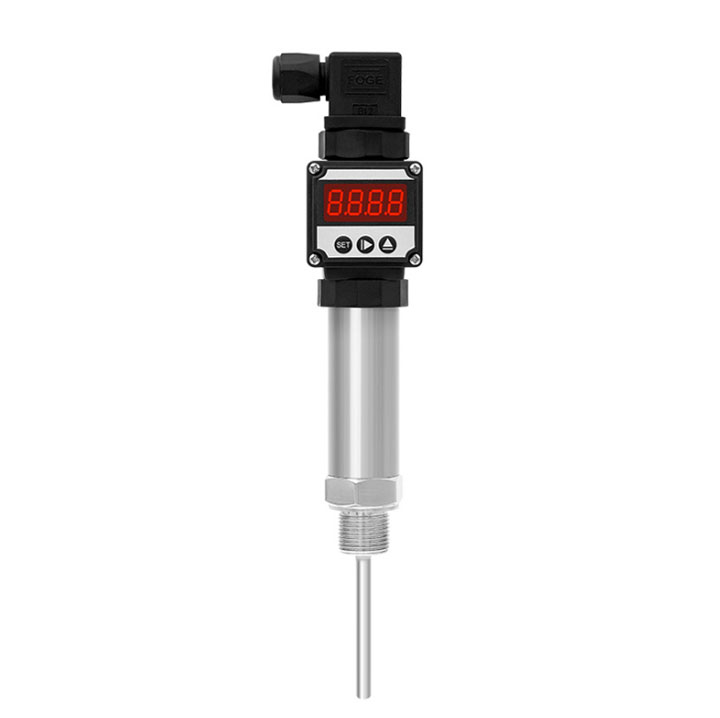
In harsh corrosive environments, how does this slim-sheathed RTD sensor maintain its precision consistently?
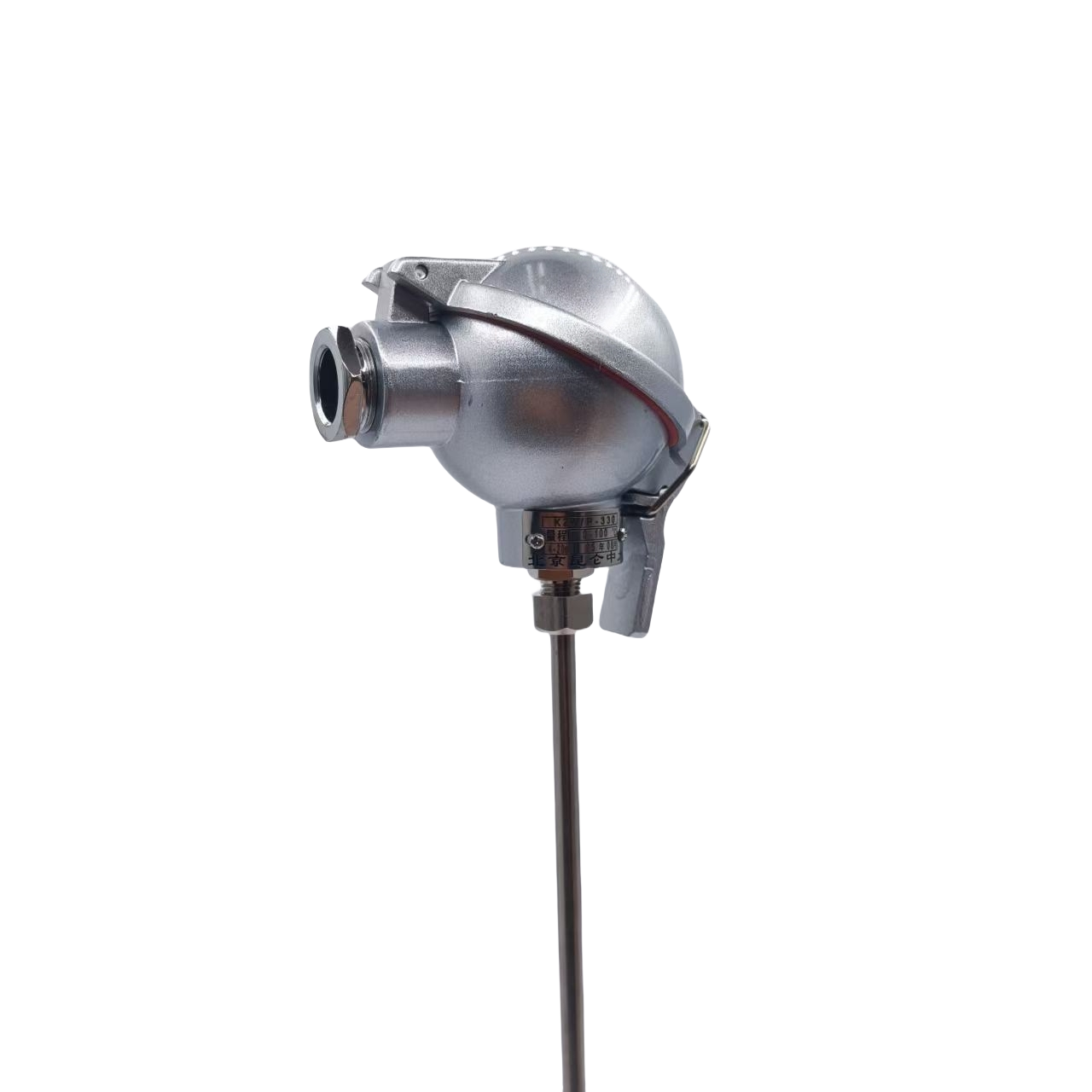
In chemical, petrochemical, pharmaceutical, and other industrial fields, the accuracy of temperature measurement directly impacts product quality, reaction safety, and energy consumption control. However, these field environments are often full of challenges: acidic gases, alkaline liquids, high-concentration salt spray, humidity combined with high temperatures… Under such conditions, ordinary temperature sensors may experience housing corrosion, insulation degradation, and measurement drift within weeks or even months.
So, how does a Chemical Industry RTD Sensor—especially one with a slim-sheathed design—maintain long-term precision and stability in these harsh environments? This article takes the Kunlun Zhongda RTD as a representative example to analyze its core technologies in depth.
1. Challenges of Corrosive Environments for Traditional Temperature Sensors
In chemical plant reactors, pipelines, storage tanks, and exhaust gas treatment systems, the main threats to sensors include:
-
Chemical corrosion: Acidic or alkaline media directly attack the sensor housing and leads.
-
Ingress failure: Moisture and corrosive gases seep through microscopic gaps, causing insulation resistance to drop.
-
Mechanical damage: Vibration, thermal shock, or media erosion causes structural fatigue.
-
Long-term drift: Corrosion of elements or connection points changes resistance characteristics, causing output signals to deviate from true values.
Conventional unprotected sensors, often deployed without sufficient chemical inertness and sealing structures, lead to frequent failures, production interruptions, and safety hazards.
2. Structural and Technical Advantages of Slim-Sheathed RTD Sensors
The Kunlun Zhongda RTD, a representative Chemical Industry RTD Sensor, employs precision sheathing and hermetic sealing technologies to fundamentally solve measurement challenges in corrosive environments.
2.1 High-Density Sheathed Jacket: A Dual Physical and Chemical Barrier
The outer sheath of a slim-sheathed RTD is typically made of corrosion-resistant metals such as 316L stainless steel, Inconel, or Hastelloy. Compared to standard stainless steel, these materials exhibit significantly lower corrosion rates in acid, alkali, and salt spray environments.
-
316L stainless steel: Resists chloride pitting, suitable for most chemical media.
-
Inconel 600/625: Resists high-temperature oxidation and reducing acids, suitable for harsher conditions.
-
Hastelloy C-276: Resists almost all common corrosive chemicals, including wet chlorine gas.
The sheath is manufactured using a seamless drawing process, resulting in uniform wall thickness and no porosity, completely blocking external corrosive media from contacting the internal insulation and sensing elements.
2.2 Magnesium Oxide (MgO) Mineral Insulation: High Purity, High Stability
Between the sheath and the sensing element (Pt100, Pt1000, etc.), high-purity magnesium oxide powder, processed at high temperatures, is filled. MgO offers the following key characteristics:
-
Chemical inertness: Does not react with the measured media or sheath material.
-
High insulation resistance: Maintains megohm-level insulation performance even at high temperatures (e.g., 500°C).
-
Low heat capacity and high thermal conductivity: Ensures fast and accurate temperature signal transmission to the sensing element.
This mineral-insulated structure allows a Corrosion Resistant Temperature Sensor to maintain internal electrical isolation even if the sheath surface is slightly damaged, preventing failure due to moisture ingress.
2.3 Hermetic Sealing of Tip and Lead Wires
The Kunlun Zhongda RTD employs laser welding or epoxy sealing at both the sensing tip and the lead exit points, preventing moisture from seeping in along the leads. For output signal wires, FEP/PFA or PTFE jacketed cables can be provided. These materials are resistant to almost all industrial chemicals and have extremely low moisture absorption rates.
3. Core Mechanisms for Maintaining Measurement Precision in Corrosive Environments
For a Chemical Industry RTD Sensor, "long-term precision" depends not only on materials but also on precise manufacturing and calibration techniques.
3.1 Stable Resistance-Temperature Characteristics
The Kunlun Zhongda RTD uses a high-purity platinum resistance element conforming to the IEC 60751 standard. Platinum itself has excellent chemical inertness and high-temperature stability, resisting lattice changes or impurity diffusion in corrosive environments. Therefore, even after prolonged contact with aggressive media, its resistance-temperature characteristics remain within initial accuracy tolerances of ±0.1°C to ±0.3°C.
3.2 Elimination of Lead Wire Resistance Interference
For slim-sheathed RTDs, the Kunlun Zhongda RTD offers 2-wire, 3-wire, or 4-wire output configurations. In corrosive environments, although the lead jacket is protected, the lead wires themselves still experience resistance changes with temperature. The Corrosion Resistant Temperature Sensor uses 3-wire or 4-wire connections to automatically eliminate measurement errors caused by lead wire resistance, ensuring signal accuracy before transmission to the control system.
3.3 Long-Term Stability Validation
Kunlun Zhongda RTD devices undergo accelerated aging and corrosion simulation tests before leaving the factory, such as:
-
Salt spray testing (ASTM B117)
-
Acidic gas exposure testing (SO₂, H₂S)
-
Thermal cycling shock testing (-50°C ↔ +300°C)
After passing these rigorous tests, the resistance change of the Chemical Industry RTD Sensor converted to temperature drift is typically less than ±0.1°C per year, meaning no recalibration is required within a typical two-year maintenance cycle.
4. Typical Application Scenarios
4.1 Chemical Plant Reactor Temperature Monitoring
Reactor media are often acidic or alkaline, accompanied by agitation and high pressure. The Kunlun Zhongda RTD is installed on the reactor body via flanges or threads. Its sheathed jacket withstands direct media scour, while the MgO insulation prevents short circuits, ensuring reliable closed-loop temperature feedback control.
4.2 Exhaust Gas Scrubbers and Flues
In desulfurization and denitrification systems, flue gases contain sulfides, moisture, and chlorides. The slim design (3mm to 6mm diameter) of the Corrosion Resistant Temperature Sensor allows insertion into narrow scrubber nozzle zones while resisting long-term erosion from wet acidic gases.
4.3 Electroplating and Surface Treatment Lines
Electroplating bath solutions contain strong acids (e.g., sulfuric acid, hydrochloric acid) or strong bases (e.g., sodium hydroxide). Using a Chemical Industry RTD Sensor with a PFA-jacketed cable, the sensor can be directly immersed in the bath solution for continuous temperature monitoring, avoiding production stoppages caused by frequent probe replacement.
5. Why Choose the Kunlun Zhongda RTD?
Among many industrial sensor brands, the Kunlun Zhongda RTD stands out due to its focus on "detail engineering":
|
Feature
|
Standard RTD
|
Kunlun Zhongda RTD
|
|
Sheath material
|
304 stainless steel (limited corrosion resistance)
|
316L / Inconel / Hastelloy
|
|
Insulation material
|
Plastic or standard MgO
|
High-purity MgO + vacuum drying
|
|
Sealing rating
|
IP65 (limited moisture protection)
|
IP68 / Hermetically sealed
|
|
Lead jacket
|
PVC (not chemical-resistant)
|
FEP / PFA / Silicone fiberglass
|
|
Long-term drift
|
±0.3~0.5℃/year
|
≤±0.1℃/year
|
|
Suitable corrosive media
|
Limited
|
Acids, alkalis, salt spray, wet chlorine, solvents
|
6. Selection and Installation Recommendations
To maximize the service life and precision of your Corrosion Resistant Temperature Sensor, pay attention to the following during selection and installation:
-
Identify the media composition: Select the appropriate sheath alloy based on pH value, concentration, and temperature.
-
Protect the lead interface: The junction box should have an IP67 or higher protection rating, or use an integrated explosion-proof junction box.
-
Avoid mechanical stress: Although a slim sheath (e.g., 3mm diameter) is flexible, avoid excessive bending or vibration fatigue.
-
Regular surface inspection: Even with the Kunlun Zhongda RTD, it is recommended to inspect the sheath surface every 6 to 12 months for corrosion pits or perforation.
7. Conclusion
In harsh corrosive environments, the precision of a temperature sensor is not a "one-time" specification but the result of the combined action of materials, structure, sealing, and circuit design. The Chemical Industry RTD Sensor achieves long-term stable measurement performance through the combination of high-alloy sheathing, mineral insulation, hermetic sealing processes, and precision platinum resistance elements.
The Kunlun Zhongda RTD, as a representative product in this field, transforms the concept of a Corrosion Resistant Temperature Sensor into a deliverable engineering solution. Whether in a chemical plant reactor or an electroplating line pickling tank, it continuously outputs true and stable temperature signals under harsh conditions.
For industrial users pursuing production safety and quality consistency, choosing the right Chemical Industry RTD Sensor—such as the Kunlun Zhongda RTD—is not just purchasing a component; it is buying a "long-term anti-corrosion precision guarantee" for the entire process.
Click for online customer service, or call our free hotline: 13220160485. Let us help you solve your most critical measurement challenges.
View more from YouTube.
Simplify Your Facility Monitoring: How Modbus-RTU RS485 Bus Sensors Reduce Cost and Complexity
Why Your Gym Needs Professional Temperature & Humidity Monitoring | Wall-Mount Solution
Related blog