Still Troubled by Inaccurate Temperature Monitoring in Your Air Conditioning System? Multi-Interface Temperature Sensors Provide the Solution
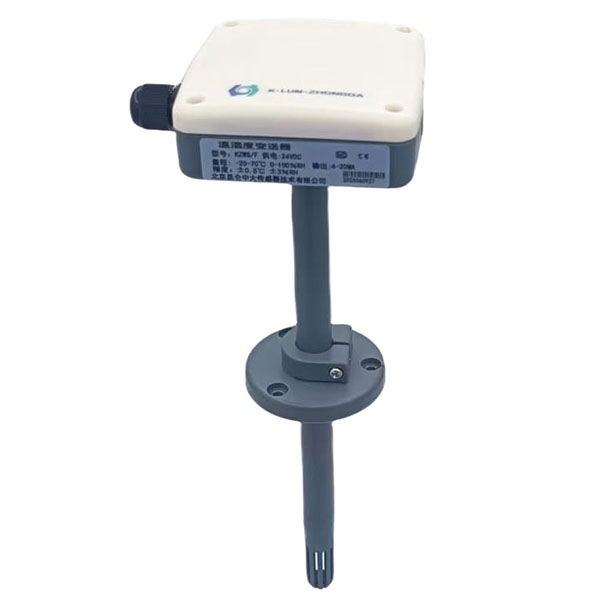
The thermostat in Zone A reads 22°C, but your portable data logger says 24°C. The building automation system is staging up the chiller, but the supply air temperature is dropping too slowly. The VAV box is calling for cooling, but the room keeps getting warmer. You have checked everything twice, yet the symptoms persist.
If this describes your week, you are not alone. HVAC professionals across the industry face the same puzzle: why does the temperature data seem so unreliable?
Let us cut through the confusion and answer the questions that keep coming up.
What Actually Causes False Readings in Air Conditioning Monitoring?
Before you replace another sensor, understand the real culprits behind bad data.
The location trap. A sensor placed where airflow stagnates will never see the true room condition. Sensors installed too close to fresh air intakes get fooled by outdoor air. Sensors behind furniture or inside control panels measure equipment heat, not room temperature. No amount of calibration can fix a sensor in the wrong spot.
The signal mismatch. Your controller speaks one language. Your sensor speaks another. A controller expecting a 10K thermistor curve gets a PT100 resistance instead. The resulting temperature calculation can be off by 5°C or more. This is not a sensor problem. It is a compatibility problem.
The wire resistance effect. Every meter of cable adds resistance. For a two-wire sensor, that extra resistance looks exactly like temperature change. A 50-meter run of ordinary thermostat wire can add 0.5°C to 1°C of error. The building owner sees the reading and thinks the system is performing poorly. In reality, the sensor is lying.
The drifting element. All temperature sensing elements change over time. Some change a lot. A thermistor that was accurate at installation may be 2°C off after five years. Your Air Conditioning System Temperature Sensor should hold its calibration for a decade, not a few seasons.
If you are asking "Why does my building management system show temperatures that feel wrong?" you are probably dealing with one or more of these four issues.
What Makes a Multi-Interface Sensor Different from Ordinary Sensors?
Most temperature sensors are single-purpose devices. You buy a sensor for a specific input type. You install it. If you later change controllers or need a different signal, you throw the sensor away and buy another.
A multi-interface sensor breaks that pattern. It is one device that speaks multiple protocols. Think of it as a universal translator for temperature signals.
This capability matters enormously for Accurate Temperature Monitoring. When your HVAC Temperature Sensor can output PT100 resistance, 4-20mA current, or 0-10V voltage, you never have to worry about compatibility. One model serves every controller on your site.
For the building owner managing multiple floors with different control systems, a multi-interface Air Conditioning System Temperature Sensor simplifies procurement. You stock one part number instead of three. You train your technicians on one device instead of many. And you never install the wrong sensor again.
If you are asking "How can I simplify my sensor inventory while improving accuracy?" the answer is a multi-interface HVAC Temperature Sensor.
How Does This Sensor Deliver Reliable Data Year After Year?
Accurate Temperature Monitoring starts with the sensing element itself. The platinum RTD inside this Air Conditioning System Temperature Sensor is fundamentally different from the thermistors used in cheap sensors.
Thermistors are made of semiconductor materials. Those materials change their electrical properties as they age. A thermistor that reads correctly today may drift substantially next year. Your building automation system will chase that drift, staging equipment at the wrong times and wasting energy.
Platinum RTDs do not drift like thermistors. The platinum element is a pure metal. It does not chemically change over time. A platinum HVAC Temperature Sensor that was accurate at installation will still be accurate five years later. The drift specification is typically less than 0.05°C per year. For the typical lifespan of a building control system, that is negligible.
But the element is only part of the story. Accurate Temperature Monitoring also requires proper signal conditioning. The electronics inside this Air Conditioning System Temperature Sensor are designed to reject electrical noise. Motors, drives, and fluorescent lights all create electromagnetic interference. That interference can corrupt a weak thermistor signal. The stronger signal from this HVAC Temperature Sensor is far more immune.
If you are asking "How do I stop chasing drifting readings in my building?" the answer is a platinum RTD Air Conditioning System Temperature Sensor built for long-term stability.
Where Should This Sensor Be Placed for Best Results?
Accurate Temperature Monitoring depends heavily on location. Here is practical guidance for common installation points.
Supply air duct. Mount this HVAC Temperature Sensor at least five duct diameters downstream of the cooling coil. Any closer, and you are measuring coil surface temperature, not air temperature. The probe should extend one-third to one-half of the duct width. For a 600mm wide duct, a 200mm probe is appropriate.
Return air duct. This is often the best location for zone-level control. The return air represents the average of the spaces served. Install your Air Conditioning System Temperature Sensor in the main return trunk, not in individual branch returns. Avoid locations near mixing boxes or dampers where stratification occurs.
Room mounting. Place this HVAC Temperature Sensor on an interior partition wall, not an exterior wall. The sensor should be at typical occupant height, around 1.4 meters from the floor. Keep it away from supply air diffusers by at least 1.5 meters. Never mount a room sensor behind a door or in direct sunlight.
Chilled water pipe. For systems using water-based cooling, strap this Air Conditioning System Temperature Sensor to the pipe with thermal compound and insulation. The best location is on the suction side of the pump where flow is fully developed and temperatures are well mixed.
If you are asking "Where is the optimal location for my sensor?" the answer depends on your specific application, but these guidelines apply to most situations.
What Is the Right Way to Wire This Sensor for Accuracy?
Wiring errors are surprisingly common. Even a skilled technician can miswire a sensor and introduce errors that are difficult to diagnose.
For this HVAC Temperature Sensor, follow these rules for Accurate Temperature Monitoring.
Use shielded cable. The shield protects the signal wire from electrical noise. Connect the shield to ground at the controller end only. Do not ground both ends of the shield. That creates a ground loop that introduces its own noise.
Keep sensor wires away from power wiring. Run your Air Conditioning System Temperature Sensor cables in separate conduits from 120V or 480V power cables. If they must cross, cross at 90 degrees to minimize coupling.
For long runs, use three-wire or four-wire configuration. A two-wire HVAC Temperature Sensor adds the resistance of the cable to the measurement. Over 50 meters, that error becomes significant. A three-wire configuration cancels out lead resistance. Your controller reads the true temperature, not the cable contribution.
Use the correct wire gauge. Thin wire has higher resistance per meter. For runs over 30 meters, use 20 AWG or thicker. Your Air Conditioning System Temperature Sensor will deliver better Accurate Temperature Monitoring with properly sized conductors.
If you are asking "Why does my sensor reading change when I move the cable?" you likely have a wiring problem. The three-wire configuration of this HVAC Temperature Sensor eliminates that symptom entirely.
How Can I Verify the Accuracy of My Existing Sensors?
You have sensors installed. You suspect they are wrong. Here are field checks that require no special equipment.
The ice bath test. Fill a thermos with crushed ice. Add enough water to make a slurry but not so much that ice floats. Insert the probe of your Air Conditioning System Temperature Sensor into the ice bath. Wait five minutes for stabilization. The reading should be 0°C ±0.3°C. Any deviation beyond that indicates an error in the sensor or its wiring.
The comparison test. Place a reference thermometer alongside your installed HVAC Temperature Sensor. The reference can be a quality handheld unit or a second sensor you trust. Compare readings over a 15-minute period while the system is stable. Your Air Conditioning System Temperature Sensor should agree within its published accuracy specification.
The consistency check. If you have multiple sensors monitoring the same system, they should read similarly when conditions are steady. For example, supply air sensors on parallel air handlers should read within 0.5°C of each other. Large discrepancies point to a problem with one HVAC Temperature Sensor or its installation.
The trend review. Pull historical data from your building automation system. Look for sudden shifts in temperature readings that do not correspond to changes in system operation. A Air Conditioning System Temperature Sensor that jumps 2°C in one day and never returns likely failed. A sensor that drifts slowly over months likely needs replacement.
If you are asking "How can I prove my sensors are wrong without sending them to a lab?" these four tests will give you the evidence you need.
What Are the Consequences of Ignoring Inaccurate Temperature Monitoring?
The cost of bad temperature data is real, but it is often hidden.
Energy waste. Your chiller plant stages up based on supply air temperature. If that reading is 2°C lower than actual, your plant will run harder than needed. That extra energy costs money every hour of every day. Over a cooling season, the waste can exceed the cost of replacing every sensor in the building.
Comfort complaints. Tenants do not care what your sensors say. They care how the space feels. If your Air Conditioning System Temperature Sensor reads 22°C but the room is actually 24°C, you will get calls. Your staff will spend time investigating. You may end up adjusting setpoints blindly, making the problem worse.
Equipment damage. A sensor that reads low can prevent your system from responding to real conditions. Chilled water valves may not open fully. Condenser fans may not start. In extreme cases, equipment can freeze or overheat because the control system believed false data.
Missed savings opportunities. Energy retrofits and optimization projects depend on accurate baseline data. If your HVAC Temperature Sensor readings are off, your savings calculations will be wrong. You may reject a worthwhile project because the data made your system look more efficient than it really is.
If you are asking "Does inaccurate temperature monitoring really matter?" the answer is yes. The cost of poor Accurate Temperature Monitoring adds up every day.
Technical Specifications
-
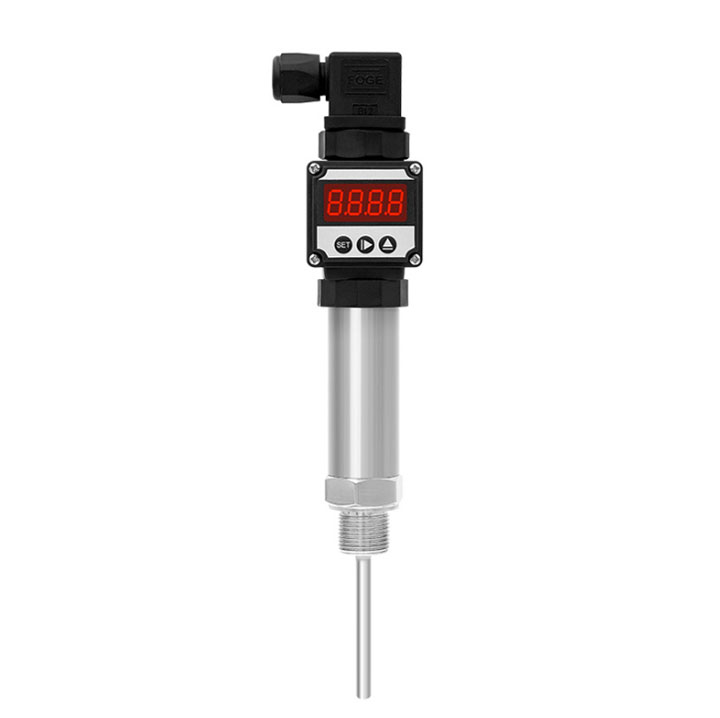
Product Type: Multi-interface Air Conditioning System Temperature Sensor with field-selectable outputs
-
Also Referred To As: HVAC Temperature Sensor for heating, ventilation, and cooling applications
-
Primary Function: Accurate Temperature Monitoring for air handlers, VAV boxes, fan coils, and hydronic systems
-
Sensing Element: Platinum RTD, PT100 or PT1000, Class B (±0.3°C) or Class A (±0.15°C)
-
Output Options: PT100 resistance, 4-20mA current (2-wire loop powered), 0-10V voltage (3-wire)
-
Temperature Range (Air): -10°C to +50°C for comfort applications, -40°C to +100°C extended
-
Temperature Range (Pipe): -30°C to +120°C with strap-on or immersion configuration
-
Response Time (Air): τ63 ≤ 10 seconds at 2 m/s airflow
-
Response Time (Pipe): τ63 ≤ 25 seconds for strap-on, ≤ 8 seconds for immersion
-
Probe Length (Duct): 100mm, 150mm, 200mm, 250mm, 300mm
-
Probe Material: 316L stainless steel
-
Housing: ABS plastic, UL94 V-0 flammability rating
-
Protection Rating: IP54 for room mount, IP65 for duct mount
-
Cable Connection: Screw terminals inside housing, accepts 16-24 AWG
-
Operating Humidity: 5% to 95% non-condensing
Frequently Asked Questions
Q: What does a multi-interface Air Conditioning System Temperature Sensor mean for me?
A: It means you can use the same physical sensor with any controller. Whether your building management system expects PT100, 4-20mA, or 0-10V, this HVAC Temperature Sensor delivers the correct signal.
A: It means you can use the same physical sensor with any controller. Whether your building management system expects PT100, 4-20mA, or 0-10V, this HVAC Temperature Sensor delivers the correct signal.
Q: How much does wiring affect Accurate Temperature Monitoring?
A: Significantly. With a two-wire sensor, 50 meters of cable can add 0.5°C to 1°C of error. This Air Conditioning System Temperature Sensor supports three-wire and four-wire connections that cancel out cable resistance.
A: Significantly. With a two-wire sensor, 50 meters of cable can add 0.5°C to 1°C of error. This Air Conditioning System Temperature Sensor supports three-wire and four-wire connections that cancel out cable resistance.
Q: Can I use this HVAC Temperature Sensor for both cooling and heating applications?
A: Yes. The temperature range covers typical heating applications up to 50°C. For high-temperature heating systems, a specialized version with extended range is available.
A: Yes. The temperature range covers typical heating applications up to 50°C. For high-temperature heating systems, a specialized version with extended range is available.
Q: How often should I replace my Air Conditioning System Temperature Sensor?
A: With platinum RTD technology, these sensors typically last 10 to 15 years. The drift rate is low enough that most building owners never need to replace them for accuracy reasons.
A: With platinum RTD technology, these sensors typically last 10 to 15 years. The drift rate is low enough that most building owners never need to replace them for accuracy reasons.
Q: Will this sensor work with my existing thermostat wire?
A: Yes, for runs under 30 meters. For longer runs, the three-wire or 4-20mA output is recommended for Accurate Temperature Monitoring.
A: Yes, for runs under 30 meters. For longer runs, the three-wire or 4-20mA output is recommended for Accurate Temperature Monitoring.
Technical Service Hotline: 13220160485
Professional Technical Consultation: 24/7 Online Service on Official Website
View more from YouTube.
The Ultimate Solution for HVAC System Water Pipe Temperature Monitoring Challenges: How to Choose the Right Temperature Sensor to Ensure Optimal Energy Efficiency Performance
How to select products for complex industrial environments? Selection and application analysis of vibration-resistant sheathed threaded thermocouples.
Related blog