How to select products for complex industrial environments? Selection and application analysis of vibration-resistant sheathed threaded thermocouples.

Your production line keeps stopping because of failed temperature sensors. The readings drift when the machine vibrates. The thermocouple wires break at the threaded connection point. Your maintenance team has replaced three sensors this month alone, and the problem keeps coming back.
If this sounds familiar, you are facing the reality of temperature measurement in complex industrial environments. Vibration, high temperature, corrosive atmospheres, and electrical noise all attack your sensors. Ordinary sensors fail. You need something built for the job.
Let us answer the questions you are probably already asking.
What Is a Sheathed Threaded Thermocouple and Why Do I Need One?
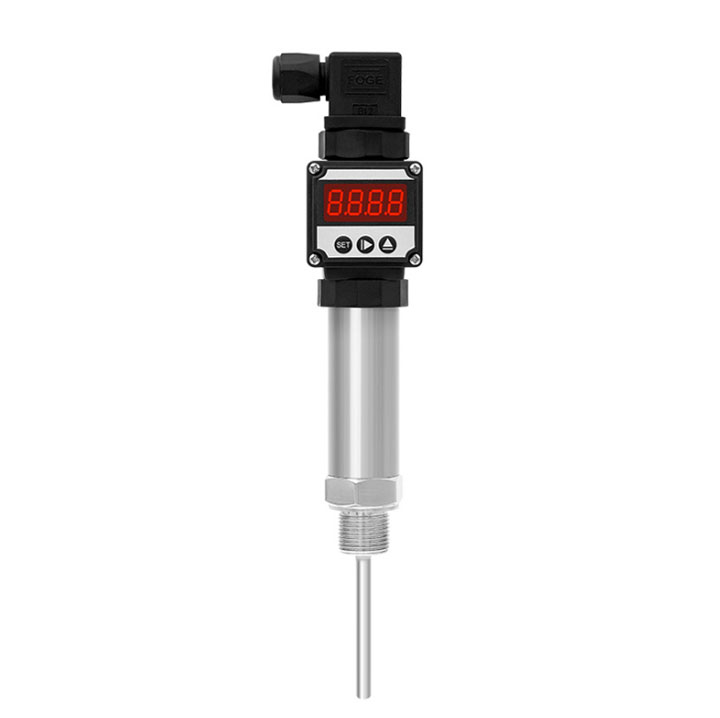
A Sheathed Threaded Thermocouple is a temperature sensor where the thermocouple wires are fully enclosed in a metal sheath, with threads machined directly onto the sheath for mounting. This design offers several critical advantages for industrial environments.
First, the metal sheath protects the delicate thermocouple wires from mechanical damage. Vibration, impact, and abrasion cannot reach the wires. A Sheathed Threaded Thermocouple can withstand conditions that would destroy an unprotected sensor.
Second, the threaded mounting provides a secure, rigid connection. The sensor screws firmly into place and cannot vibrate loose. The thermal contact remains consistent over time, which is essential for accurate measurement.
Third, the sheathed construction is inherently sealed. Moisture, dust, and corrosive vapors cannot enter the sensor. This means a Sheathed Threaded Thermocouple continues to work reliably even in harsh environments.
If you are asking "What sensor should I use on my vibrating equipment?" the answer is a Sheathed Threaded Thermocouple.
What Type of Thermocouple Works Best Inside the Sheath?
The most common and versatile choice is a K-Type Thermocouple. A K-Type Thermocouple uses Chromel and Alumel wires and covers a wide temperature range from -200°C to +1260°C.
A K-Type Thermocouple is ideal for most industrial applications because it offers the best balance of temperature range, accuracy, and cost. For systems monitoring engines, compressors, furnaces, or ovens, the K-Type Thermocouple is the standard choice.
When a K-Type Thermocouple is installed inside a Sheathed Threaded Thermocouple, the element is fully protected. The sheath absorbs vibration before it reaches the delicate wires. The result is a sensor that combines the wide range of the K-Type Thermocouple with the durability of the sheathed design.
If you are asking "Which thermocouple type works best for general industrial monitoring?" the answer is a K-Type Thermocouple inside a Sheathed Threaded Thermocouple.
How Does This Sensor Support Industrial Automation Temperature Control?
Industrial Automation Temperature Control systems depend on accurate input signals. Bad data leads to bad decisions. A control system that receives wrong temperature readings will stage equipment incorrectly, waste energy, and potentially damage machinery.
A Sheathed Threaded Thermocouple with a K-Type Thermocouple element provides clean, stable signals even in high vibration environments. The threaded mounting stays tight, eliminating signal noise caused by loose connections. The metal sheath provides some electrical shielding, reducing interference from motors and drives.
For Industrial Automation Temperature Control, reliability is everything. When your control system receives good data, it makes correct decisions about heating, cooling, and equipment staging. A Sheathed Threaded Thermocouple delivers years of trouble-free service.
Applications that benefit from this sensor include engine monitoring, compressor protection, furnace control, and extruder temperature regulation. In every case, the combination of Sheathed Threaded Thermocouple construction, K-Type Thermocouple element, and Industrial Automation Temperature Control compatibility provides reliable operation.
Why Do Standard Thermocouples Fail in Vibration Environments?
Standard thermocouples fail for several reasons. The thin thermocouple wires flex at the point where they exit the protection tube. Over time, the metal work hardens and cracks. Vibration can also loosen the sensor in its mounting, creating an air gap that leads to inaccurate readings.
A Sheathed Threaded Thermocouple solves both problems. The sheath absorbs vibration before it reaches the K-Type Thermocouple wires inside. The threaded mounting stays tight, maintaining consistent thermal contact.
If you are asking "Why do my temperature sensors keep failing on my production line?" the answer is that you need a Sheathed Threaded Thermocouple with a K-Type Thermocouple element designed for Industrial Automation Temperature Control.
How Do I Choose the Correct Sheath Material?
The sheath material determines the maximum temperature and corrosion resistance of your Sheathed Threaded Thermocouple. The K-Type Thermocouple inside is the same, but the sheath protects it.
For most industrial applications, 316L stainless steel is the standard choice. It resists oxidation up to 900°C. A Sheathed Threaded Thermocouple with 316L stainless steel sheath works for 80 percent of applications.
For higher temperatures up to 1200°C, choose Inconel 600. This nickel alloy maintains its strength at high temperatures. A K-Type Thermocouple inside an Inconel sheath can measure exhaust gases and furnace temperatures.
For corrosive environments with acids or chlorides, choose Hastelloy C276. This material resists pitting and crevice corrosion that destroys stainless steel.
For the best vibration resistance, choose a thicker sheath wall. A Sheathed Threaded Thermocouple with 2mm wall thickness will outlast a 1mm wall version in high vibration applications.
If you are asking "What sheath material is best for my environment?" the answer depends on your temperature and chemical exposure.
How Do I Install a Sheathed Threaded Thermocouple Correctly?
Installation is critical for performance and longevity. First, clean the threaded port. Remove any debris, old sealant, or corrosion. The threads must be clean for proper engagement.
Second, apply anti-seize compound to the threads. This prevents galling and makes future removal easier.
Third, screw the Sheathed Threaded Thermocouple into the port by hand until finger tight. Then tighten with a wrench. Do not overtighten.
Fourth, connect the K-Type Thermocouple leads to your Industrial Automation Temperature Control system. Use the correct polarity. For a K-Type Thermocouple, the positive lead is yellow and the negative lead is red.
Fifth, secure the lead wires so they do not vibrate against nearby equipment. Use cable ties or clamps. A loose wire that chafes against metal will eventually short out.
If you are asking "How do I install a threaded thermocouple so it lasts?" the answer is clean threads, anti-seize, proper torque, and secured wires.
What Are the Common Applications?
Sheathed Threaded Thermocouple sensors with K-Type Thermocouple elements are used throughout industry for Industrial Automation Temperature Control.
-
Diesel and gas engines: Exhaust gas temperature monitoring on each cylinder. The Sheathed Threaded Thermocouple screws into the exhaust manifold.
-
Compressors: Discharge temperature and bearing temperature monitoring. Vibration does not damage the sheathed design.
-
Plastics processing: Extruder barrel temperature control. The Sheathed Threaded Thermocouple mounts directly into the extruder head.
-
Heat treating furnaces: Work zone temperature profiling. The sensor withstands repeated high temperature cycles.
-
Power generation: Turbine exhaust and bearing temperature monitoring. The threaded mounting stays secure despite vibration.
In every application, the combination of sheathed construction, K-Type Thermocouple element, and Industrial Automation Temperature Control compatibility provides long life and accurate readings.
How Long Will a Sheathed Threaded Thermocouple Last?
Lifespan depends on your application conditions. In a clean, low vibration, moderate temperature environment, a Sheathed Threaded Thermocouple can last for years. In a high vibration, high temperature application, lifespan may be measured in months.
The failure mode is usually not the K-Type Thermocouple element itself. The wires inside the sheath are well protected. The failure is typically at the connection point where the sheath meets the lead wires.
To maximize lifespan, choose the correct sheath material for your temperature and corrosion environment. Use the correct torque during installation. Secure the lead wires so they do not vibrate. Inspect the sensor annually for signs of damage.
If you are asking "How often will I need to replace this sensor?" the answer is that a quality Sheathed Threaded Thermocouple with a K-Type Thermocouple element typically outlasts standard sensors by three to five times.
Technical Specifications
-
Sensor Type: Sheathed Threaded Thermocouple with fully enclosed metal sheath
-
Thermocouple Element: K-Type Thermocouple (Chromel vs Alumel)
-
Application Focus: Industrial Automation Temperature Control in high vibration environments
-
Sheath Material: 316L stainless steel, Inconel 600, or Hastelloy C276
-
Sheath Diameter: 3mm, 6mm, 8mm
-
Sheath Wall Thickness: 1.5mm to 2mm standard
-
Thread Sizes: 1/8 NPT, 1/4 NPT, 1/2 NPT, M8, M10, M12
-
Temperature Range: -200°C to +1260°C
-
Accuracy: ±0.75% or ±2.2°C
-
Response Time: τ63 < 2 seconds for exposed junction
-
Junction Types: Exposed, grounded, or ungrounded
Frequently Asked Questions
Q: What is the difference between a standard thermocouple and a Sheathed Threaded Thermocouple?
A: A standard thermocouple has bare or lightly protected wires. A Sheathed Threaded Thermocouple has the K-Type Thermocouple wires fully enclosed in a metal sheath with threaded mounting. The sheathed design is far more durable in vibration.
A: A standard thermocouple has bare or lightly protected wires. A Sheathed Threaded Thermocouple has the K-Type Thermocouple wires fully enclosed in a metal sheath with threaded mounting. The sheathed design is far more durable in vibration.
Q: Can I use a K-Type Thermocouple for all industrial applications?
A: A K-Type Thermocouple covers 90 percent of industrial temperature ranges. For very high temperature applications above 1260°C, consider a different type. For most Industrial Automation Temperature Control needs, the K-Type Thermocouple is the right choice.
A: A K-Type Thermocouple covers 90 percent of industrial temperature ranges. For very high temperature applications above 1260°C, consider a different type. For most Industrial Automation Temperature Control needs, the K-Type Thermocouple is the right choice.
Q: How does a Sheathed Threaded Thermocouple improve Industrial Automation Temperature Control?
A: Industrial Automation Temperature Control systems depend on reliable input signals. A Sheathed Threaded Thermocouple with a K-Type Thermocouple element provides stable readings even in vibration, so your control system receives good data.
A: Industrial Automation Temperature Control systems depend on reliable input signals. A Sheathed Threaded Thermocouple with a K-Type Thermocouple element provides stable readings even in vibration, so your control system receives good data.
Q: How do I select the correct thread size?
A: Match the thread size to your existing port. Common sizes are 1/4 NPT and 1/2 NPT for industrial applications. If you are installing a new port, 1/4 NPT is standard for most Sheathed Threaded Thermocouple sensors.
A: Match the thread size to your existing port. Common sizes are 1/4 NPT and 1/2 NPT for industrial applications. If you are installing a new port, 1/4 NPT is standard for most Sheathed Threaded Thermocouple sensors.
Conclusion
Complex industrial environments do not have to mean frequent sensor failures. Choose a Sheathed Threaded Thermocouple for mechanical protection and secure mounting. The K-Type Thermocouple element provides wide temperature range and accuracy. Together, they deliver reliable Industrial Automation Temperature Control input that lasts.
Stop replacing failed sensors every month. Choose the right sensor for your application.
Contact Kunlun Zhongda today. Get expert advice on selecting the right Sheathed Threaded Thermocouple with K-Type Thermocouple element for your Industrial Automation Temperature Control application. Let us help you solve your temperature measurement problems in complex industrial environments.
Technical Service Hotline: 13220160485
Professional Technical Consultation: 24/7 Online Service on Official Website
View more from YouTube.
Still Troubled by Inaccurate Temperature Monitoring in Your Air Conditioning System? Multi-Interface Temperature Sensors Provide the Solution
Looking for a reliable partner in industrial temperature measurement? The threaded fixed-lead thermocouple selection guide provides professional solutions.
Related blog