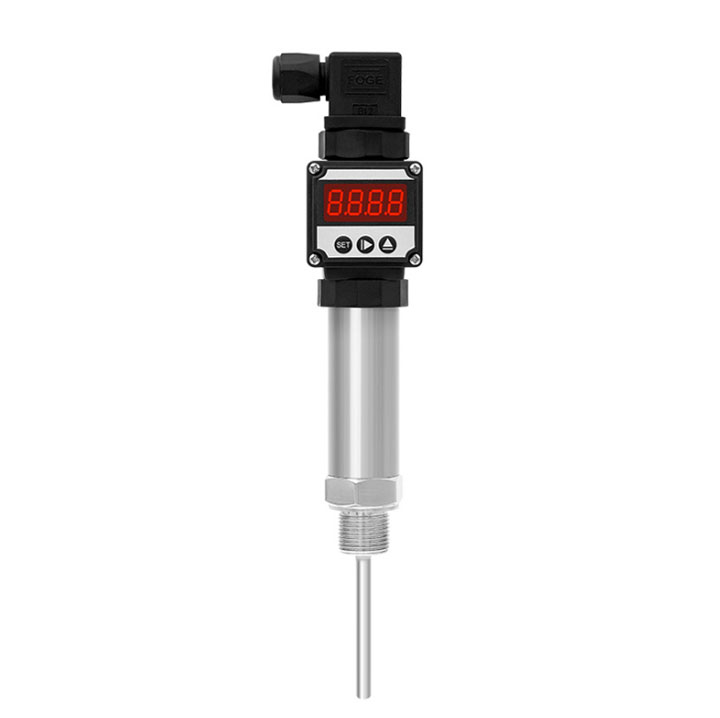
How to achieve digital and precise monitoring of pipeline temperature? The complete guide to industrial-grade RS485 pipeline temperature transmitters.
Your plant has hundreds of temperature measurement points spread across miles of pipelines. Every day, your team walks the same routes, manually recording temperatures from analog gauges. The data goes into a logbook. Nobody looks at it until something goes wrong. By then, it is too late.
This is not how modern industrial monitoring should work. You need real-time data. You need digital accuracy. You need a system that alerts you before a problem becomes a crisis.
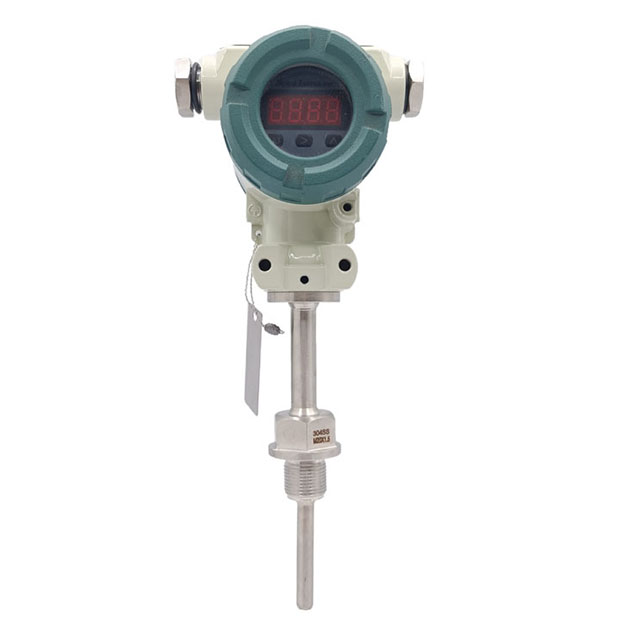
The solution lies in one device. It is an RS485 Temperature Transmitter that converts analog signals into digital data. It is designed specifically for Industrial pipeline temperature control applications. And it simplifies Digital temperature sensor installation with daisy-chain wiring and Modbus communication.
Let us answer the questions you are probably already asking.
What Is This Device and Why Do You Need It?
This is a single device that solves three critical challenges. It is an RS485 Temperature Transmitter that connects to your temperature sensor and converts the analog signal into digital RS485 communication. It is purpose-built for Industrial pipeline temperature control, where reliability and accuracy are essential. And it is designed to make Digital temperature sensor installation simple and cost-effective.
As an RS485 Temperature Transmitter, this device uses digital communication over a twisted-pair cable. Multiple RS485 Temperature Transmitter devices can share the same two wires. This means you can monitor hundreds of temperature points without running individual wires back to the control room.
For Industrial pipeline temperature control, this RS485 Temperature Transmitter is a game changer. You can monitor temperatures in real time on a computer screen. You can set alarms for high or low temperatures. You can log data for trend analysis and regulatory compliance. The RS485 Temperature Transmitter makes all of this possible.
When it comes to Digital temperature sensor installation, this device simplifies the process. Instead of pulling a separate cable for each sensor, you daisy-chain the RS485 Temperature Transmitter devices along your pipe rack. One cable carries both power and communication. Digital temperature sensor installation with this RS485 Temperature Transmitter takes less time and fewer materials than analog systems.
If you are asking "Why should I switch from analog to digital temperature measurement?" the answer is this RS485 Temperature Transmitter for Industrial pipeline temperature control with simplified Digital temperature sensor installation.
How Does This RS485 Temperature Transmitter Work with Pipeline Sensors?
This RS485 Temperature Transmitter connects directly to a temperature sensor mounted on your pipeline. The sensor could be an RTD, a thermocouple, or a thermistor. The RS485 Temperature Transmitter reads the sensor's resistance or voltage, calculates the temperature, and converts it into a digital value.
That digital value is then sent over the RS485 network using Modbus RTU, the universal language of industrial automation. Almost every PLC, DCS, and building management system supports Modbus RTU over RS485, making this RS485 Temperature Transmitter compatible with your existing equipment.
The beauty of RS485 is that it is a multi-drop network. You can connect up to 247 of these RS485 Temperature Transmitter devices on a single pair of wires. The devices are daisy-chained from one to the next. The master controller polls each RS485 Temperature Transmitter by its unique address and requests the temperature reading.
For Industrial pipeline temperature control, this means you can monitor an entire facility with a single communication cable running along your pipe racks. No more running individual wires from each sensor back to the control room. This RS485 Temperature Transmitter makes large-scale Industrial pipeline temperature control affordable and practical.
If you are asking "How do I connect multiple sensors to my control system without running thousands of feet of wire?" the answer is this RS485 Temperature Transmitter.
What Is Involved in Digital Temperature Sensor Installation with This Device?
Digital temperature sensor installation with this RS485 Temperature Transmitter is different from traditional analog installation. It requires some planning, but the effort pays off in reduced wiring and better data.
Here is what Digital temperature sensor installation looks like for this RS485 Temperature Transmitter.
First, you mount the temperature sensor on your pipeline. For most pipelines, a thermowell is welded or threaded into the pipe. The sensor screws into the thermowell. The RS485 Temperature Transmitter can be mounted directly on the sensor or in a nearby junction box.
Second, you run a single twisted-pair shielded cable along your pipe rack. This cable will carry both power and communication for all your RS485 Temperature Transmitter devices. This is a huge saving compared to analog systems where each sensor needs its own pair of wires.
Third, you daisy-chain each RS485 Temperature Transmitter to the next. The cable goes from the controller to the first transmitter, then from the first to the second, and so on. The last device in the chain may need a termination resistor to prevent signal reflections.
Fourth, you assign a unique address to each RS485 Temperature Transmitter using DIP switches on the device. The controller uses this address to request data from each specific transmitter.
Fifth, you configure your controller or software to read the Modbus registers from each RS485 Temperature Transmitter. The temperature value is stored in specific registers.
Digital temperature sensor installation for this RS485 Temperature Transmitter takes more planning upfront than analog wiring. But it is much simpler to expand later. Adding a new sensor? Just tap into the existing RS485 cable and assign a new address to another RS485 Temperature Transmitter.
If you are asking "What do I need to know before installing digital temperature sensors on my pipelines?" the answer is the basics of Digital temperature sensor installation for this RS485 Temperature Transmitter.
How Does This Improve Industrial Pipeline Temperature Control?
Industrial pipeline temperature control is about maintaining process temperatures within specified limits. Too hot, and your product may be damaged or safety systems may trip. Too cold, and viscosity may increase, or chemical reactions may slow.
Traditional analog monitoring gives you a snapshot of temperature at a single point in time. But unless someone is watching the gauge constantly, you will not know when a temperature excursion occurs.
This RS485 Temperature Transmitter changes this completely. Because the data is digital and sent to a central system, you can monitor temperatures in real time. You can set high and low alarms. You can log historical data and analyze trends. You can even integrate temperature data into your control loops.
For Industrial pipeline temperature control, this means fewer product quality issues. Fewer unplanned shutdowns. Better energy efficiency. And a complete record of temperature conditions for regulatory audits. The RS485 Temperature Transmitter is the backbone of modern Industrial pipeline temperature control.
If you are asking "How can I get better control over my pipeline temperatures without spending a fortune?" the answer is this RS485 Temperature Transmitter with its simple Digital temperature sensor installation.
What Temperature Sensor Should You Use with This RS485 Transmitter?
This RS485 Temperature Transmitter is compatible with most common temperature sensors. The choice depends on your application.
For most Industrial pipeline temperature control applications, a Pt100 RTD is the best choice. It offers excellent accuracy of ±0.3°C to ±0.15°C and very low drift over time. This RS485 Temperature Transmitter can be configured to read Pt100 sensors directly.
For higher temperatures up to 1260°C, a Type K thermocouple is a good choice. This RS485 Temperature Transmitter can also read thermocouple signals, including cold junction compensation.
For lower cost applications, a thermistor can be used. This RS485 Temperature Transmitter must be configured for the specific thermistor curve.
During Digital temperature sensor installation, you will select the sensor type and configure the RS485 Temperature Transmitter accordingly. Most units have DIP switches or software configuration for sensor type selection.
If you are asking "What type of temperature sensor should I use with my digital transmitter?" the answer is a Pt100 RTD for most Industrial pipeline temperature control applications, paired with this RS485 Temperature Transmitter.
How Accurate Is This RS485 Temperature Transmitter?
Accuracy comes from two sources: the sensor itself and the transmitter. This RS485 Temperature Transmitter adds very little error to the measurement.
A typical RS485 Temperature Transmitter has an accuracy of ±0.1°C for RTD inputs and ±0.5°C for thermocouple inputs. This is in addition to the sensor accuracy. For a Class A Pt100 sensor with ±0.15°C accuracy, the total system accuracy is about ±0.25°C.
That is excellent for Industrial pipeline temperature control. Most processes require accuracy of ±1°C to ±2°C. This RS485 Temperature Transmitter exceeds these requirements.
The digital nature of this RS485 Temperature Transmitter also means there is no signal degradation over long cable runs. The temperature value is sent as a digital number. It does not change whether the cable is 10 meters or 1000 meters long.
If you are asking "How accurate is digital temperature measurement compared to analog?" the answer is that this RS485 Temperature Transmitter with a good sensor is as accurate as any analog system, with the added benefit of no signal degradation over distance.
How Do You Set Up the Modbus Communication?
Modbus RTU over RS485 is the standard protocol for this RS485 Temperature Transmitter. Setting it up requires a few parameters.
First, you need to set the baud rate on your RS485 Temperature Transmitter. Common values are 9600, 19200, and 38400 baud. All devices on the same network must use the same baud rate.
Second, you need to set the data format. Standard Modbus RTU uses 8 data bits, 1 stop bit, and no parity (8-N-1). Your RS485 Temperature Transmitter can be configured accordingly.
Third, you need to assign a unique address to each RS485 Temperature Transmitter. Addresses can range from 1 to 247. No two devices on the same network can share an address.
Fourth, you need to know the Modbus register addresses where the temperature is stored. Your RS485 Temperature Transmitter manual provides these addresses.
Once these parameters are set, your controller can read the temperature by sending a Modbus request to the RS485 Temperature Transmitter address. The transmitter responds with the current temperature value.
If you are asking "How do I get my PLC to read temperatures from my sensors?" the answer is Modbus RTU over RS485 using this RS485 Temperature Transmitter.
What Are the Common Problems with Installation?
Even with the best equipment, Digital temperature sensor installation can have issues. Here are the most common problems and solutions for this RS485 Temperature Transmitter.
Problem 1: Communication errors or no communication. This is almost always a wiring or termination issue. Check that the A and B wires are connected correctly (A to A, B to B) for your RS485 Temperature Transmitter. Check that the shield is connected to ground at one end only. Check that the last device on the chain has a termination resistor.
Problem 2: Intermittent communication. This is usually caused by electrical noise. Make sure the RS485 cable is shielded and properly grounded. Keep the cable away from power cables.
Problem 3: Incorrect temperature readings. This is usually a sensor type configuration issue on the RS485 Temperature Transmitter. Check that the device is configured for the correct sensor type.
Problem 4: Address conflicts. If two RS485 Temperature Transmitter devices have the same address, the controller will get garbled data. Verify that each device has a unique address.
For Industrial pipeline temperature control, reliable communication is essential. Proper Digital temperature sensor installation practices prevent most problems with this RS485 Temperature Transmitter.
Technical Specifications
-
Product Type: RS485 Temperature Transmitter with Modbus RTU protocol
-
Application: Industrial pipeline temperature control
-
Installation: Digital temperature sensor installation daisy-chain topology
-
Input Types: Pt100 RTD, Type K/J/T thermocouple, thermistor
-
Temperature Range: -200°C to +1260°C depending on sensor
-
Transmitter Accuracy: ±0.1°C for RTD, ±0.5°C for thermocouple
-
Output: RS485 Modbus RTU
-
Communication Parameters: 9600/19200/38400 baud, 8-N-1 or 8-E-1
-
Number of Devices: Up to 247 on a single RS485 network
-
Cable Type: Twisted-pair shielded, 22-24 AWG
-
Maximum Cable Length: 1200 meters
-
Power Supply: 24V DC
-
Enclosure Rating: IP65 or IP67
Frequently Asked Questions
Q: What is this product? Does it have multiple purposes?
A: Yes. This single device is an RS485 Temperature Transmitter that converts analog signals to digital. It is designed for Industrial pipeline temperature control applications. And it simplifies Digital temperature sensor installation with daisy-chain wiring.
A: Yes. This single device is an RS485 Temperature Transmitter that converts analog signals to digital. It is designed for Industrial pipeline temperature control applications. And it simplifies Digital temperature sensor installation with daisy-chain wiring.
Q: Why use this RS485 Temperature Transmitter for Industrial pipeline temperature control?
A: This RS485 Temperature Transmitter allows you to monitor hundreds of temperature points on a single cable. For Industrial pipeline temperature control, this means real-time data, alarms, and trend analysis at a fraction of the wiring cost.
A: This RS485 Temperature Transmitter allows you to monitor hundreds of temperature points on a single cable. For Industrial pipeline temperature control, this means real-time data, alarms, and trend analysis at a fraction of the wiring cost.
Q: Is Digital temperature sensor installation difficult with this device?
A: Digital temperature sensor installation with this RS485 Temperature Transmitter requires more planning than analog wiring, but it is straightforward. The daisy-chain topology and Modbus protocol are industry standards that most technicians can learn quickly.
A: Digital temperature sensor installation with this RS485 Temperature Transmitter requires more planning than analog wiring, but it is straightforward. The daisy-chain topology and Modbus protocol are industry standards that most technicians can learn quickly.
Q: How many of these RS485 Temperature Transmitter devices can I put on one network?
A: Up to 247 devices, including the master controller. This makes Industrial pipeline temperature control possible across very large facilities.
A: Up to 247 devices, including the master controller. This makes Industrial pipeline temperature control possible across very large facilities.
Q: Do I need special training for Digital temperature sensor installation with this product?
A: Basic knowledge of RS485 wiring and Modbus protocol is helpful. The RS485 Temperature Transmitter manufacturer provides documentation and support.
A: Basic knowledge of RS485 wiring and Modbus protocol is helpful. The RS485 Temperature Transmitter manufacturer provides documentation and support.
Conclusion
Industrial pipeline temperature control does not have to rely on analog gauges and manual logging. This single device is your solution. It is an RS485 Temperature Transmitter that brings digital precision to your pipelines. It is designed specifically for Industrial pipeline temperature control applications. And it simplifies Digital temperature sensor installation with daisy-chain wiring and Modbus communication.
Stop walking the same routes with a clipboard. Stop finding out about temperature problems after the fact. Upgrade to digital temperature measurement with this RS485 Temperature Transmitter.
Contact Kunlun Zhongda today. Get expert advice on selecting this RS485 Temperature Transmitter for your Industrial pipeline temperature control needs. Ask about our Digital temperature sensor installation guides and support. Let us help you achieve digital and precise monitoring of your pipeline temperatures.
Technical Support Hotline: 400-601-0468
Download detailed technical specifications from our website
Download detailed technical specifications from our website
View more from YouTube.
How can industrial environmental monitoring achieve stable transmission and precise sensing? The 4-20mA duct-type temperature and humidity sensors reveal their core value.
A Complete Guide to Pipeline Temperature Measurement: How to Choose the Most Suitable Sheathed RTD for Water Systems
Related blog