A New Era of Precise Duct Monitoring: Why Industrial Users Prefer 3-Wire Duct Sensors?
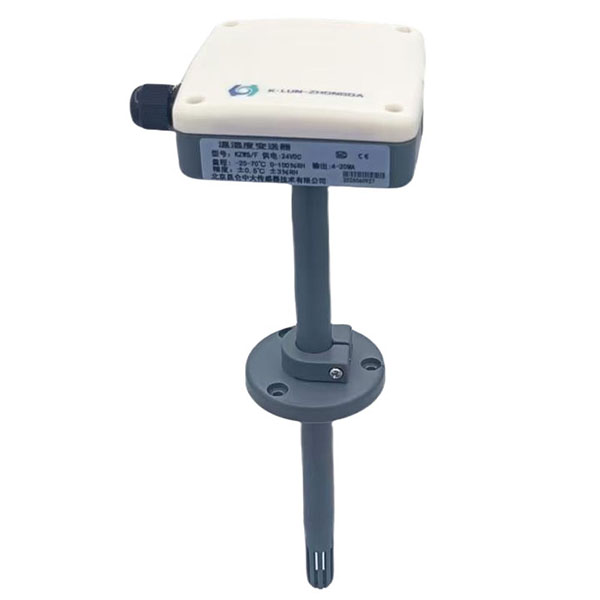
In industrial HVAC, cleanroom ventilation, data center air conditioning, and process air duct systems, accurate temperature and humidity data is the foundation of air quality control, energy efficiency, and production consistency. However, many facilities still struggle with measurement drift, unstable control, and frequent calibration issues.
The solution lies in choosing the right sensor architecture. Today, more industrial users are turning to Industrial grade duct humidity sensor technology combined with intelligent communication protocols. This article explores why 3-wire duct sensors are leading a new era of precise duct monitoring.
The Problem with Traditional Sensor Wiring
Traditional 2-wire loop-powered sensors share wires for both power and signal transmission. This results in limited power budgets and voltage fluctuations that directly interfere with high-sensitivity sensing elements.
Voltage-based signals like 0-10V are extremely susceptible to line length and electromagnetic interference from VFD fans, electric valves, and heating equipment.
As wiring distances exceed 30 meters, voltage signals can produce temperature fluctuations of ±0.5°C — completely unacceptable for pharmaceutical cleanrooms or data center precision cooling.
The 3-Wire Advantage: Precision Meets Stability
The 3-wire duct sensor architecture solves these problems through a three-line independent design: power positive, common ground (power negative), and signal output. This physical isolation eliminates circuit coupling interference and load voltage fluctuations.
Here's why industrial users prefer 3-wire duct sensor technology:
2-Wire / Voltage Signal
-
Power & signal separation: No
-
Long-distance stability (100m+): Poor
-
EMI resistance: Low
-
Temperature drift at extreme temps: Significant
-
Fault diagnosis (live-zero): No
3-Wire Current Signal
-
Power & signal separation: Yes
-
Long-distance stability (100m+): Excellent
-
EMI resistance: High
-
Temperature drift at extreme temps: Near zero
-
Fault diagnosis (live-zero): Yes
A true 3-wire duct sensor using 4-20mA current loop can achieve error-free transmission over hundreds of meters while resisting VFD harmonics and electromagnetic field fluctuations.
Digital Evolution: Modbus RTU Temperature Humidity Sensor
While analog 4-20mA 3-wire sensors offer excellent stability, the industry is rapidly adopting digital communication for even greater capabilities. The Modbus RTU temperature humidity sensor combines the physical robustness of 3-wire architecture with digital protocol intelligence.
A Modbus RTU temperature humidity sensor allows up to 247 sensors on a single RS485 bus, dramatically reducing wiring complexity and cost.
Each Modbus RTU temperature humidity sensor provides digital temperature and humidity values directly without analog conversion errors. The Modbus RTU temperature humidity sensor also supports remote configuration, allowing users to change addresses, baud rates, and even calibration offsets without physical access.
For large facilities with hundreds of monitoring points, the Modbus RTU temperature humidity sensor reduces installation time by over 60% compared to traditional analog sensors.
Industrial Grade Duct Humidity Sensor: Built for Harsh Environments
Not all duct sensors are created equal. A true Industrial grade duct humidity sensor must withstand extreme conditions: -20°C to +60°C operating range, condensation, dust, and vibration.
Key characteristics of a true Industrial grade duct humidity sensor include:
-
High-precision capacitive sensing element: Accuracy to ±1.5% RH
-
Integrated temperature compensation: Maintains accuracy across wide temperature swings
-
Rugged IP65 housing: Protects against moisture and particulate ingress
-
Optional probe coatings: For corrosive or high-velocity environments
When combined with 3-wire or Modbus RTU output, an Industrial grade duct humidity sensor delivers years of drift-free operation with minimal maintenance.
Why 3-Wire Duct Sensor is the Preferred Choice
After comparing field performance across hundreds of installations, the data is clear. The 3-wire duct sensor outperforms both 2-wire loop-powered and voltage-output devices in industrial settings.
Case Example One: A pharmaceutical cleanroom required temperature control within ±0.2°C and humidity within ±2% RH. Using 0-10V sensors with 45-meter cable runs, temperature readings fluctuated by ±0.5°C. After replacing with 3-wire duct sensor devices using 4-20mA output, temperature error stabilized at ±0.1°C with no further drift over 18 months.
Case Example Two: A data center with 120 air handling units needed centralized environmental monitoring. Deploying Modbus RTU temperature humidity sensor units on an RS485 bus reduced wiring from 480 individual cables to just two bus runs, saving over $15,000 in installation costs.
Integration with Building Automation Systems
Modern facilities require seamless integration with BMS, BAS, or PLC systems. The Industrial grade duct humidity sensor with 3-wire 4-20mA output provides universal compatibility with any analog input card. Meanwhile, the Modbus RTU temperature humidity sensor offers direct digital integration with SCADA systems, allowing real-time trending, alarming, and historical data logging.
For new installations or major retrofits, the 3-wire duct sensor with Modbus RTU represents the optimal balance of accuracy, stability, and cost-effectiveness.
Selection Guide: Choosing the Right Sensor
When evaluating duct sensors for your application, consider these criteria:
-
Selection Factor: Humidity accuracy
-
Recommended Specification: ±1.5% RH or better
-
Selection Factor: Temperature accuracy
-
Recommended Specification: ±0.2°C or better
-
Selection Factor: Output type
-
Recommended Specification: 4-20mA (3-wire) or Modbus RTU
-
Selection Factor: Operating range
-
Recommended Specification: -20°C to +60°C
-
Selection Factor: Protection rating
-
Recommended Specification: IP65 minimum
-
Selection Factor: Calibration interval
-
Recommended Specification: ≥12 months
For cleanrooms and laboratories, choose an Industrial grade duct humidity sensor with NIST-traceable calibration. For large facilities with distributed monitoring points, a Modbus RTU temperature humidity sensor network provides the best value. For any industrial application requiring long cable runs or operating near VFD equipment, a 3-wire duct sensor with 4-20mA output is the only reliable choice.
Conclusion
The era of unreliable voltage signals and unstable 2-wire sensors is ending. Industrial users are demanding better stability, higher accuracy, and lower lifecycle costs. The combination of Industrial grade duct humidity sensor construction, Modbus RTU temperature humidity sensor digital communication, and 3-wire duct sensor analog output provides a complete solution for any duct monitoring requirement.
Whether you're upgrading an existing HVAC system or designing a new cleanroom, choosing the right sensor architecture from the start will eliminate calibration headaches, reduce maintenance costs, and ensure consistent product quality.
Ready to upgrade your duct monitoring? Contact our technical team to discuss which sensor configuration best fits your application.
View more from YouTube.
A New Standard in Industrial Environmental Monitoring: How LCD Temperature and Humidity Transmitters Enhance Facility Management Efficiency
Simplify Your Facility Monitoring: How Modbus-RTU RS485 Bus Sensors Reduce Cost and Complexity
Related blog