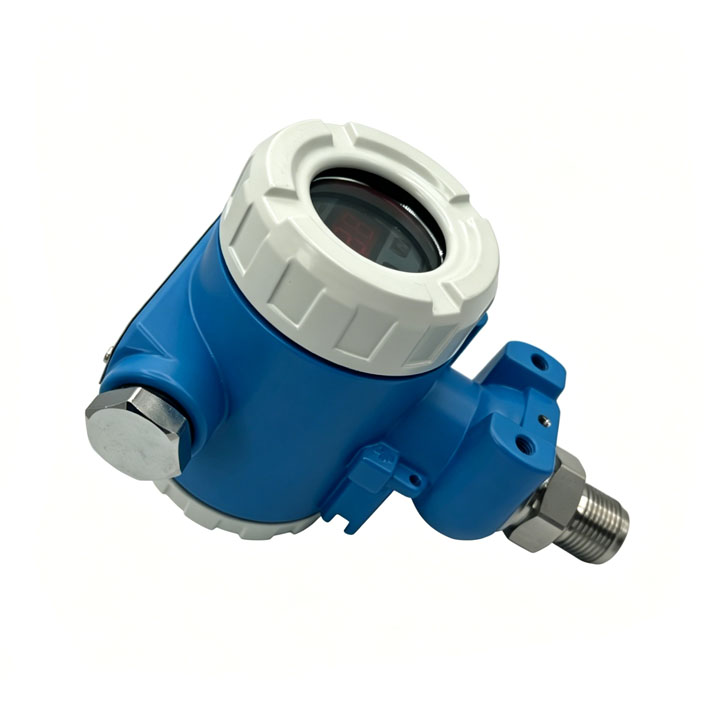
How can temperature and humidity monitoring in hazardous areas be both safe and accurate? The application practices of the CT6 intrinsically safe explosion-proof transmitter provide a complete guide.
I. The Dual Challenge of Hazardous Environment Monitoring
Any electrical equipment used in areas with flammable gases or dust must meet explosion-proof standards. The internationally recognized Ex d II CT6 explosion-proof rating means the device can operate safely in explosive environments containing Class II, IIC-level gases (hydrogen, acetylene, etc.), and T6 temperature group (surface temperature ≤85°C). Using ordinary civilian sensors in these areas is itself a major safety hazard.
The unique nature of hazardous environments demands highly reliable measurement data—temperature deviation in a reactor could cause side reactions to spiral out of control, while excessive humidity in a warehouse might trigger material degradation or even spontaneous combustion. However, the sealed design of explosion-proof housings and energy limitations of intrinsically safe circuits can theoretically affect sensor response time and signal transmission quality.
II. Technical Decryption of the CT6 Explosion-proof Transmitter
The CT6 Explosion-proof Transmitter achieves both safety and accuracy through three core technologies:
2.1 Flameproof Enclosure: The First Barrier to Safety
2.2 CT6 Temperature Class: Rigorous Thermal Management
2.3 Intrinsically Safe Circuit and Signal Isolation: Ensuring Accurate Transmission
III. Typical Application Scenarios and Practical Cases
3.1 Petrochemical Industry: Precision "Thermometer" for Reaction Processes
3.2 Pharmaceutical Manufacturing: Data Guardian for GMP Compliance
3.3 Coal Mines and Dust Environments: Reliable Operation Under Extreme Conditions
3.4 Hazardous Chemical Warehousing: Early Warning System for Preventive Maintenance
IV. Four Key Considerations for Selection and Deployment
4.1 Precise Matching of Explosion-proof Ratings
-
Zone 0 (continuous presence of hazardous gas): Requires Ex ia intrinsically safe equipment
-
Zone 1 (may appear during normal operation): Either Ex d flameproof or Ex ib intrinsically safe
-
Zone 2 (rarely appears): Ex nR increased safety may be acceptable, but CT6 rating is recommended for simplified management
4.2 Compatibility Planning for Signal Output
-
4-20mA analog: Suitable for direct connection to PLC and DCS, strong anti-interference capability
-
RS485/Modbus: Suitable for digital monitoring systems, allows networked multi-point data collection
-
Wireless transmission: Suitable for retrofit projects where cabling is difficult
4.3 Matching Range and Accuracy to Process Requirements
-
General warehouse monitoring: ±0.5°C, ±3%RH is sufficient
-
Clean rooms or reaction areas: Consider higher-accuracy models
-
Low-temperature cold storage: Verify that the sensor's minimum operating temperature meets your requirements
4.4 Practical Convenience of Installation and Maintenance
V. Conclusion
For engineers, choosing the right equipment is only the first step. What's more critical is designing a systematic solution based on actual process requirements, hazardous area classification, and control system architecture. Safety is never a small matter, and data is evidence—in hazardous environments, every accurate measurement is a serious commitment to protecting life and property.
How to build a solid safety line for hazardous area monitoring? An in-depth analysis of the Exd II C T6 Gb explosion-proof RS485 temperature and humidity sensor.
PT100 Wiring Configurations Explained: How to Choose Between 2-Wire, 3-Wire, or 4-Wire Temperature Sensors for Industrial Applications?