Why is the 3-wire current signal solution key to precise temperature and humidity control in ducts?

In industrial HVAC, cleanroom ventilation, data center air conditioning, and process air duct systems, stable and accurate temperature and humidity data is the cornerstone of air quality control, energy saving, and production consistency.
Most on-site measurement drift, unstable control, and frequent calibration problems do not stem from sensor element quality alone, but from unreasonable signal transmission wiring schemes. For mainstream industrial air duct detection equipment — the Duct Humidity Transmitter integrated with built-inIn-duct Humidity Probe and supporting Pipe Mounted Temperature Sensor synchronous acquisition — the 3-wire 4-20mA current signal architecture has become the industry standard solution for precise and long-term stable duct environment monitoring.
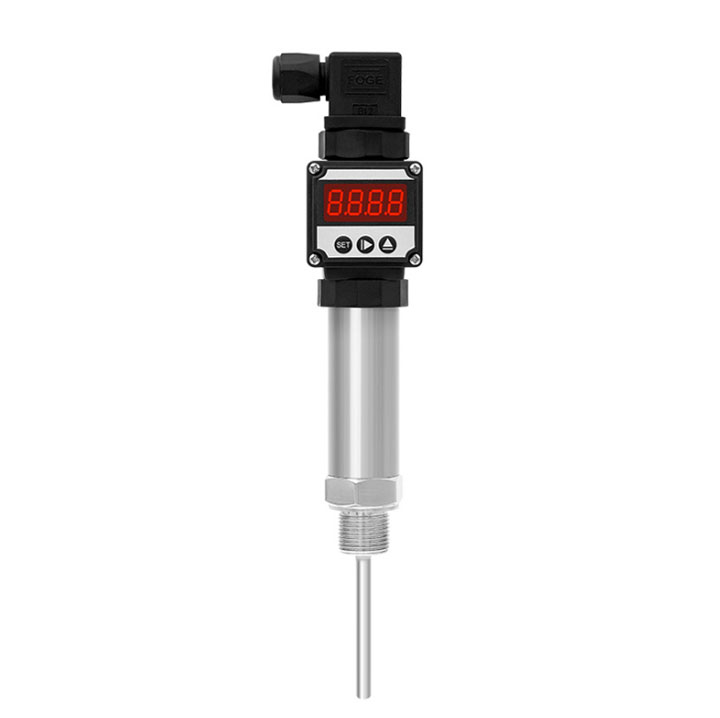
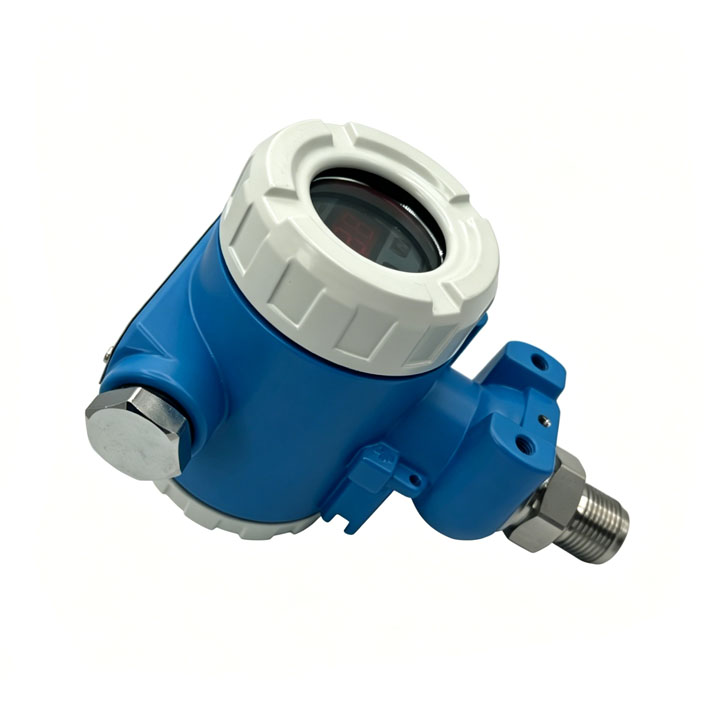
Different from split sensor devices, this all-in-oneDuct Humidity Transmitter adopts an integrated structural design: the built-in In-duct Humidity Probe extends into the duct airflow layer to capture real-time dynamic humidity data, while the matched Pipe Mounted Temperature Sensor realizes accurate thermal coupling with air duct pipelines to collect authentic ambient temperature values.
The three core components are integrated into one device, completing synchronous temperature and humidity sampling, signal processing, and output transmission. Among all hardware configurations of the transmitter, the 3-wire current signal output mode is the core guarantee to activate the maximum measurement performance of the probe and temperature sensing module.
The Defects of Traditional 2-Wire/4-Wire & Voltage Signal Schemes
Air duct sensor installation scenarios have typical industrial characteristics: long distance from on-site equipment to control cabinets and PLC terminals, complex electromagnetic interference environment caused by VFD fans, electric valves, and heating equipment, and severe cable voltage drop and line impedance interference. Traditional wiring and signal output modes cannot adapt to high-precision measurement demands, and restrict the performance of the built-in In-duct Humidity Probe and Pipe Mounted Temperature Sensor.
The 2-wire loop-powered 4-20mA scheme shares wires for power supply and signal transmission, resulting in limited power budget. The working voltage of the transmitter fluctuates with loop current changes, which directly interferes with the high-sensitivity capacitive sensing element of the In-duct Humidity Probe and the resistance calibration accuracy of the Pipe Mounted Temperature Sensor, causing obvious temperature and humidity measurement drift.
The 4-wire scheme separates power and signal circuits completely, which guarantees accuracy but greatly increases on-site wiring complexity, material costs, and equipment failure points, with poor engineering practicability. In addition, the common 0-10V voltage signal is extremely susceptible to line length and electromagnetic interference, unable to meet long-distance stable transmission requirements.
Working Principle & Core Advantages of 3-Wire Current Signal Solution
The 3-wire current signal configuration perfectly solves the pain points of traditional schemes, and is the optimal matching architecture for the integrated Duct Humidity Transmitter.
It adopts a three-line independent design of power positive, public ground (power negative), and signal output. The power supply circuit and signal conditioning circuit are physically isolated, eliminating circuit coupling interference and load voltage fluctuation impact, and fully releasing the sensing accuracy of the integrated In-duct Humidity Probe and Pipe Mounted Temperature Sensor.
For the integrated transmitter, the 3-wire system provides stable and independent 24V DC regulated power supply for the In-duct Humidity Probe. The probe’s high-precision humidity sensing element works in a constant voltage state for a long time, avoiding humidity reading errors caused by power ripple and current fluctuation.
Even in a high-wind-speed duct environment up to 15m/s, it can stably control the humidity measurement error within ±1.5% RH. Meanwhile, the Pipe Mounted Temperature Sensor (supporting Pt100/Pt1000 high-precision thermal resistance) completes line resistance elimination and digital calibration through the internal bridge circuit and high-precision ADC module, and converts accurate temperature resistance signals into standard 4-20mA current output via DAC. The public ground design realizes synchronous and crosstalk-free transmission of temperature and humidity dual signals.
Industrial-Grade Performance Advantages of 3-Wire 4-20mA Current Signal
Based on the 3-wire architecture, the integrated Duct Humidity Transmitter achieves three core industrial-grade capabilities that other schemes cannot match:
1. Ultra-strong anti-interference and long-distance stability: The 4-20mA current loop is not sensitive to wire resistance and common-mode noise, and can achieve error-free stable transmission over hundreds of meters. It effectively resists VFD harmonic interference and electromagnetic field fluctuation in industrial ducts, solving the problem of data jitter caused by long-distance wiring of voltage signals.
2. Zero drift under extreme temperature conditions: Adapt to the extreme working temperature range of -20°C to +60°C in ducts. Changes in cable impedance caused by temperature fluctuations will not affect the sampling accuracy of the In-duct Humidity Probe and Pipe Mounted Temperature Sensor, realizing long-term zero-drift measurement.
3. Reliable fault diagnosis capability: It has a standard live-zero design, with 4mA corresponding to the zero value of temperature and humidity. A current below 3.6mA can automatically trigger a wire break and equipment fault alarm, facilitating real-time system monitoring and rapid maintenance, which cannot be realized by voltage signal output.
Scenario Value: Why 3-Wire Is the Preferred Solution for High-Standard Duct Monitoring
In high-precision scenarios such as pharmaceutical and food cleanrooms, laboratory constant temperature and humidity systems, and data center precision air conditioning, tiny temperature and humidity errors will lead to unqualified air quality, increased energy consumption, or even production safety risks.
On-site comparison tests show that when the wiring distance exceeds 30 meters, the 0-10V voltage signal will produce a temperature fluctuation of ±0.5°C, while the 3-wire 4-20mA integrated Duct Humidity Transmitter can stabilize the temperature error within ±0.1°C and maintain long-term control accuracy of ±0.2°C temperature and ±2% RH humidity.
As an all-in-one detection device integratingIn-duct Humidity Probe airflow sampling and Pipe Mounted Temperature Sensor thermal coupling temperature measurement, it balances compact structure, convenient wiring, and ultra-high precision. The 3-wire current signal scheme eliminates the performance bottleneck of traditional wiring, enabling the equipment to maintain consistent and reliable measurement data in complex and harsh industrial environments.
Summary
2-wire schemes sacrifice measurement stability for cost reduction, while 4-wire schemes increase engineering costs and complexity. Only the 3-wire current signal solution achieves the perfect balance of precision, stability, and practicability.
For the integrated Duct Humidity Transmitter, it is not only a wiring mode, but also a core technical guarantee to give full play to the sensing performance of the built-in probe and temperature measurement module.
When selecting industrial duct temperature and humidity monitoring equipment, the true 3-wire 4-20mA output configuration is the key standard to distinguish civilian ordinary sensors from industrial high-precision transmitters, and is the preferred solution for long-term stable operation of HVAC automatic control systems.
Why Your Gym Needs Professional Temperature & Humidity Monitoring | Wall-Mount Solution
Beyond Numbers: How an Industrial LCD Temperature & Humidity Transmitter Safeguards Your Critical Environments
Related blog