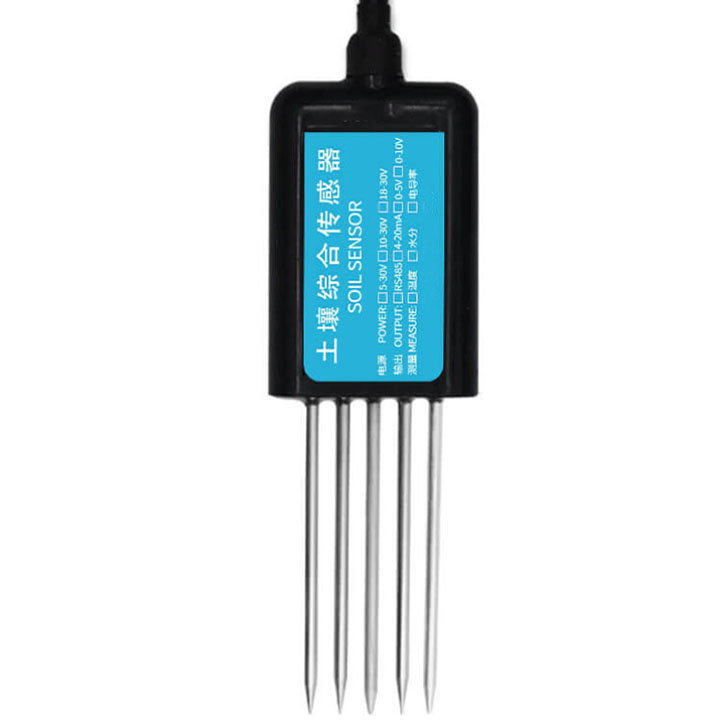
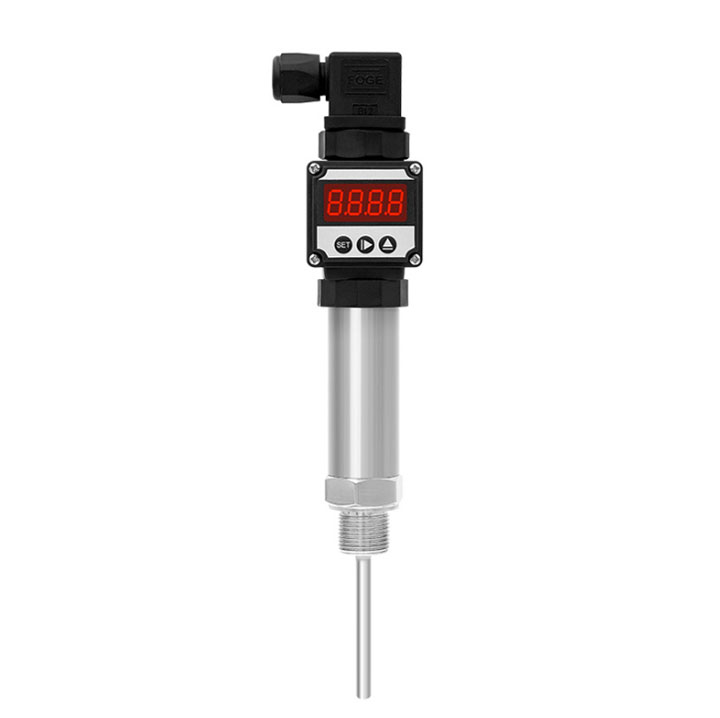
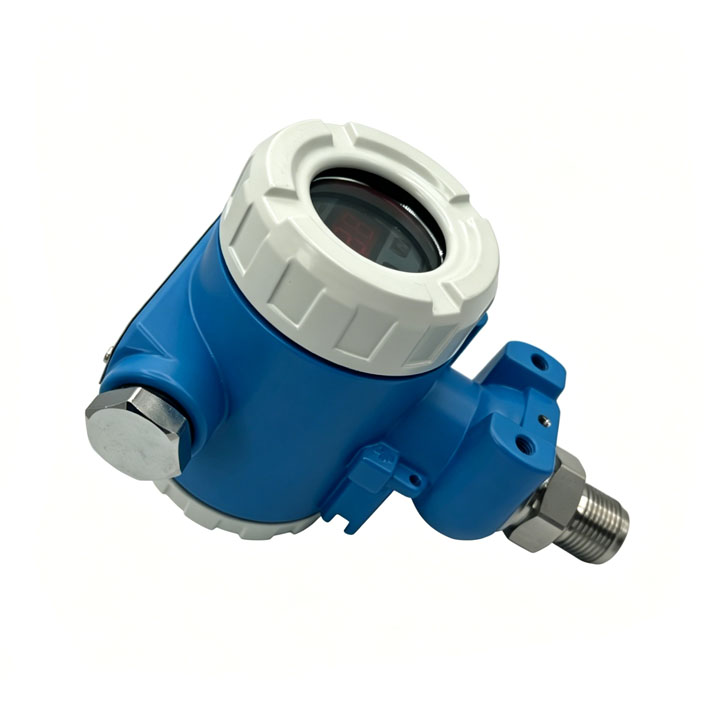
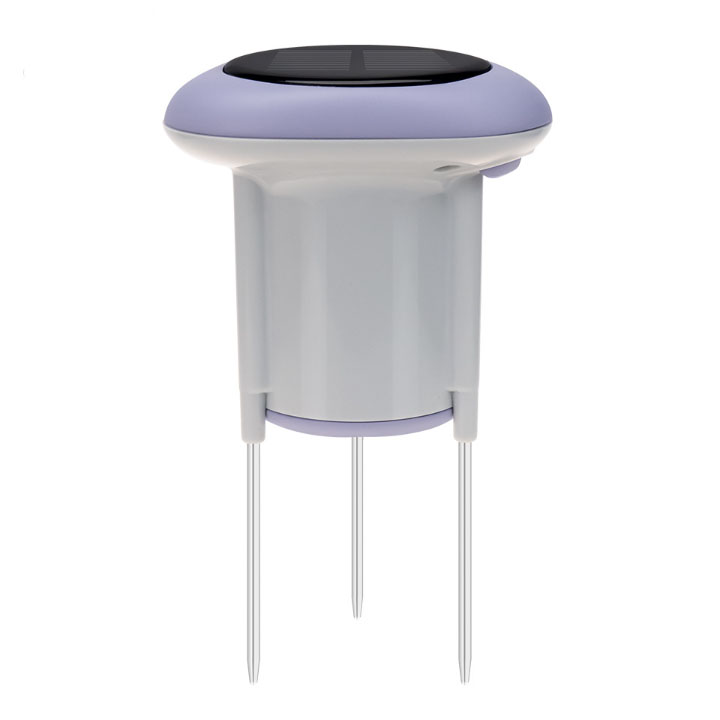
How can surface temperature measurement achieve both accuracy and convenience? The semiconductor simple aviation plug sensor reshapes the measurement experience with innovative design.
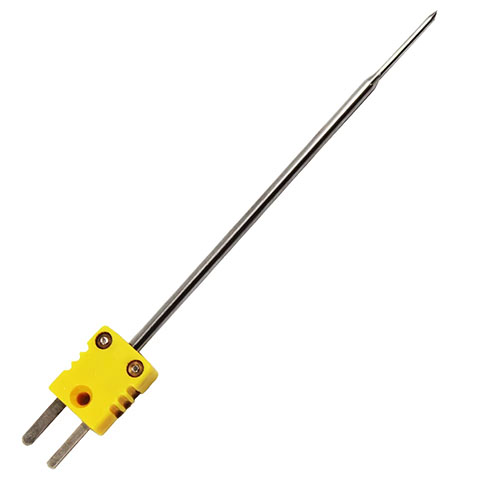
You have been struggling with surface temperature measurement for years. The thermocouple wires keep breaking at the connection point. The readout is erratic unless you hold the wires at exactly the right angle. Every time you move the sensor, the temperature jumps by several degrees. You are not sure if you can trust your data.
Sound familiar?
Surface temperature measurement has always been a compromise. High accuracy sensors are bulky and inconvenient. Convenient sensors are inaccurate and unreliable. But what if you could have both?
Let us answer the questions you are probably already asking.
Why Is Surface Temperature Measurement So Difficult?
Surface temperature measurement presents unique challenges that immersion or air temperature sensing do not.
First, the sensor must make good thermal contact with the surface. Any gap, no matter how small, introduces error. Second, the sensor itself can act as a heat sink, drawing heat away from the surface and giving a false reading. Third, the connection between the sensor and your measuring instrument is fragile. Standard thermocouple connectors are not designed for repeated mating and unmating. The tiny pins bend. The wires break at the strain relief point.
If you are asking "Why do my thermocouples keep failing at the connector?" the answer is simple. Standard connectors are not built for field use. They are designed for laboratory benchtops where they are plugged in once and left alone.
What Makes This Sensor Different?
This is a single device that combines three critical features. It is an Aviation Plug Temperature Sensor, a K-Type Thermocouple Sensor, and a Household Temperature Sensing Probe all in one. This integrated design attacks the accuracy and convenience problems from every angle.
As an Aviation Plug Temperature Sensor, this device uses a circular aviation connector originally designed for aerospace and military applications.
It is built to survive vibration, moisture, and repeated use. Unlike standard thermocouple connectors, the aviation plug has robust pins that do not bend. The coupling nut locks the connection securely so it cannot vibrate loose. You can plug and unplug this Aviation Plug Temperature Sensor hundreds of times without damaging the connection. The cable is strain relieved at both ends, so pulling on the cable does not break the internal wires.
As a K-Type Thermocouple Sensor, this device uses the most common and versatile thermocouple type. This K-Type Thermocouple Sensor uses Chromel and Alumel wires, covering a wide range from -200°C to +1260°C. It is accurate, affordable, and readily available. The K-Type Thermocouple Sensor element provides inherent accuracy of ±0.75% or ±2.2°C, whichever is greater. For higher accuracy, special limits of error versions are available at ±0.4% or ±1.1°C.
As a Household Temperature Sensing Probe, this device is optimized for everyday use around the home. This Household Temperature Sensing Probe has a longer, more flexible cable, typically 2 to 5 meters, allowing you to reach ovens, grills, engines, or pipes that are far from your meter. The Household Temperature Sensing Probe tip is available in different shapes: flat for surfaces, pointed for penetration, or magnetic for attaching to ferrous metal surfaces.
So if you are asking "Is there one sensor that solves all my surface measurement problems?" the answer is yes. This Aviation Plug Temperature Sensor with K-Type Thermocouple Sensor element and Household Temperature Sensing Probe design is built for exactly your application.
How Does This Sensor Achieve Accuracy?
Accuracy comes from three factors: the thermocouple itself, the thermal contact, and the connection integrity.
The K-Type Thermocouple Sensor element provides the fundamental accuracy. This K-Type Thermocouple Sensor is manufactured to industry standards, ensuring that your readings are consistent with other K-Type instruments.
The thermal contact is achieved through the Household Temperature Sensing Probe design. This Household Temperature Sensing Probe uses a flat, spring loaded tip. The spring maintains constant pressure against the surface. This eliminates air gaps and ensures consistent thermal contact even on uneven surfaces.
The connection integrity comes from the Aviation Plug Temperature Sensor design. A loose connection adds resistance, which adds error. The Aviation Plug Temperature Sensor locks securely, ensuring that the electrical connection remains stable over time.
If you are asking "How accurate is accurate enough for my application?" the answer depends on what you are measuring. For HVAC troubleshooting, ±2°C is fine. For process control, you may need ±0.5°C. This Aviation Plug Temperature Sensor with K-Type Thermocouple Sensor element and Household Temperature Sensing Probe configuration can meet both requirements.
How Do I Get Good Thermal Contact on Curved or Uneven Surfaces?
This is one of the most common questions. Flat probes work well on flat surfaces but poorly on pipes or rounded objects.
The Household Temperature Sensing Probe feature of this device solves this problem. The Household Temperature Sensing Probe tip is available in multiple shapes. For pipes, choose a curved or V shaped probe tip. For uneven surfaces like engine blocks, use the spring loaded version that conforms to the surface.
Some versions of this Aviation Plug Temperature Sensor come with interchangeable tips. You can swap between flat, curved, and pointed tips without changing the entire sensor. This versatility is a major advantage over fixed tip sensors.
If you are asking "How do I measure temperature on a curved pipe accurately?" the answer is to use the curved tip option of this Household Temperature Sensing Probe. A standard flat probe will only contact the pipe along a thin line, giving an inaccurate reading.
What About Response Time? How Fast Does This Sensor React?
Response time is critical for many applications. If you are measuring a rapidly changing temperature, a slow sensor will miss the peaks and valleys.
A bare K-Type Thermocouple Sensor junction responds in milliseconds. But a bare junction is fragile and easily damaged. Once you add a protective sheath, response time increases.
For surface measurement, this Household Temperature Sensing Probe typically has a response time of 1 to 3 seconds. This is fast enough for most applications. For faster response, choose a thinner probe tip. For slower but more durable, choose a thicker tip.
If you are asking "Is this sensor fast enough to measure my frying pan temperature as it heats up?" the answer is yes. One to three seconds is plenty fast for cooking applications. The K-Type Thermocouple Sensor inside responds quickly, and the Aviation Plug Temperature Sensor connection adds no delay.
Can I Use This Sensor with My Existing Thermocouple Meter?
Compatibility is a common concern. This Aviation Plug Temperature Sensor uses a standard miniature thermocouple connector on the meter end. This is the same two pin flat connector used by most handheld thermocouple meters.
The aviation plug is on the sensor end, not the meter end. The meter end remains a standard thermocouple connector. This means you can plug this Aviation Plug Temperature Sensor into any standard K-Type thermocouple meter.
If you are asking "Will this sensor work with my Fluke meter?" the answer is almost certainly yes. As long as your meter accepts a standard miniature K-Type thermocouple plug, this Aviation Plug Temperature Sensor with K-Type Thermocouple Sensor element will work perfectly.
What Are the Common Applications for This Sensor?
This Aviation Plug Temperature Sensor with K-Type Thermocouple Sensor element and Household Temperature Sensing Probe design is perfect for:
-
Home cooking: Measuring pan temperature for perfect searing. The Household Temperature Sensing Probe feature makes it easy to use in the kitchen.
-
HVAC service: Checking pipe temperatures and superheat readings. The Aviation Plug Temperature Sensor connector survives repeated use in the field.
-
Automotive diagnosis: Measuring engine block and exhaust temperatures. The K-Type Thermocouple Sensor handles the high heat.
-
Wood stoves: Monitoring surface temperature for safety and efficiency. The Household Temperature Sensing Probe cable is long enough to reach.
-
Laboratory: General surface temperature measurement. The K-Type Thermocouple Sensor provides the accuracy you need.
-
Industrial maintenance: Bearing and motor housing temperature checks. The Aviation Plug Temperature Sensor connection stays secure.
-
Food service: Griddle and flat top temperature verification. The Household Temperature Sensing Probe tip is easy to clean.
What Are the Common Failure Modes This Sensor Solves?
Understanding how standard probes fail helps you appreciate why this design is better.
Failure mode 1: Wire break at the connector. Standard thermocouple connectors have poor strain relief. The wires flex at the point where they enter the connector pin. After enough flexing, the wire work hardens and breaks. This Aviation Plug Temperature Sensor solves this with robust strain relief and a cable that is molded into the connector.
Failure mode 2: Loose connection. Standard connectors do not lock. Vibration or cable movement can cause the connector to partially unplug. This adds resistance and throws off the reading. The Aviation Plug Temperature Sensor locks with a coupling nut. It cannot vibrate loose.
Failure mode 3: Damaged junction. The thermocouple junction is delicate. Bending or dropping the probe can damage the junction. This Household Temperature Sensing Probe version uses a reinforced junction that is more durable than standard probes.
Failure mode 4: Wrong thermocouple type. Some applications need extended range. This K-Type Thermocouple Sensor covers from -200°C to +1260°C, suitable for almost any surface measurement task.
If you are asking "Why do my surface probes keep breaking?" the answer is that you are using connectors and probes not designed for your use case. This Aviation Plug Temperature Sensor with K-Type Thermocouple Sensor element and Household Temperature Sensing Probe construction is designed for real world abuse.
Technical Specifications
-
Sensor Type: K-Type thermocouple (Chromel vs Alumel) – a true K-Type Thermocouple Sensor
-
Connector Type: Aviation plug on probe end – the Aviation Plug Temperature Sensor feature
-
Meter End Connector: Standard miniature thermocouple plug (two flat pins)
-
Probe Design: Spring loaded flat tip – the Household Temperature Sensing Probe feature
-
Temperature Range: -50°C to +400°C for standard probe, up to +800°C for high temp version
-
Accuracy: ±0.75% or ±2.2°C standard, ±0.4% or ±1.1°C special limits
-
Response Time: τ63 < 2 seconds for surface measurement
-
Probe Tip Options: Flat, curved, pointed, magnetic, spring loaded
-
Cable Length: 1m, 2m, 3m, 5m, or custom
-
Cable Material: Fiberglass insulated, rated to 200°C or 400°C
-
Connector Durability: Rated for 500+ mating cycles
-
Strain Relief: Molded at both ends
-
Sealing: Moisture resistant when mated
Frequently Asked Questions
Q: Can I use this sensor to measure liquid temperature?
A: No. This Household Temperature Sensing Probe is designed for surface measurement. For liquids, use an immersion probe. The surface probe is not sealed for submersion.
A: No. This Household Temperature Sensing Probe is designed for surface measurement. For liquids, use an immersion probe. The surface probe is not sealed for submersion.
Q: How do I clean the probe tip?
A: Wipe with a damp cloth when cool. Do not immerse the Household Temperature Sensing Probe or the Aviation Plug Temperature Sensor connector in liquid. Do not use abrasive cleaners on the K-Type junction.
A: Wipe with a damp cloth when cool. Do not immerse the Household Temperature Sensing Probe or the Aviation Plug Temperature Sensor connector in liquid. Do not use abrasive cleaners on the K-Type junction.
Q: Can I extend the cable length?
A: Yes, but use thermocouple extension wire of the same K-Type. Standard copper wire will introduce error. Splices should be made with proper connectors. The Aviation Plug Temperature Sensor makes it easy to connect extension cables.
A: Yes, but use thermocouple extension wire of the same K-Type. Standard copper wire will introduce error. Splices should be made with proper connectors. The Aviation Plug Temperature Sensor makes it easy to connect extension cables.
Q: What happens if I reverse the polarity?
A: The reading will be incorrect, typically reading low or negative. If you get strange readings, check that the red wire is connected to the negative terminal. This applies to any K-Type Thermocouple Sensor.
A: The reading will be incorrect, typically reading low or negative. If you get strange readings, check that the red wire is connected to the negative terminal. This applies to any K-Type Thermocouple Sensor.
Q: Is this sensor compatible with my specific meter?
A: Almost certainly. If your meter accepts a standard miniature K-Type thermocouple plug (two flat pins, one wider than the other), this Aviation Plug Temperature Sensor with K-Type Thermocouple Sensor will work.
A: Almost certainly. If your meter accepts a standard miniature K-Type thermocouple plug (two flat pins, one wider than the other), this Aviation Plug Temperature Sensor with K-Type Thermocouple Sensor will work.
Q: Can I use this sensor for high temperature applications above 400°C?
A: Yes. A high temperature version of this Aviation Plug Temperature Sensor is available with Inconel sheath and ceramic fiber cable rated to 800°C. The K-Type Thermocouple Sensor element handles these temperatures easily.
A: Yes. A high temperature version of this Aviation Plug Temperature Sensor is available with Inconel sheath and ceramic fiber cable rated to 800°C. The K-Type Thermocouple Sensor element handles these temperatures easily.
Q: Is this really a household probe? Can I use it in my kitchen?
A: Yes. The Household Temperature Sensing Probe version is designed for kitchen use. The cable is flexible, the probe tip is easy to clean, and the Aviation Plug Temperature Sensor connector is easy to grip with wet or greasy hands.
A: Yes. The Household Temperature Sensing Probe version is designed for kitchen use. The cable is flexible, the probe tip is easy to clean, and the Aviation Plug Temperature Sensor connector is easy to grip with wet or greasy hands.
Conclusion
Surface temperature measurement no longer requires a compromise between accuracy and convenience. This single device is an Aviation Plug Temperature Sensor that solves connection reliability problems. It is a K-Type Thermocouple Sensor that provides the accuracy and range you need. It is a Household Temperature Sensing Probe that makes it practical for everyday use around the home, shop, or plant.
Stop fighting with broken connectors and unreliable readings. Stop wondering if your data is accurate. Choose this integrated solution designed for the real world.
Contact Kunlun Zhongda today. Get expert advice on selecting the right configuration of this Aviation Plug Temperature Sensor, K-Type Thermocouple Sensor, and Household Temperature Sensing Probe integrated solution for your application. Let us help you achieve both accuracy and convenience in your surface temperature measurements.
View more from YouTube.
Is Vibration Killing Your Temperature Readings? Discover the Armored Solution
Seeking the ultimate solution to industrial temperature measurement challenges? The threaded fixed-lead thermocouple sensor guide provides a comprehensive analysis for you.
Related blog