
Application of Pipeline Temperature Sensors in Semiconductor High-Temperature Furnaces
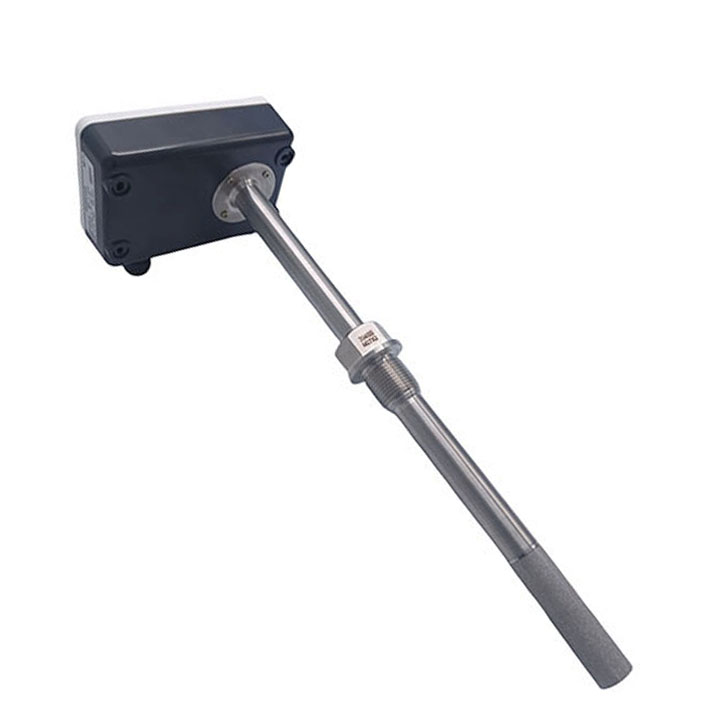
Semiconductor high-temperature furnaces are critical equipment for core thermal processing procedures such as wafer oxidation, diffusion and annealing. The process pipelines connected to the furnace deliver high-purity process gases. Pipeline temperature sensors are core components to stabilize gas circuit conditions, guarantee process consistency and ensure production safety.
Semiconductor high-temperature furnaces, including vertical or horizontal oxidation furnaces, diffusion furnaces, and annealing furnaces, which are core thermal processing equipment for wafer front-end manufacturing. They perform critical processes such as oxidation, dopant diffusion, thin-film deposition, post-ion implantation annealing and alloying, with process temperatures ranging from 600℃ to 1200℃. Extremely strict requirements are imposed on gas purity, temperature stability and batch consistency.
The supporting process pipelines consist of main inlet lines, branch lines, heat tracing pipelines, flanges, valve manifolds, exhaust pipelines and vacuum lines. They deliver high-purity special gases including O₂, N₂, silane, borane, phosphine and hydrogen chloride. Uncontrolled pipeline temperature easily causes gas condensation, precursor precipitation, particle contamination, pipeline corrosion and process drift, which directly lead to wafer yield loss. Pipeline temperature sensors are core sensing components for closed-loop heat tracing control, process monitoring, safety interlock and equipment health management. Different from thermocouples inside the furnace cavity, they focus on the temperature of pipe wall and flowing media, stabilizing working conditions of gas from gas cabinet to furnace chamber and exhaust treatment unit.
What is Advantage of Pipeline Temperature Sensors in Semiconductor High-Temperature Furnaces?
1. Constant Temperature Control of Process Gas
The gas temperature inside the inlet, outlet and purge pipelines of the high-temperature furnace directly affects the reaction rate on the wafer surface and thin-film uniformity. Pipeline temperature sensors collect the temperature of the pipe wall or internal gas in real time, and realize closed-loop temperature control together with the heat tracing system. They prevent condensation and precipitation of high-purity gas so as to avoid wafer contamination.
2. Thermal Balance Monitoring of Furnace Zones
Pipeline temperature sensors installed at furnace openings, flanges and exhaust pipelines continuously monitor thermal distribution of pipelines. They help judge whether the temperature field inside the furnace chamber is uniform, detect local overheating and temperature deviation in time, and ensure consistent process parameters for batches of wafers.
3. Safety Interlock Protection
In case of over-temperature or heat tracing failure of pipelines, the pipeline temperature sensors send alarm signals to trigger gas cut-off and equipment shutdown interlock. This avoids leakage, combustion and explosion risks of flammable and corrosive special gases, complying with safety standards for semiconductor cleanrooms.
4. Equipment Fault Prediction and Maintenance
Long-term continuous temperature data can be used to analyze aging, blockage and abnormal heat exchange of heat tracing pipelines. Pipeline temperature sensor supports early fault warning, reduces unplanned downtime and improves the uptime of high-temperature furnaces.
How to select the pipeline temperature sensors in semiconductor high-temperature furnaces?
Thermocouples temperature sensors are widely used for high-temperature measurement due to their wide temperature range and fast response. Type K is suitable for general-purpose measurement up to about 1100°C; Type S/R is preferred for diffusion, oxidation, and high-temperature annealing up to 1500–1600°C; Type B is used in extreme high-temperature applications. RTDs such as Pt100 and Pt1000 temperature sensors provide higher accuracy and stability in low- and medium-temperature sections, including gas preheating, cooling water, and environmental monitoring. In Rapid Thermal Processing (RTP) , sapphire light pipe radiation thermometers or ripple pyrometers enable non-contact wafer surface temperature measurement; in silicon carbide (SiC) single crystal growth furnaces (PVT method), infrared pyrometers paired with temperature controllers achieve closed-loop control at 2200°C, with temperature fluctuations maintained within ±0.5°C.
How to install the pipeline temperature sensors in semiconductor high-temperature furnaces?
The pipeline temperature sensor consists of a sensing element, a thermowell, signal conditioning circuitry, and an output interface. In furnace tube equipment, thermocouples temperature sensors are inserted into quartz or ceramic thermowells to isolate them from the process atmosphere, preventing corrosion and contamination without compromising measurement accuracy. Vertical furnaces typically adopt a multi-zone design, with each zone equipped with an independent temperature sensor and an over heat temperature sensor reflect the true heater temperature and triggering an alarm and circuit shutdown upon exceeding limits.
Summary
Semiconductor high-temperature furnace environments feature high temperature, high purity and strict cleanliness. The pipeline temperature sensors are made of high-clean, low-outgassing materials with sealing structures suitable for high-purity media. The pipeline temperature sensors adopt anti-corrosion, high-temperature resistant and low-particle materials, which adapt to ultra-clean workshop, high-temperature furnaces and semiconductor special gas working conditions.
The pipeline temperature sensors can provide precise pipeline temperature control to ensure uniform film thickness, consistent diffusion depth and stable surface quality of semiconductor wafers. It effectively reduces process defects such as color difference, uneven doping and warpage, and improves product yield and process repeatability.
The pipeline temperature sensors can provide real-time temperature feedback which forms closed-loop automatic control, realizes overtemperature alarm, temperature deviation correction and equipment interlock protection, ensures long-term stable and safe operation of high-temperature furnace equipment.
The installation and application of pipeline temperature sensors realize full-range temperature monitoring of high-temperature furnace gas pipelines, form closed-loop intelligent temperature control, reduce process fluctuation and equipment failure rate, ensure high uniformity and high consistency of wafer thermal processing, and support high-precision, high-stability and mass production of semiconductor wafers.
Application of High-Temperature Pressure Transmitters in Pharmaceutical Lyophilizers
Related Article