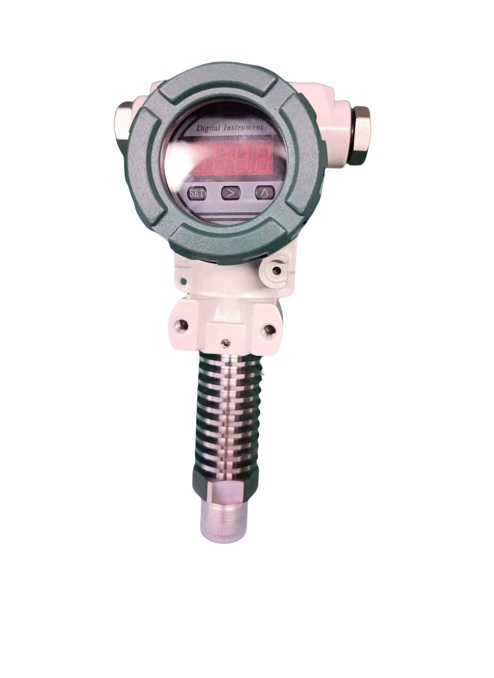
Application of High‑Temperature Pressure Transmitters in Pharmaceutical Hot Water Systems
Pharmaceutical production has extremely strict requirements for process parameters, medium quality and equipment safety. Hot water systems are widely used in pharmaceutical workshops, including heating hot water for process heat preservation, sanitary circulating hot water, hot water for CIP (Clean‑in‑Place) cleaning, and auxiliary heat‑exchange hot water for production equipment. Due to the characteristics of high medium temperature, continuous operation, sanitary pipeline design and strict GMP compliance requirements, ordinary pressure measuring instruments cannot adapt to such complex working conditions. High‑temperature pressure transmitters have become indispensable front‑end sensing devices for pressure monitoring and automatic control in pharmaceutical hot water systems.
Why Pharmaceutical Hot Water Systems Need High-Temperature Pressure Transmitters?
High-temperature pressure transmitters reduce thermal impact on core sensing elements through high-temperature diaphragms, heat-dissipation structures, temperature compensation, hygienic wetted designs, or remote diaphragm seal installation, while also meeting pharmaceutical requirements for hygiene, cleanability, and data reliability.
1. Application of High‑Temperature Pressure Transmitters in Sanitary Circulating Hot Water Systems
Sanitary circulating hot water pipelines in pharmaceutical plants must maintain continuous circulation to avoid stagnant water dead zones, which effectively suppress microbial reproduction and biofilm formation inside pipelines, meeting GMP and related pharmaceutical regulatory requirements.
- Installation locations: main circulation pipes, branch pipes, heat‑exchange station outlets and return pipes of sanitary hot‑water loops.
- Monitoring objectives: real‑time pressure of circulating hot water in closed sanitary pipelines.
- Control logic: The high‑temperature pressure transmitter collects pressure signals and transmits data to the pharmaceutical factory’s DCS or PLC control system. The control system judges the circulation state of the pipeline according to pressure changes.
- Determine whether the circulating pump operates normally. Abnormal pressure can reflect pump aging, impeller damage or insufficient output.
- Detect pipeline blockage. If the pipeline is fouled or blocked, the pressure difference between the inlet and outlet will change obviously, which provides basis for maintenance and pipeline cleaning.
- Maintain stable circulation driving force to prevent dead water sections, reduce microbial contamination risks and guarantee the sanitary performance of the whole loop.
2. Application of High‑Temperature Pressure Transmitters in CIP On‑line Cleaning Hot Water Systems
CIP cleaning is a standard cleaning process for pharmaceutical production equipment such as fermentation tanks, preparation tanks and pipeline systems. Hot water is one of the commonly used cleaning media. Stable pressure is the prerequisite to ensure the cleaning effect.
- Working characteristics: CIP cleaning requires hot water to scour the inner wall of tanks and pipelines at a set flow rate and pressure. Insufficient pressure leads to weak flushing capacity and incomplete cleaning; excessive pressure may cause impact damage to sanitary pipelines, gaskets and valves.
- Application function: High‑temperature pressure transmitters are installed on the hot‑water supply pipeline of the CIP station to monitor the cleaning pressure in real time. Combined with regulating valves, closed‑loop pressure control is realized to keep the cleaning pressure within the process specified range.
- Application value: Guarantee consistent CIP cleaning effect, avoid unqualified cleaning verification results caused by unstable pressure, and support the enterprise’s cleaning validation documentation audit required by pharmaceutical regulatory authorities.
3. Application of High‑Temperature Pressure Transmitters in Process Heat‑preservation and Auxiliary Heat‑exchange Hot Water Systems
Many pharmaceutical production processes need constant‑temperature conditions. Hot water is used as heat‑transfer medium for jacket heating, pipeline heat preservation and heat exchange of reaction equipment.
- Monitoring demand: The heat‑exchange hot‑water system runs continuously. Pressure fluctuation will affect the flow rate of hot water, further changing the heat‑transfer efficiency and temperature stability of the production equipment.
- Application function: Pressure data from high‑temperature pressure transmitters is uploaded to the process control platform. When pressure deviates from the allowable range, the system triggers an alarm, reminding operators to check circulating pumps, filters and valves.
- Application value: Stabilize heat‑exchange efficiency, avoid temperature fluctuation of production process caused by abnormal hot‑water pressure, ensure batch‑to‑batch consistency of pharmaceutical products and reduce product scrap risk.
What is Application Advantages of High‑Temperature Pressure Transmitters for Pharmaceutical Scenarios?
- High‑temperature resistance: Adapt to long‑term hot‑water medium, effectively prevent zero drift and measurement error caused by heat conduction, and provide stable and reliable pressure measurement data for 24‑hour continuous production of pharmaceutical workshops.
- Signal compatibility: Support standard 4‑20mA analog output and Modbus digital communication, which can be seamlessly connected with DCS, PLC and pharmaceutical SCADA systems to realize data recording, traceability and report generation, convenient for GMP audit and data traceability.
- Field adaptability: Compact structure, convenient installation. Many models have good vibration resistance and electromagnetic interference resistance, suitable for installation near circulating pumps, heat exchangers and other vibration sources in pharmaceutical workshops.
- Safety alarm and interlock: Cooperate with the control system to set pressure upper and lower limit protection. When overpressure or underpressure occurs, sound‑light alarm or equipment interlock protection can be activated to reduce production safety risks.
Summary
High-temperature pressure transmitters are mainly used for pressure monitoring and control in pharmaceutical purified water, water for injection, hot water circulation, CIP or SIP systems, hot water disinfection lines, sterilization equipment, and heating exchange systems. Compared with standard pressure transmitters, high-temperature models can maintain stable pressure signal output under elevated media temperatures and frequent temperature changes, making them suitable for pharmaceutical hot water networks, circulation pumps, heat exchangers, storage tanks, distribution systems, and sterilization process sections.
In pharmaceutical hot water systems, high‑temperature pressure transmitters undertake pressure monitoring, process closed‑loop control, fault early warning and data traceability functions. They help pharmaceutical enterprises meet GMP management specifications, stabilize production process parameters, ensure product quality and improve the safety and reliability of production systems. With the continuous upgrading of pharmaceutical intelligent factories, high‑temperature pressure transmitters will be more widely used in various pharmaceutical hot‑water process loops.
Application of High-Temperature Pressure Transmitters in Pharmaceutical Reactors and Bioreactors
Related Article