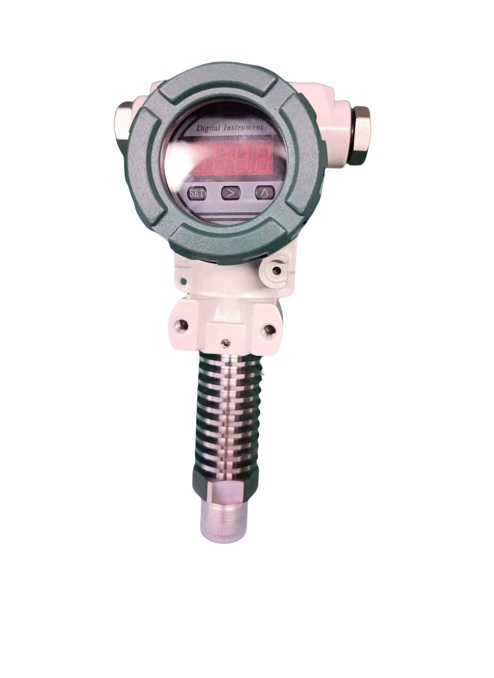
Application of High-Temperature Pressure Transmitters in Pharmaceutical Lyophilizers
What is The Pharmaceutical Freeze-Drying Process?
Pharmaceutical lyophilization is a core low-temperature drying technology widely used in biopharmaceuticals, injections, powder injections, biological agents, probiotics and high-value pharmaceutical products. The entire process is divided into three key stages: pre-freezing, primary drying (sublimation drying), and secondary drying (desorption drying). Under high-vacuum environment, the moisture inside the medicinal materials is directly sublimated from solid ice into gas, so as to achieve low-temperature dehydration, retain drug activity, avoid thermal degradation, and extend product shelf life.
Throughout the whole lyophilization cycle, the vacuum degree and cavity pressure are the most critical process parameters. Slight pressure deviation will lead to incomplete drying, collapse of drug cake, residual moisture over standard, batch instability and even product scrapping. Therefore, high-precision, high-stability and high-reliability pressure measurement equipment with high-temperature pressure transmitter is essential for lyophilizer systems.
Working Environment Challenges of Lyophilizer Pressure Measurement
Different from general industrial pressure measurement, pharmaceutical lyophilizers need to withstand frequent extreme working condition switching, mainly including vacuum low-pressure operation and high-temperature SIP sterilization.
2.1 Long-term high vacuum and micro-pressure measurement
In the production stage, the lyophilizer runs under high vacuum and micro-pressure state for a long time. The pressure range is extremely low, requiring transmitters to have ultra-low pressure resolution, no zero drift, and excellent long-term stability under vacuum environment. Ordinary industrial transmitters are prone to zero drift, pressure hysteresis and inaccurate data in micro-vacuum conditions. But high-temperature pressure transmitters can avoid these problems.
2.2 Frequent high-temperature SIP sterilization
To meet pharmaceutical GMP standards, lyophilizers must perform regular SIP (Steam In Place) high-temperature saturated steam sterilization. The sterilization temperature reaches 121℃~135℃, with high humidity and instantaneous high pressure.
High-temperature pressure transmitters can resist continuous high-temperature steam erosion. Internal sensor oil leakage, diaphragm deformation, parameter drift and circuit damage often occur after repeated sterilization, resulting in measurement failure and frequent equipment maintenance.
2.3 Condensation and sanitary environment requirements
A large amount of condensed water will be generated inside the cavity after steam sterilization. The high-temperature pressure transmitters have excellent anti-condensation performance, waterproof and moisture-proof capability. Meanwhile, pharmaceutical equipment requires no dead angle, smooth sanitary diaphragm, corrosion resistance, and no contamination risk to drugs.
Why Pharmaceutical Lyophilizers Need High-Temperature Pressure Transmitters?
Pharmaceutical lyophilizers frequently undergo SIP cycles. Pressure instruments installed on the chamber, condenser, or sterilization lines must tolerate repeated high-temperature steam exposure without drift, leakage, or material degradation.
In addition, the instrument must remain stable during rapid temperature transitions between sterilization, cooling, and vacuum drying. This makes thermal stability, diaphragm design, and material compatibility especially important.
High-temperature pressure transmitters specially developed for pharmaceutical lyophilizers adopt high-temperature resistant sensitive chips, fully welded sanitary stainless steel structure, vacuum-tight sealing technology and anti-condensation internal design, which perfectly adapt to lyophilizer complex working conditions.
What is The Core Value of High-Temperature Pressure Transmitters for Pharmaceutical Industry?
High-temperature pressure transmitters are key measurement components for pharmaceutical lyophilizers. The freeze-drying process includes pre-freezing, primary drying and secondary drying, which requires precise, stable pressure monitoring inside the chamber.
High-temperature pressure transmitters help maintain consistent chamber pressure during sterilization and drying, reduce batch-to-batch variation, and improve process reliability. When integrated with the lyophilizer control system, they also support alarm management, trend recording, and regulatory compliance.
High-temperature pressure transmitters stabilize lyophilization process parameters, ensure consistent residual moisture, uniform drug cake forming, and stable batch quality of pharmaceutical products.
High-temperature pressure transmitters adapt to GMP standardized SIP sterilization process, reduce equipment failure rate, and lower production and maintenance costs.
High-temperature pressure transmitters avoid pressure control deviation leading to unqualified freeze-drying batches, improve product yield and production efficiency.
High-temperature pressure transmitters realize long-term online accurate monitoring of lyophilizer vacuum pressure, providing reliable data basis for pharmaceutical production traceability and quality inspection.
Summary
High-temperature pressure transmitters are indispensable core measuring components for modern GMP-standard pharmaceutical lyophilizers. They effectively solve the technical pain points of vacuum micro-pressure measurement and high-temperature steam sterilization in freeze-drying equipment, ensure the safety, stability and consistency of pharmaceutical freeze-drying production, High-temperature pressure transmitters are widely used in pharmaceutical freeze-drying which are applied in high-standard pharmaceutical scenarios.
Application of High‑Temperature Pressure Transmitters in Pharmaceutical Hot Water Systems
Related Article