Application of Pipeline Temperature Sensors in Heating Systems
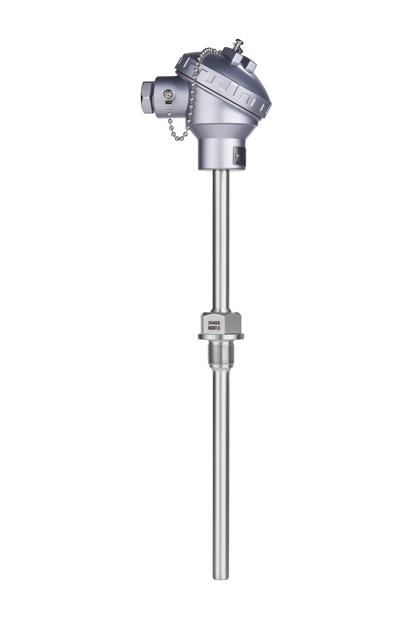
Pipeline temperature sensors are key sensing terminals in heating systems. They are used to measure the temperature of supply water, return water, steam, and pipe surfaces at the heat source, pipe network, heat exchange station, and user end. The collected temperature data supports real time monitoring, hydraulic balance adjustment, energy saving control, fault warning, and heat metering.
What Are The Main Application Scenarios of Pipeline Temperature Sensor in Heating System
1. Pipeline temperature sensor application in primary or secondary pipe network monitoring
The pipeline temperature sensor will monitor supply and return water temperature to evaluate heat delivery status. The pipeline temperature sensors will be surface-mounted on the pipe wall or immersion installation.
2. Pipeline temperature sensor application in heating exchange station control
The pipeline temperature sensor will provide temperature feedback for valve, pump, and heat source regulation. The pipeline temperature sensors will be arranged immersion or flange-type installation.
3. Pipeline temperature sensor application in hydraulic balance adjustment
The pipeline temperature sensor will identify uneven heating through return water temperature. The pipeline temperature sensors will be installed at building inlet, unit riser, or pipe end.
4. Pipeline temperature sensor application in leakage and insulation fault diagnosis
The pipeline temperature sensor will detect abnormal temperature changes on the pipe surface. The pipeline temperature sensors will be installed distributed fiber or multi-point surface-mounted.
5. Pipeline temperature sensor application in heat metering
The pipeline temperature sensor will calculate heat together with flow sensors. The pipeline temperature sensors will be installed at supply or return pipe measurement points.
6. Pipeline temperature sensor application in anti-freeze and safety protection
When pipeline temperature sensor detect temperature is too low, it will cause trigger alarms or linked heating. The pipeline temperature sensors will be installed at outdoor pipes, valve wells, or pump rooms.
Summary
In heating systems, pipeline temperature sensors will be measured about the relationship between two readings and how that relationship holds over time. Accuracy drives selection, location drives installation, pairing and drift drive operation. The system runs on guesswork if missing any one of them. In the vast market of heating renovation, single sensors are consumables, while consistent pairing and long-term stability are the true strengths of the product.
Application of Fluoride Ion Electrodes in Semiconductor Industry Wastewater Treatment
Related Article