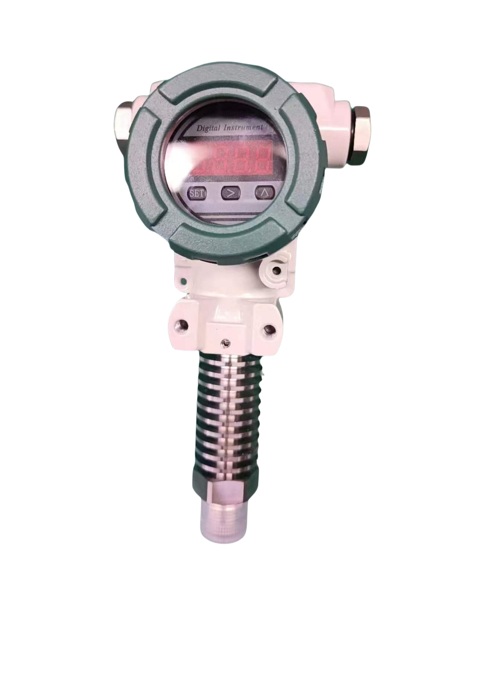
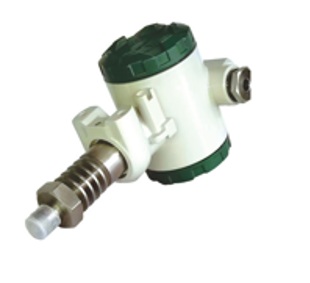
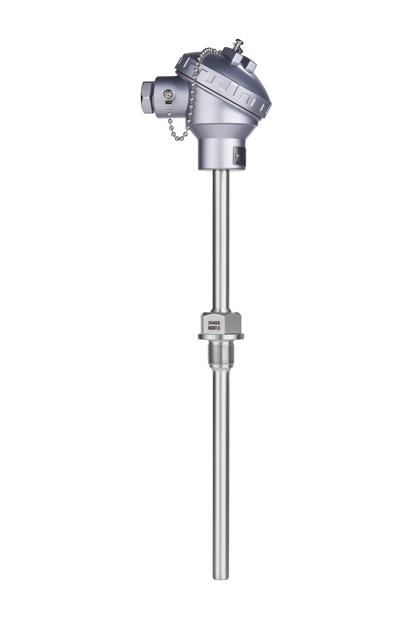
Pump Temperature Sensor Application on Various Pumps in Downstream

Why Pumps Need temperature sensors to Monitoring
During pump operation, mechanical friction, media temperature, seal failure, bearing wear, and motor overload all generate abnormal temperature rises. Temperature sensors applied on pump of monitoring are the core sensing elements in pump condition monitoring and protection systems, enabling early warning before faults escalate into catastrophic damage to enable a shift from reactive maintenance to predictive maintenance.
Bases on Industry data, there are approximately 30–40% of pump failures are directly temperature related like bearing overheating, seal burnout, media cavitation, etc., and temperature sensors applied on pump monitoring can reduce unplanned downtime by over 50%.
Pump Types and Temperature Sensors Applied on Pump
1. Centrifugal Pumps
Centrifugal pumps are the most widely deployed pump type in downstream applications. Temperature sensors applied on pump are primarily installed at both bearing housings and the mechanical seal, monitoring babbitt bearing temperature rise, the alarm threshold is typically 80°C, shutdown is 90°C and seal face temperature to prevent dry running seal failure.
In high temperature feedwater pumps like power plant boiler feedwater pumps with media temperatures of 150–230°C, casing inlet&outlet temperature sensors applied on pump also participate in minimum continuous stable flow MCSF control, preventing media flashing under low flow conditions.
2. Multistage High Pressure Pumps
Multistage pumps face thermal risks at each interstage seal ring and balance disc. Temperature sensors applied on pump will deploy for monitor point, thrust bearing, radial bearing, balance disc chamber and cooling water outlet.
3. Screw Pumps
Screw pump stator rubber linings are extremely temperature sensitive, the excessive heat causes rubber expansion and wear, while low temperature increases media viscosity beyond torque limits. Temperature sensors applied on pump must simultaneously monitor media temperature and stator surface temperature, forming a temperature viscosity torque interlock control loop.
Thermal recovery screw pump conditions is media temperature 80–180°C, requiring high temperature sensors applied on pump to monitor.
4. Diaphragm Pumps
Temperature monitoring in diaphragm pumps focuses on the hydraulic oil chamber and diaphragm body. Excessive hydraulic oil temperature accelerates diaphragm aging like service life drops 50% above 60°C, while low temperature increases oil viscosity and causes unstable stroking frequency. Temperature sensors applied on pump are typically threaded insertion mounted on the hydraulic oil chamber wall.
5.Submersible Pumps
Submersible pump motors are immersed in the media with limited heat dissipation, making winding temperature monitoring critical. A triple monitoring scheme is typically employed three embedded temperature sensors applied on pump to monitor, motor chamber temperature sensors applied on pump, seal oil chamber temperature sensors applied on pump.
6. Magnetic Drive Pumps
The critical risk in magnetic drive pumps is frictional heating between the inner magnet rotor and containment shell, in case any under dry running or insufficient flow, shell temperature can spike above 300°C within seconds, causing magnet demagnetization and shell rupture. Temperature sensors applied on pump are mounted directly on the containment shell exterior, participating in minimum flow protection interlock.
7. Canned Motor Pumps
The canned motor pump separates stator and rotor by only a thin non magnetic containment tube, with the pumped media flowing directly through the motor air gap as coolant. Temperature sensors applied on canned motor pumps can monitor stator winding temperature, cooling fluid inlet&outlet temperature and axial thrust bearing temperature.
Nuclear primary pumps, reactor coolant pumps, represent the extreme application of canned motor pumps, where temperature sensors applied on pump must meet 1E class nuclear safety grade, 40 to 60 year design life, and withstand irradiation, high temperature and pressure environments.
Nuclear power plant pumps are among the most critical rotating equipment in any nuclear facility, operating under conditions far more severe than conventional industrial pumps like high temperature, high pressure, intense radiation, seismic loading SSE grade, and 40 to 60 year maintenance free design life. Temperature sensors applied on such pumps serve not only condition monitoring but also directly participate in the Reactor Protection System interlock logic.
Nuclear safety principle is No single failure of a nuclear pump temperature sensors shall result in loss of safety function. All safety-grade temperature sensors applied on pump therefore employ redundant design and fail-safe mode.
Temperature sensors applied on nuclear pump serve as the peripheral nervous system of nuclear safety architecture, they monitor equipment health and directly drive reactor trip and engineered safety feature actuation. A twin unit nuclear plant requires 300–600 temperature sensors applied only on pump alone, nearly half of which are 1E class nuclear safety grade, demanding radiation resistance, seismic qualification, 60 years design life, and full traceability. For Chinese temperature sensors applied on pump manufacturers, temperature sensors applied on nuclear pump represent the technical pinnacle of industrial temperature measurement, aerospace grade quality is the foundation, but nuclear safety grade qualification is the entry ticket.
Summary
Temperature sensors applications in downstream pumps have evolved from simple "over-temperature trip" protection into a "multi-dimensional temperature sensing system" covering bearings, seals, media, motors, and cooling circuits. As IoT edge computing and AI predictive models mature, temperature sensors applied on pump data is becoming the core driver of the pump industry's transition from "time-based maintenance" to "predictive maintenance", every degree of temperature change is an early signal of equipment health status.
Modern pump stations integrate temperature sensors applied on pump data into SCADA, DCS, PLC systems, forming a layered protection architecture.
Combined temperature vibration trend analysis is the frontier of pump predictive maintenance. Studies show that bearing faults exhibit temperature anomalies two to six weeks before vibration indicators change, making temperature sensors applied on pump monitoring the first line of defense in early fault detection.
Application of Pipe Temperature Sensors in AI Electric Equipment
Application of Water Quality COD Sensors in Wastewater Treatment
Related Article