
How Can the Textile Industry Achieve Breakthroughs in Temperature and Humidity Control? Why Did a Zhejiang Client Quickly Choose Kunlun Zhongda After Inquiring About High-Temperature Sensors?
author: jennie
2025-12-04
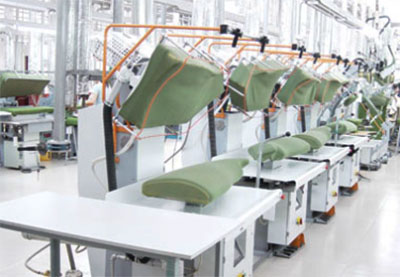
[Beijing, Recent] When textile machinery operates in harsh environments ranging from 80°C to 300°C, how can precise and stable temperature and humidity monitoring be ensured? As enterprises transition from single-parameter temperature monitoring to integrated temperature and humidity control, how should they select reliable and cost-effective sensor solutions? Recently, a textile equipment control system supplier from Zhejiang inquired with Beijing Kunlun Zhongda Sensor Technology Co., Ltd. about the pricing of the KZWS/GW series high-temperature temperature and humidity sensors. After gaining a deeper understanding of the product performance and pricing structure, they swiftly made a procurement decision. This case not only reflects the market's urgent demand for specialized high-temperature sensing products but also reveals that the comprehensive value provided by sensor suppliers is increasingly becoming a key factor in customer decision-making during industrial upgrades.
From Pt100 to Integrated Temperature-Humidity Monitoring: The Evolution of Monitoring Needs in the Textile Industry
"We previously mainly used Pt100 temperature probes for temperature monitoring, but now we need to achieve synchronized measurement and control of temperature and humidity in specific humidity environments," the Zhejiang client's inquiry clearly reflects the trend toward refinement in textile industry process control. In processes such as dyeing, shaping, and drying, the coupling effect of environmental humidity and temperature directly impacts fabric quality and energy consumption levels. The operating temperature range specified by the client (80°C–300°C), particularly the conditions of long-term operation around 200°C with instantaneous peaks reaching 300°C, presents clear challenges to the sensor's high-temperature resistance, long-term stability, and response speed.
"Many clients realize during system upgrades that single-parameter temperature data is no longer sufficient to support optimized control," analyzed a Kunlun Zhongda technical engineer. "What they need is an integrated sensing solution that can operate stably in high-temperature and high-humidity environments, with easy installation and minimal maintenance." This is precisely the design philosophy behind the KZWS/GW series high-temperature temperature and humidity sensors.
Balancing Price and Performance: How Is 'Cost-Effective Excellence' Defined?
In response to the client's inquiry about pricing, Kunlun Zhongda provided a clear product quotation, but the focus of communication extended beyond the numbers alone. The sales team emphasized the specific support behind "cost-effective excellence": the series uses powder metallurgy protective tubes to ensure effective protection of the probe in high-temperature, dusty, and mildly corrosive environments; the standard threaded installation method, derived from feedback from numerous industrial users, balances installation stability with ease of disassembly and maintenance; and the passive probe design further simplifies on-site wiring and system integration.
"What clients truly care about is the total cost of ownership, not just the purchase price," pointed out Kunlun Zhongda's Sales Director. "Our products achieve highly competitive pricing while ensuring industrial-grade reliability through optimized design, mature processes, and scaled production. More importantly, we help clients avoid downtime losses or quality fluctuations caused by sensor failures—a hidden value that is often immeasurable."
The Value of Industry Expertise: How Does Thirty Years of Experience Translate into Customer Trust?
The swift decision-making by the Zhejiang client is rooted in Kunlun Zhongda's over three decades of continuous expertise in the industrial sensor field. The company is not only a professional manufacturer of high-temperature temperature and humidity sensors, intake pressure sensors, and intake temperature sensors but has also accumulated extensive cross-industry application experience by serving numerous large domestic enterprises. Taking the textile industry as an example, the team has a deep understanding of typical working conditions such as high-temperature and high-humidity environments, mechanical vibrations, and chemical vapors, and integrates these insights into product design and selection recommendations.
"We adhere to the principle of mutual benefit in building our R&D and service teams," emphasized the company's leadership. "This means we always start from the actual process needs of our clients, providing genuinely high-cost-performance domestic products to help enhance the competitiveness of their end equipment." The collaboration with the Zhejiang client is another demonstration of this philosophy—by offering high-temperature temperature and humidity sensors that match parameters, offer reasonable pricing, feature convenient installation, and ensure stable reliability, Kunlun Zhongda has helped the client improve the sensing layer of their textile control system, jointly driving the intelligent upgrade process in this specialized industry segment.
View more from YouTube.
How to Achieve Precise Humidity Control in Drying Processes? Why Did a Changzhou Client Swiftly Place an Order After Consulting on Duct-Mounted Ambient Humidity Sensors?
How to Precisely Control the Drying End Point of Agricultural Waste? Xi'an Customer Chooses High-Temperature Sensors for Real-Time Monitoring
Related Article
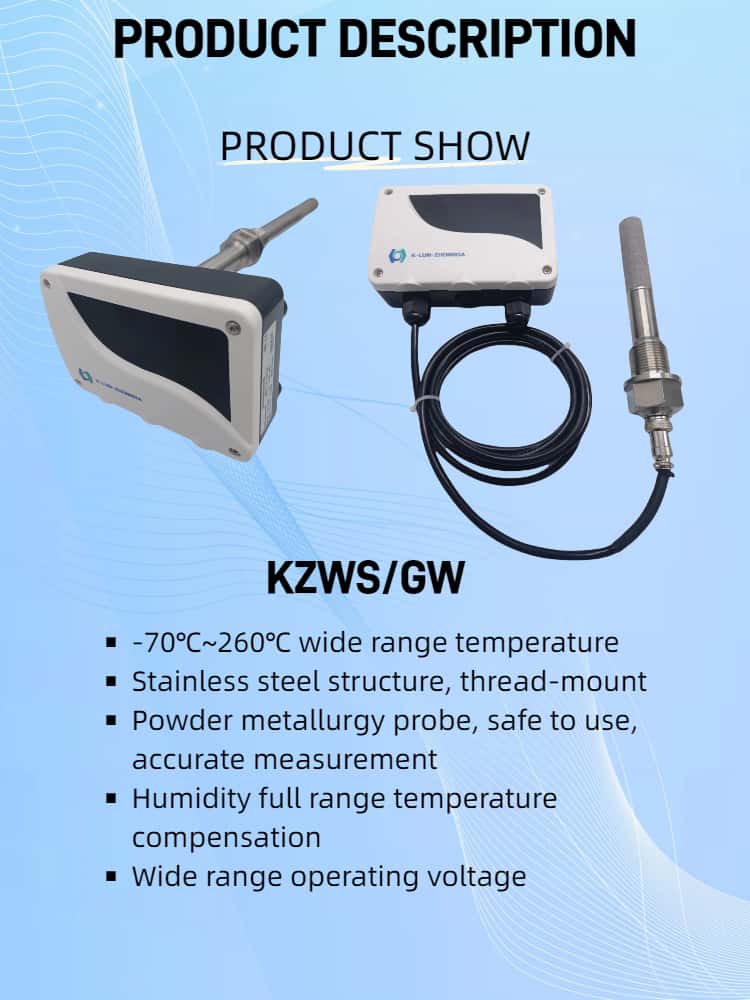
The Kunlun Zhongda high temperature and humidity transmitters are the key hardware foundation for transitioning wood drying kilns from experience-based drying to precision drying. The high temperature adaptability, anti-condensation design, and industrial grade stability directly determine the intelligence level of the drying process and the quality of the final product.
Application of Kunlun Zhongda High Temperature and Humidity Transmitter in Wood Drying Kilns

The deep value of screw pump temperature sensors lies not in single point measurement but in a four-in-one system including transient protection, stator smart algorithm, triangular fusion diagnostics and SIL functional safety, which enable most component suppliers to upgrade to system solution providers.
Applications of Temperature Sensors in Screw Pumps

From passive alarm to proactive prediction, from single-point measurement to multi-parameter fusion, that is the technical foundation for the shift from "scheduled maintenance" to "predictive maintenance" by using temperature sensors in multistage high pressure pumps.
Application of Temperature Sensors in Multistage High Pressure Pumps

The value of temperature sensor monitoring lies not in "knowing the current temperature" but in "predicting what it will become",from passive alarm to proactive prediction, this is the technical foundation of the shift from scheduled to predictive maintenance.
Application of Temperature Sensors in Centrifugal Pumps