
How is Pharmaceutical Storage Safety Ensured? The Choice of Core Sensors for Remote Environmental Monitoring Systems
author: jennie
2025-12-09

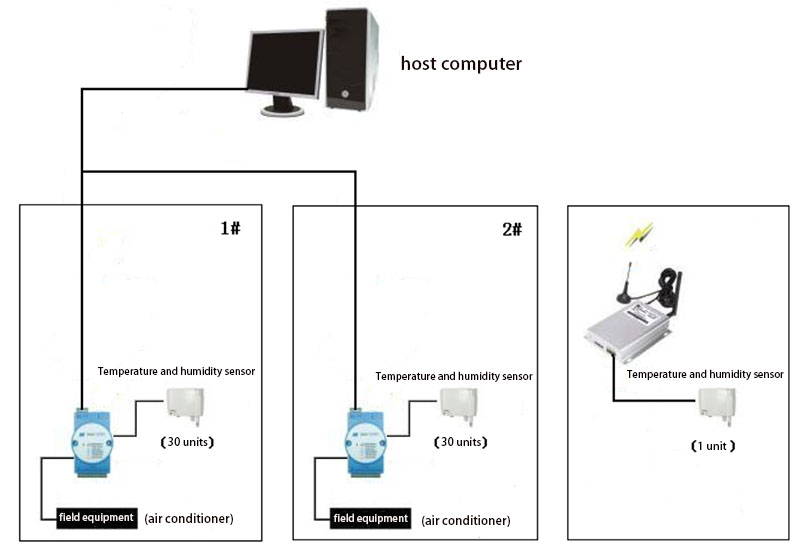
[Beijing, Recent] In today's increasingly complex pharmaceutical supply chain, how can we ensure that medicines remain within compliant temperature and humidity environments from warehouse to transport vehicle? As regulatory requirements evolve from "periodic sampling" to "full traceability and real-time alerts," how should enterprises build truly reliable environmental monitoring systems? Recently, a pharmaceutical storage environment remote monitoring system integrated with Kunlun Zhongda temperature and humidity sensors was successfully deployed. This system employs a combination of wired data acquisition and GPRS wireless transmission to achieve local control and remote real-time monitoring of pharmaceutical storage environments, providing a highly reliable solution for environmental monitoring in the pharmaceutical industry. This case not only demonstrates a technological solution but also reveals, at a deeper level, the foundational and decisive role of sensors as the data source in critical quality control processes.
From GxP to Supply Chain: Why Does Pharmaceutical Environmental Monitoring Require Systematic Thinking?
The stability and efficacy of pharmaceuticals are directly influenced by storage temperature and humidity. Global Good Practice (GxP) guidelines and China's "Good Supply Practice for Pharmaceutical Products" (GSP) impose clear and stringent monitoring requirements for pharmaceutical storage and transportation environments. Traditional spot recorders or manual inspections suffer from data lag, inability to provide real-time alerts, and challenges in achieving full traceability, making them inadequate for modern pharmaceutical logistics and regulatory demands.
The remote monitoring system deployed in this case is designed precisely to address these pain points. It is not merely a collection of individual devices but a complete system encompassing a perception layer, transmission layer, and application layer. High-precision temperature and humidity sensors are deployed at fixed points in warehouses and inside transport vehicles for real-time data acquisition. Data is reliably transmitted via wired or GPRS wireless modules. Finally, centralized data display, out-of-limit alerts, historical traceability, and report generation are achieved through supervisory control software or touchscreens at the monitoring center. The system's core objective is to transform environmental quality management from "post-event verification" to "in-process control" and "pre-event warning."
How is Reliability Constructed? Analyzing the Three Technical Pillars of the Monitoring System
The system's prominent features lie in its designed reliability and flexibility, primarily built upon three pillars:
-
Accurate and Reliable Perception Layer: The system's "eyes" and "skin" are the temperature and humidity sensors distributed throughout. The accuracy, long-term stability, and adaptability of the sensors to the specific environments of pharmaceutical storage (such as potential minor vibrations, temperature shocks from door openings/closings, and seasonal humidity fluctuations) directly determine the credibility of the entire system's data. The sensors provided by Kunlun Zhongda, validated over extended periods, maintain measurement consistency across a wide range of environments, forming the cornerstone for the system's reliable operation.
-
Stable and Redundant Transmission Layer: The system employs a hybrid transmission architecture of "wired + wireless (GPRS)". Within warehouses, wired transmission offers strong anti-interference capabilities, ensuring data reaches the local control module stably. For mobile scenarios like transport vehicles, GPRS modules utilize mature cellular networks to achieve remote wireless data backhaul. This design balances stability and coverage, ensuring seamless monitoring from fixed warehouses to mobile transportation.
-
Flexible and Intelligent Application Layer: The monitoring software supports flexible parameter configuration and personalized programming. Users can set differentiated temperature and humidity thresholds based on the storage requirements of different pharmaceuticals. Alert rules can be customized (e.g., duration of continuous out-of-limit conditions, multi-level alerts). The system can also generate audit trail reports compliant with GSP requirements. This makes the system not just a monitoring tool but a compliance management platform adaptable to the specific quality management processes of different clients.
Why Kunlun Zhongda? Customization Capabilities Empower System Integration
In this system, sensors, as the source data collectors, are of paramount importance. Kunlun Zhongda's role as the core sensor supplier for this solution stems from its over two decades of deep focus in the temperature and humidity sensing field. The company not only provides standardized temperature and humidity sensors but also possesses strong capabilities in "temperature and humidity sensor customization."
Pharmaceutical storage environments are diverse, ranging from cool storage, cold storage, and constant temperature/humidity rooms to enclosed transport compartments. These environments may present personalized demands regarding sensor size, installation method, measurement range, response speed, and even communication protocols. Kunlun Zhongda's R&D team, guided by a "win-win" philosophy, can deeply understand the specific scenarios of system integrators and end-users, offering targeted product adaptation and customization services. This ensures sensors can be seamlessly integrated into the overall system architecture and operate stably over the long term.
Conclusion: Forging a Trustworthy Data Chain for Pharmaceutical Safety
The successful application of the pharmaceutical storage environment remote monitoring system marks a solid step toward digitalization and intelligence in pharmaceutical supply chain quality management. By providing high-performance, highly reliable temperature and humidity sensors, Kunlun Zhongda has endowed the starting point of this "data chain" with credibility. In fields concerning public health and life, reliability is always paramount. This collaboration demonstrates that only enterprises like Kunlun Zhongda—adhering to long-term principles, committed to core technology development, and flexibly responding to customization needs—can become trusted partners within the core supply chains of critical industries. Together, they safeguard the final leg of the quality journey for pharmaceuticals, from manufacturer to patient.
View more from YouTube.
A Decade of Partnership Continues: Why Does Beijing Fanhua Hengxing Persistently Choose Kunlun Zhongda's Intelligent Isolated Transmitters?
How Does the Food Industry Choose Reliable Sensor Suppliers? Jindi Sweet Chestnut's Repeat Purchases Provide the Answer
Related Article

Results indicate that fluoride ion electrode in the system offers fast response and high accuracy, effectively reducing chemical costs and enhancing process automation to ensure compliant industrial wastewater discharge.
Application of Fluoride Ion Electrodes in Semiconductor Industry Wastewater Treatment
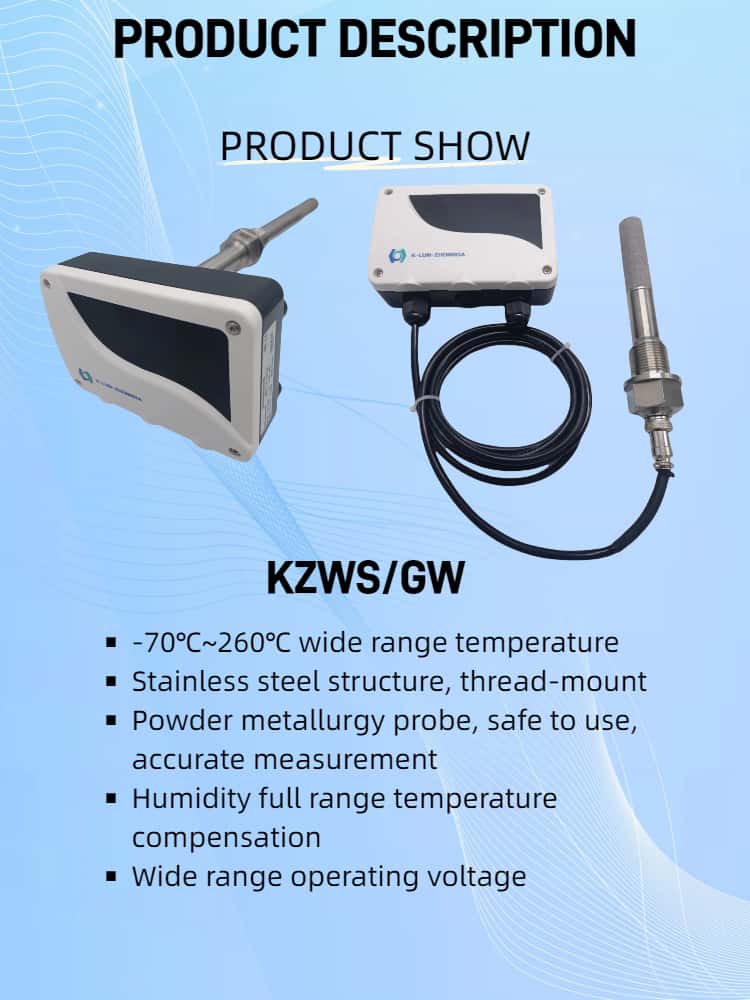
The Kunlun Zhongda high temperature and humidity transmitters are the key hardware foundation for transitioning wood drying kilns from experience-based drying to precision drying. The high temperature adaptability, anti-condensation design, and industrial grade stability directly determine the intelligence level of the drying process and the quality of the final product.
Application of Kunlun Zhongda High Temperature and Humidity Transmitter in Wood Drying Kilns

The deep value of screw pump temperature sensors lies not in single point measurement but in a four-in-one system including transient protection, stator smart algorithm, triangular fusion diagnostics and SIL functional safety, which enable most component suppliers to upgrade to system solution providers.
Applications of Temperature Sensors in Screw Pumps

From passive alarm to proactive prediction, from single-point measurement to multi-parameter fusion, that is the technical foundation for the shift from "scheduled maintenance" to "predictive maintenance" by using temperature sensors in multistage high pressure pumps.
Application of Temperature Sensors in Multistage High Pressure Pumps