
How Intelligent Isolation Technology Empowers Digital Transformation in the Pharmaceutical Industry—The Evolutionary Path of Collaboration Between Kunlun Zhongda and Weifang Jianfu Pharmaceutical Machinery
author: jennie
2025-12-30
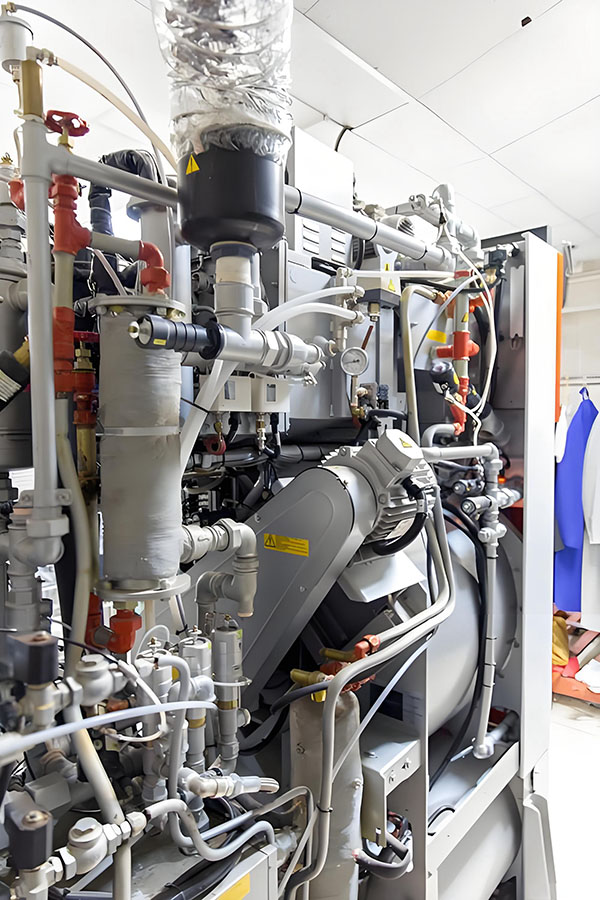
In the field of pharmaceutical production, the precise transmission of process parameters and signal security directly affect the stability of drug quality and production compliance. When Weifang Jianfu Pharmaceutical Machinery Co., Ltd. placed another order with Kunlun Zhongda in September 2014, a deep collaboration officially began—from a single temperature measurement device to an intelligent signal management system. This also became a microcosm of the "intelligent manufacturing upgrade" in China's pharmaceutical equipment sector.
Trust Accumulation: From a Thermometer to a System
In the autumn of 2013, Weifang Jianfu encountered issues with fluctuating temperature monitoring data during the debugging phase of a newly built pharmaceutical production line. Traditional temperature measurement equipment frequently experienced signal drift in the high-humidity environment of the antibiotic fermentation workshop. After multiple comparisons, they chose Kunlun Zhongda's anti-corrosion thermometer, which maintained a measurement accuracy of ±0.1°C over 18 months of continuous operation.
"Initially, it was just about addressing the need for a single temperature measurement point," recalled Weifang Jianfu's Technical Director. "But Kunlun Zhongda's engineers proactively mapped the temperature distribution of the entire workshop during installation. This professionalism showed us the potential for deeper collaboration."
Demand Upgrade: Special Requirements for Signal Isolation in Pharmaceutical Processes
In 2014, with the implementation of new GMP certification requirements, Weifang Jianfu began digital transformation of its production lines. The biggest challenges came from three major sources of signal interference:
-
Variable Frequency Drive Interference: Electromagnetic noise generated by large mixing equipment.
-
Multi-System Common Ground Interference: Ground potential differences among control systems from different brands.
-
Long-Distance Transmission Attenuation: Signal loss over the longest distance of 200 meters from the workshop to the control room.
"What we needed wasn't just an isolator, but a solution that could understand the uniqueness of pharmaceutical processes," emphasized the project lead. "For example, the signal sampling frequency for certain bioreactors must strictly synchronize with the process cycle."
Technological Breakthrough: Customized Development of the KZGL Intelligent Isolator
Kunlun Zhongda made five key improvements to the standard KZGL series tailored to the characteristics of the pharmaceutical industry:
Hardware-Level Innovations
-
Adopted a three-level shielding structure, elevating electromagnetic compatibility to industrial grade three standards.
-
Built-in dual-redundant power modules supporting online hot-swapping.
-
Developed pharmaceutical-specific interfaces compatible with sensors for parameters like pH and dissolved oxygen.
Software Algorithm Breakthroughs
-
Adaptive filtering algorithms capable of identifying and suppressing periodic process interference.
-
Dynamic calibration mechanisms performing automatic zero-point correction every 24 hours.
-
Process parameter learning functionality to memorize signal characteristics at different stages of drug production.
Implementation Validation: From Single-Point Testing to Production Line Integration
The first batch of eight isolators underwent a 90-day validation test on Weifang Jianfu's cephalosporin API production line. The implementation process creatively adopted a "three-step validation method":
Phase One (Days 1-30): Basic Performance Validation
-
Linearity testing across the full 4–20 mA range.
-
Stability testing under simulated ±50 V common-mode voltage interference.
-
Reliability validation through 30 days of continuous uninterrupted operation.
Phase Two (Days 31-60): Process Adaptation Optimization
-
Adjusted sampling frequencies to match the cyclical characteristics of fermentation processes.
-
Optimized signal routing based on workshop layout.
-
Established an intelligent alarm threshold learning model.
Phase Three (Days 61-90): System Integration Testing
-
Conducted bidirectional communication tests with the DCS system.
-
Built a real-time signal quality monitoring platform.
-
Completed deployment of a fault pre-diagnosis system.
Test data showed: signal transmission accuracy improved to 0.05% FS, system mean time between failures (MTBF) reached 100,000 hours, fully meeting the stringent requirements of the pharmaceutical industry for signal reliability.
Value Extension: From Equipment Supplier to Process Partner
The success of this collaboration brought value extensions beyond expectations:
-
Maintenance Cost Optimization: Predictive maintenance systems reduced unplanned downtime by 85%.
-
Energy Efficiency Improvement: In-depth analysis of process signals reduced production line energy consumption by 12%.
-
Compliance Enhancement: Automatically generated audit trail records compliant with FDA 21 CFR Part 11 requirements.
More notably, the collaboration model fundamentally transformed. Kunlun Zhongda's technical team now participates in Weifang Jianfu's quarterly process review meetings to jointly explore how to improve drug production efficiency through signal optimization.
Industry Insight: The Philosophy of Signal Management in the Pharma 4.0 Era
This case reveals a key trend in the digital transformation of the pharmaceutical industry: during intelligent upgrades, the quality of basic signal transmission is often more critical than advanced control algorithms. Kunlun Zhongda summarized the "Three Principles of Signal Management for the Pharmaceutical Industry" from this collaboration:
-
Determinism Over Speed: Pharmaceutical processes require predictable transmission delays, not the highest transmission speeds.
-
Safety Over Functionality: No functional expansion should come at the cost of signal isolation safety.
-
Traceability as the Lifeline: Every signal must have a complete lifecycle record.
Future Outlook: From Signal Isolation to Data Empowerment
Based on the experience accumulated from this collaboration, Kunlun Zhongda is developing a next-generation intelligent isolation platform for the pharmaceutical industry, with innovations including:
-
Digital Twin Interface: Real-time mapping of physical signals to digital models.
-
AI Quality Prediction: Predicting drug quality indicators by analyzing process signal patterns.
-
Blockchain Notarization: Providing tamper-proof notarization services for critical process parameters.
"We no longer regard Kunlun Zhongda as just an equipment supplier," summarized Weifang Jianfu's General Manager. "Their professional depth in signal transmission has become an indispensable technical think tank for our process optimization."
What began as a collaboration over a thermometer has now evolved into a benchmark case for intelligent transformation in the pharmaceutical industry. It proves a profound insight: in the Industry 4.0 era, the most basic technologies often hold the greatest potential for innovation—when signal isolation technology truly understands and integrates into industry processes, it can transform from a cost center into a value creation center. Kunlun Zhongda's philosophy of "prioritizing technical strength" serves as the ideal catalyst for this value transformation.
View more from YouTube.
Technology Empowers Trust: How Kunlun Zhongda Won the Long-Term Trust of Chongqing Linglue Technology Through Systematic Solutions
Precision Empowering Safety: How Kunlun Zhongda Sensors Help Chengdu Feiya Aviation Equipment Achieve High-Reliability Monitoring
Related Article

Results indicate that fluoride ion electrode in the system offers fast response and high accuracy, effectively reducing chemical costs and enhancing process automation to ensure compliant industrial wastewater discharge.
Application of Fluoride Ion Electrodes in Semiconductor Industry Wastewater Treatment
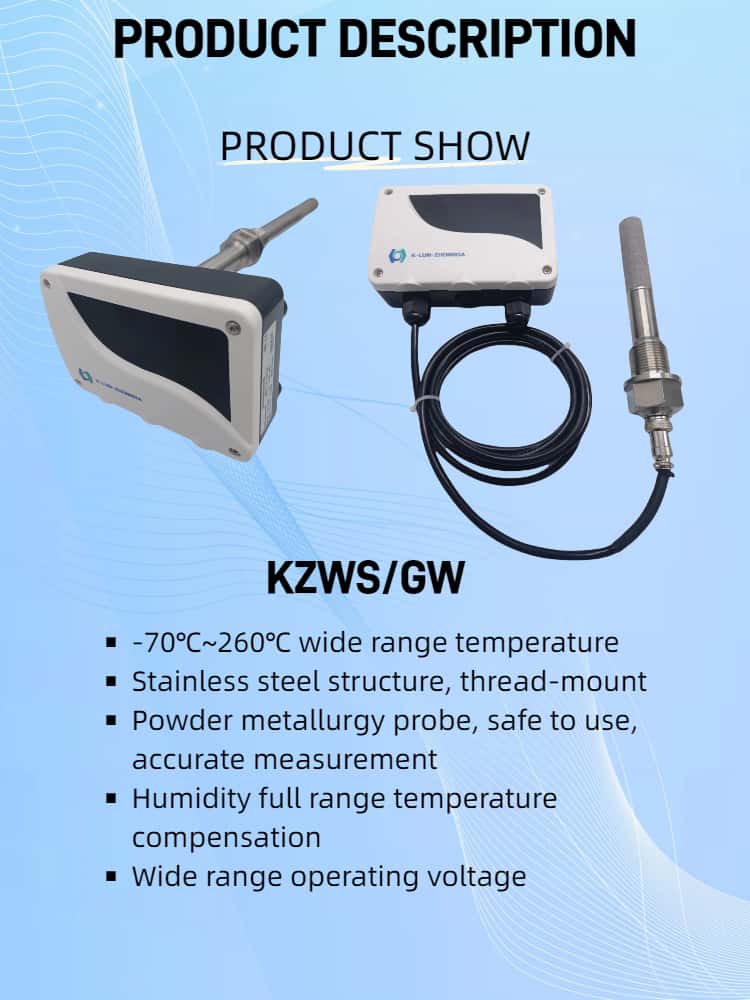
The Kunlun Zhongda high temperature and humidity transmitters are the key hardware foundation for transitioning wood drying kilns from experience-based drying to precision drying. The high temperature adaptability, anti-condensation design, and industrial grade stability directly determine the intelligence level of the drying process and the quality of the final product.
Application of Kunlun Zhongda High Temperature and Humidity Transmitter in Wood Drying Kilns

The deep value of screw pump temperature sensors lies not in single point measurement but in a four-in-one system including transient protection, stator smart algorithm, triangular fusion diagnostics and SIL functional safety, which enable most component suppliers to upgrade to system solution providers.
Applications of Temperature Sensors in Screw Pumps

From passive alarm to proactive prediction, from single-point measurement to multi-parameter fusion, that is the technical foundation for the shift from "scheduled maintenance" to "predictive maintenance" by using temperature sensors in multistage high pressure pumps.
Application of Temperature Sensors in Multistage High Pressure Pumps