
From On-site Insight to Value Delivery: How Kunlun Zhongda Customizes Sensor Solutions for Pharmaceutical Steam Systems
author: jennie
2026-01-26
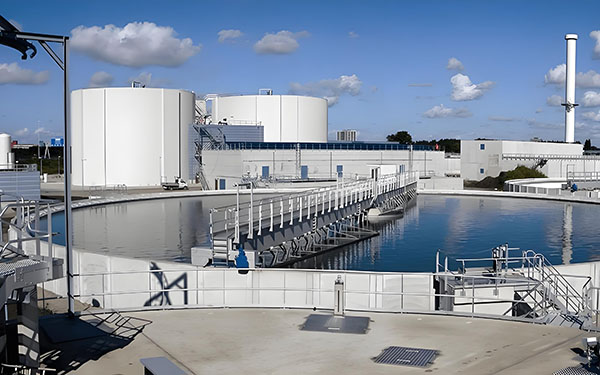
In the control room of a cleanroom workshop at a pharmaceutical enterprise in Jiangsu, the display of a temperature and humidity transmitter shows the steam temperature curve steadily maintained within the set range of 201.7°C. For this company, which produces sterile active pharmaceutical ingredients, behind this seemingly ordinary curve lies a story of the value leap of industrial sensors from "standard products" to "scenario solutions."
When the equipment supervisor of the pharmaceutical company initially contacted Kunlun Zhongda, the requirement appeared straightforward: to purchase a batch of high-temperature-resistant pressure sensors for steam sterilization equipment. In the unique environment of the pharmaceutical industry, steam systems are not only related to production efficiency but also directly affect the sterility assurance level of drug manufacturing.
"Pharmaceutical companies typically require measurement accuracy 1-2 orders of magnitude higher than conventional industrial fields," pointed out Kunlun Zhongda's pharmaceutical industry technical consultant. "A measurement deviation exceeding ±0.5°C in steam temperature at 200°C may impact the validation of sterilization effectiveness."
It was this deep understanding of industry-specific requirements that prompted the technical team to insist on conducting an on-site survey. In the equipment room crisscrossed with steam pipelines, engineers identified key details that standard product solutions might overlook: the instantaneous impact force peaks generated by steam at pipeline bends could reach three times the normal working pressure, and the sensor installation location was only 1.5 meters from the pressure relief valve, exhibiting significant temperature gradient variations.
"We presented the customer with a set of comparative data," recalled the project lead. "The probability of failure within six months for directly installing standard sensors was approximately 23%, while adding buffer cooling devices could reduce the failure rate to below 3%." This professional judgment, based on extensive on-site data accumulation, ultimately convinced the customer to accept the seemingly cost-increasing improvement solution.
I. The Core of Pharmaceutical Industry Sensor Solutions: From Standard Products to Scenario Solutions
The core innovation of the improvement solution lies in a dual-protection mechanism: the primary buffer device uses special ceramic materials to absorb mechanical impact, while the secondary cooling ring controls the sensor contact temperature within a safe range of 150°C through the principle of air convection. More crucially, the team redesigned the installation angle based on the on-site pipeline layout, forming an optimal angle between the sensor sensing surface and the steam flow direction, improving measurement response time by 40%.
This is the core value of Pharmaceutical Industry Sensor Solutions—pharmaceutical industry sensor solutions are not simple product selection, but a complete set of adaptable solutions based on deep understanding of process flows, compliance requirements, and on-site working conditions.
The value of this case extends beyond addressing a single procurement need. During the subsequent three months of operational monitoring, Kunlun Zhongda provided the customer with seven preventive maintenance reminders through the remote data platform, helping to avoid two unplanned shutdowns. "They gave us not only products but also a method for steam system health management," stated the pharmaceutical company's equipment manager. "We now regularly receive sensor performance analysis reports, which provide data support for our equipment validation documents."
II. The Value of Customized Steam System Measurement: From Passive Supply to Proactive Foresight
In the special environment of steam systems, the importance of Customized Steam System Measurement is particularly prominent. Steam sterilization is one of the most critical sterilization methods in the pharmaceutical industry, and the precise control of its temperature and pressure directly affects the drug sterility assurance level. Kunlun Zhongda's technical team not only solved the issues of instantaneous impact and temperature gradients but also proactively identified and addressed a hidden risk the customer had not mentioned: the impact of sudden pressure changes during pressure relief valve operation on sensor lifespan.
This deep-service model is redefining the role of sensor suppliers. Kunlun Zhongda's "application scenario database," built on over two decades of industry accumulation, currently includes more than 300 special working condition cases in the pharmaceutical industry. From steam sterilization to freeze-dryer vacuum monitoring, from cleanroom environmental control to fermenter pressure management, each case has been incorporated into standardized service processes.
III. The Technical Barrier of Sterile Environment Monitoring Sensors: Scenario Insight Is the Core Competitiveness
In the field of sterile environment monitoring, the technical barrier of Sterile Environment Monitoring Sensors lies not in laboratory indicators, but in understanding the complex working conditions at customer sites. During the site survey, Kunlun Zhongda's technical team discovered that the instantaneous impact force peaks generated by steam at pipeline bends could reach three times the normal working pressure—a finding that directly influenced sensor selection and installation design.
Notably, this "on-site insight + solution customization" service capability represents a microcosm of Chinese manufacturing's transition from scale production to value-based services. While most sensor companies are still competing on parameters and price, Kunlun Zhongda has established a nationwide technical response network—any customer technical inquiry receives an initial response within two hours, with on-site support arranged within 24 hours as needed.
"The uniqueness of the pharmaceutical industry compels us to go beyond traditional supplier thinking," emphasized the company's Technical Director. "Our value lies not in how many sensors we sell, but in how many production anomalies we help customers avoid and how much we improve overall equipment efficiency."
IV. Conclusion: Value Delivery, Not Product Delivery
With the implementation of new GMP regulations and the advancement of intelligent transformation in the pharmaceutical industry, this customization solution based on deep understanding is gaining more recognition. Currently, Kunlun Zhongda has provided sensor solutions for over 60 domestic pharmaceutical enterprises, including 12 listed companies. The case of this Jiangsu pharmaceutical enterprise has been incorporated into the company's internal training materials, becoming a classic example for new engineers to understand "scenario value."
In the field of industrial sensors, true competitive barriers often lie not in laboratory precision indicators but in the complex working conditions at customer sites. The collaboration story between Kunlun Zhongda and pharmaceutical enterprises reveals a trend: when manufacturing companies can deeply integrate product knowledge with industry experience, evolving from "meeting needs" to "anticipating needs," they can build irreplaceable professional value within the industry chain. After all, in the pharmaceutical industry concerning public health, the stable operation of every sensor carries not only data but also responsibility for life.
View more from YouTube.
Reverse Engineering to Overcome International Standards Barriers: How Kunlun Zhongda Conquered Swiss HCT Sensor Replacement Needs Through Four Iterations
Intelligent Sensing Empowers Modern Agriculture: How Kunlun Zhongda Infuses "Digital Vitality" into Beijing's Ecological Park
Related Article
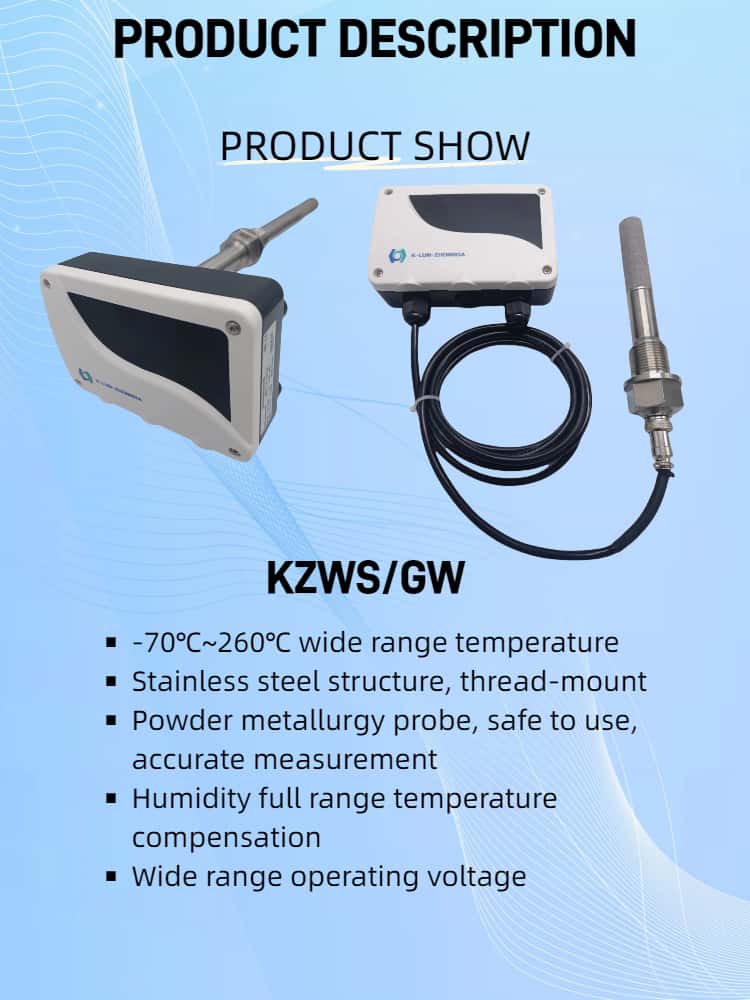
The Kunlun Zhongda high temperature and humidity transmitters are the key hardware foundation for transitioning wood drying kilns from experience-based drying to precision drying. The high temperature adaptability, anti-condensation design, and industrial grade stability directly determine the intelligence level of the drying process and the quality of the final product.
Application of Kunlun Zhongda High Temperature and Humidity Transmitter in Wood Drying Kilns

The deep value of screw pump temperature sensors lies not in single point measurement but in a four-in-one system including transient protection, stator smart algorithm, triangular fusion diagnostics and SIL functional safety, which enable most component suppliers to upgrade to system solution providers.
Applications of Temperature Sensors in Screw Pumps

From passive alarm to proactive prediction, from single-point measurement to multi-parameter fusion, that is the technical foundation for the shift from "scheduled maintenance" to "predictive maintenance" by using temperature sensors in multistage high pressure pumps.
Application of Temperature Sensors in Multistage High Pressure Pumps

The value of temperature sensor monitoring lies not in "knowing the current temperature" but in "predicting what it will become",from passive alarm to proactive prediction, this is the technical foundation of the shift from scheduled to predictive maintenance.
Application of Temperature Sensors in Centrifugal Pumps