
How Are Sensor Challenges in Oil Mist Lubrication Systems Solved? Why Did Langrunde Ultimately Choose Kunlun Zhongda After Multiple Suppliers?
author: JENNIE
2025-12-09
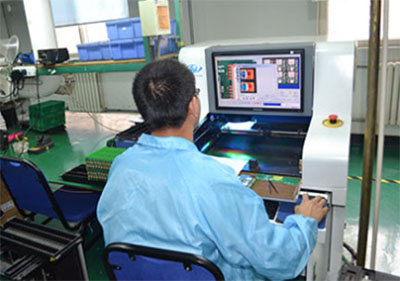
[Beijing, Recent] In the field of industrial energy-saving retrofits, how can precise and reliable monitoring sensors be matched to complex oil mist lubrication systems? When standardized products fail to meet special operating conditions, how should companies find partners with genuine customization capabilities? Recently, Beijing Langrunde Environmental Technology Co., Ltd., while advancing its oil mist lubrication system energy-saving retrofit project, ultimately established a partnership with Beijing Kunlun Zhongda Sensor Technology Co., Ltd. after trials with multiple sensor suppliers. This case not only highlights the critical role of specialized industrial sensors in system integration but also reveals that, within professional fields, deep technical compatibility and customization capabilities have become core criteria for clients selecting suppliers.
Monitoring Challenges Under Harsh Operating Conditions: Why Do Universal Sensors Struggle to Meet Oil Mist Lubrication Needs?
Since its establishment in 2005, Beijing Langrunde has consistently focused on centralized lubrication and energy-saving environmental services. Its oil mist lubrication system has been successfully applied in over thirty enterprises in industries such as oil refining and petrochemicals. However, the system places extremely unique demands on monitoring oil condition: sensors must not only operate stably in complex media rich in oil mist and potentially containing trace metal particles but also adapt to variations in temperature, pressure, and chemical environments across different customer sites.
"Several sensor manufacturers we previously collaborated with struggled to fully meet our special requirements," admitted Langrunde's technical lead. Standardized sensors often exhibited gaps in material compatibility, measurement accuracy, long-term stability, or installation interfaces when compared to the actual operating conditions of oil mist lubrication systems. Such "approximate matching" could lead to data deviations, equipment false alarms, or even premature failure, directly affecting the reliable operation and energy-saving performance of the lubrication system.
From Promotional Materials to In-Depth Collaboration: How Did Technical Communication Enable Precise Customization?
After encountering Kunlun Zhongda's promotional materials, Langrunde's team saw the potential for a solution. The two parties promptly engaged in detailed technical discussions. Kunlun Zhongda's engineering team did not rush to recommend existing products but first sought to deeply understand the working principles of Langrunde's oil mist lubrication system, the characteristics of the medium, installation constraints, and the monitoring objectives the client aimed to achieve.
"The core of communication is understanding the 'why'—why monitor at this point, why this parameter range, and how the data will be used by the system," explained a Kunlun Zhongda project engineer. Based on this in-depth needs analysis, the team developed a tailored sensor solution for Langrunde. This solution, from the selection of sensitive component materials and the design of protective structures to the calibration of output signals, was optimized for the oil mist environment. It ensured not only endurance in harsh conditions but also the provision of accurate, stable monitoring data, fully complying with relevant industry standards.
Beyond Single Products: How Do Customized Sensors Empower Energy-Saving Retrofit Projects?
Langrunde's satisfaction stems from Kunlun Zhongda providing not an isolated product but a solution deeply integrated with the system. In energy-saving retrofit projects, sensors are key to the perception layer, and the reliability of their data directly impacts the optimization of control strategies and the evaluation of energy-saving outcomes. Kunlun Zhongda's customized sensors helped Langrunde achieve precise control over the lubrication system's status, providing a solid data foundation for subsequent energy consumption analysis, early warning configuration, and maintenance optimization.
The success of this collaboration also validates Kunlun Zhongda's over two decades of technical accumulation in the specialty sensor field. The company has long focused on the research, development, and manufacturing of products such as oil sensors, explosion-proof temperature sensors, and platinum resistance temperature sensors, maintaining close collaboration with top research institutions like the Institute of Automation and the Institute of Electronics of the Chinese Academy of Sciences, and Tsinghua University. This innovation model, combining "industry, academia, research, and application," ensures the company can integrate cutting-edge materials science with engineering practices to rapidly develop effective and reliable customized products for specific industrial challenges, such as those faced by Langrunde.
Conclusion: Professional Matching Creates Win-Win Value
The collaboration between Langrunde and Kunlun Zhongda is a typical example of successful alignment between professional needs and professional supply. In today's increasingly specialized and refined industrial services, Langrunde ensured the reliability and advancement of its core service—the oil mist lubrication system—by choosing a sensor partner with deep customization capabilities. Meanwhile, Kunlun Zhongda, through its solid technical expertise and flexible service model, once again demonstrated that in the niche industrial sensor market, true competitiveness stems from a profound understanding of clients' unique processes and the ability to provide rapidly responsive solutions. This is not merely a collaboration between two companies but a vivid footnote to the collaborative innovation and mutual upgrading of China's industrial services and high-end manufacturing sectors.
View more from YouTube.
How Does the Food Industry Choose Reliable Sensor Suppliers? Jindi Sweet Chestnut's Repeat Purchases Provide the Answer
How Can Industrial Ovens Achieve Precise Dual Temperature and Humidity Control? Why Did a Shanghai Equipment Manufacturer Choose Kunlun Zhongda?
Related Article
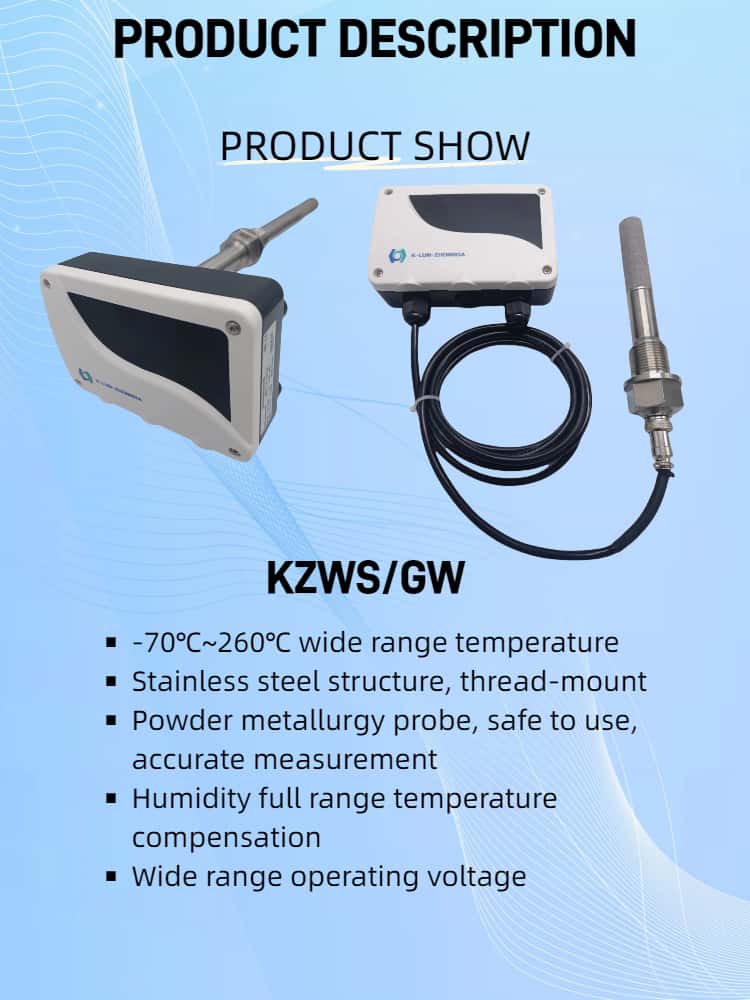
The Kunlun Zhongda high temperature and humidity transmitters are the key hardware foundation for transitioning wood drying kilns from experience-based drying to precision drying. The high temperature adaptability, anti-condensation design, and industrial grade stability directly determine the intelligence level of the drying process and the quality of the final product.
Application of Kunlun Zhongda High Temperature and Humidity Transmitter in Wood Drying Kilns

The deep value of screw pump temperature sensors lies not in single point measurement but in a four-in-one system including transient protection, stator smart algorithm, triangular fusion diagnostics and SIL functional safety, which enable most component suppliers to upgrade to system solution providers.
Applications of Temperature Sensors in Screw Pumps

From passive alarm to proactive prediction, from single-point measurement to multi-parameter fusion, that is the technical foundation for the shift from "scheduled maintenance" to "predictive maintenance" by using temperature sensors in multistage high pressure pumps.
Application of Temperature Sensors in Multistage High Pressure Pumps

The value of temperature sensor monitoring lies not in "knowing the current temperature" but in "predicting what it will become",from passive alarm to proactive prediction, this is the technical foundation of the shift from scheduled to predictive maintenance.
Application of Temperature Sensors in Centrifugal Pumps