
How to Achieve Precise Humidity Control in Drying Processes? Why Did a Changzhou Client Swiftly Place an Order After Consulting on Duct-Mounted Ambient Humidity Sensors?
author: jennie
2025-12-04
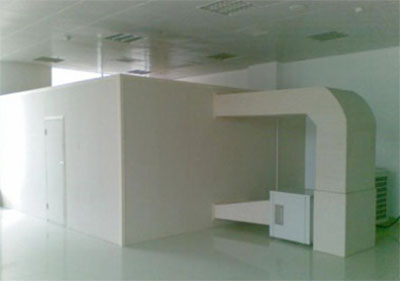
[Beijing, Recent] In the field of industrial drying, what key factors truly determine the effectiveness of material drying? When temperatures reach 180°C–260°C or even higher, how can reliable humidity monitoring and precise control be achieved? Recently, a drying process specialist in Changzhou consulted Beijing Kunlun Zhongda Sensor Technology Co., Ltd. regarding duct-mounted ambient humidity sensors. Upon understanding the product's performance and competitive pricing, the client promptly purchased two units for evaluation. This case highlights not only the technical challenges of humidity control in high-temperature drying but also the strong competitiveness of specialized domestic sensors in meeting specific industrial requirements.
The Critical yet Overlooked Factor in Drying: Why is Humidity Control as Important as Temperature?
"When drying materials, controlling humidity is essential and varies for different products," stated the Changzhou client, pinpointing a key industry challenge. Many operations focus heavily on temperature while underestimating humidity's role. Excessive humidity leads to higher energy use and uneven drying, while insufficient humidity can cause materials to crack or degrade, impacting final product quality. This is particularly critical in sectors like food processing, pharmaceuticals, and specialty chemicals, where precise humidity control directly influences product consistency and operational costs.
A Kunlun Zhongda applications engineer explained, "Material drying often occurs above 100°C, with many processes exceeding 300°C. Standard humidity sensors falter under such sustained high temperatures. Our duct-mounted ambient sensors are engineered specifically for these demanding environments."
Meeting the High-Temperature Challenge: How are Duct-Mounted Sensors Designed for 260°C+ Conditions?
The client's specifications were precise: a operational range of 180°C–260°C with a 5-meter connection cable. This reflects real-world complexities where sensors must endure prolonged heat, fit within ductwork, and reliably transmit signals over distance.
"Our duct-mounted ambient humidity sensors are rated for temperatures exceeding 300°C, comfortably covering the client's range," detailed a Kunlun Zhongda product manager. "For duct installations, we've optimized the mechanical design and selected materials that maintain accuracy and longevity despite high thermal loads and airflow exposure." This allows the sensor to be installed directly in drying system ducts, providing real-time humidity data for process control.
From Evaluation to Adoption: How Does Value Drive the Choice for Domestic Sensors?
Beyond technical specs, the client was pleased with the cost proposition. "Our pricing is significantly more competitive than imported equivalents," noted a Kunlun Zhongda sales director. "This isn't merely a lower price, but a better value—achieved through over twenty years of design refinement and manufacturing scale, all while ensuring industrial-grade reliability."
The initial order for two sensors, though modest, represents a logical first step: validating performance in a critical application before broader deployment. "We are confident this will lead to ongoing collaboration," the sales director added. "We have extensive experience supporting users across various drying ovens, chambers, and systems."
Two Decades of Focus: Translating Expertise into Reliable Solutions
The client's rapid decision is supported by Kunlun Zhongda's deep expertise in industrial sensing, developed over more than twenty years. The company specializes in products like dual-port duct-mounted humidity sensors, integrated wall-mount temperature transmitters, and gas temperature probes. Collaboration with leading research institutions, including the Chinese Academy of Sciences and Tsinghua University, helps transform advanced research into practical, robust industrial products.
This approach enables Kunlun Zhongda to understand diverse industry needs and deliver tailored solutions. For drying applications, the company offers a complete range from individual sensors to integrated monitoring systems, providing end-to-end support from selection through commissioning.
Looking Ahead: Enabling Smarter, More Efficient Drying
As Industry 4.0 and smart manufacturing advance, drying processes are becoming more precise, efficient, and automated. Collaborations like the one with the Changzhou client exemplify this shift—implementing high-performance, cost-effective sensing solutions allows for finer process control, improved product quality, reduced energy consumption, and stronger competitiveness.
As China's manufacturing sector advances, companies like Kunlun Zhongda—focused on core industrial components—demonstrate through practical applications that domestic sensors can meet and exceed demanding requirements, offering a reliable and valuable alternative to international brands. This technological capability forms a solid foundation for the ongoing upgrade of manufacturing processes.
View more from YouTube.
How Can Cold Storage Equipment Achieve Intelligent Temperature Management? The Procurement Choice of a Jiangsu Refrigeration Equipment Manufacturer Provides the Answer
How Can the Textile Industry Achieve Breakthroughs in Temperature and Humidity Control? Why Did a Zhejiang Client Quickly Choose Kunlun Zhongda After Inquiring About High-Temperature Sensors?
Related Article

Results indicate that fluoride ion electrode in the system offers fast response and high accuracy, effectively reducing chemical costs and enhancing process automation to ensure compliant industrial wastewater discharge.
Application of Fluoride Ion Electrodes in Semiconductor Industry Wastewater Treatment
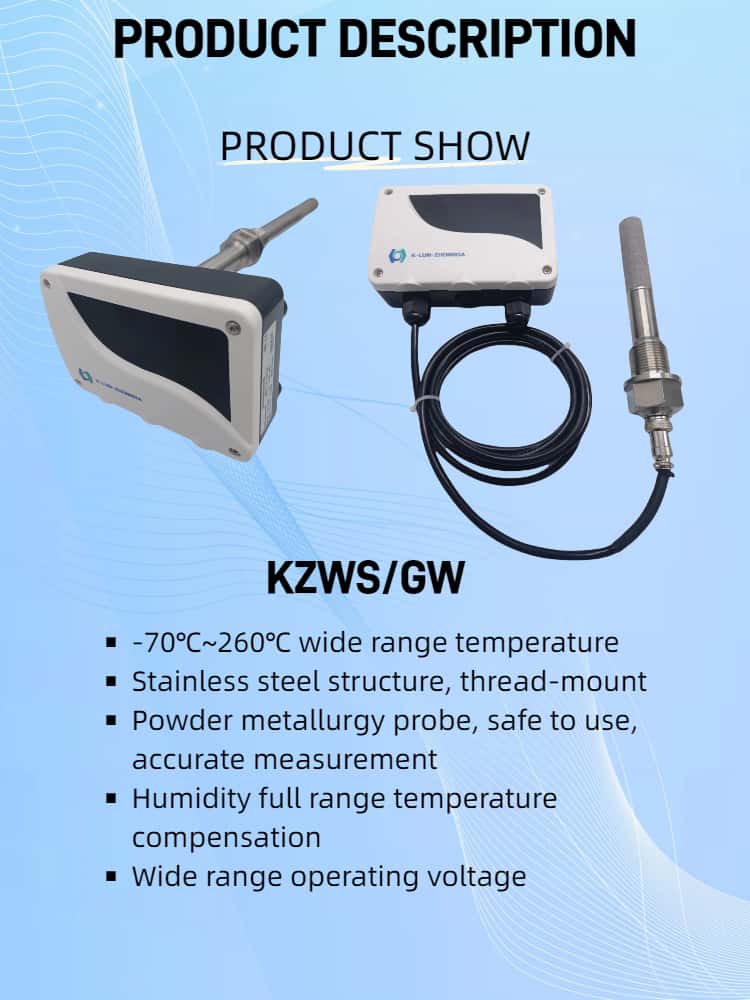
The Kunlun Zhongda high temperature and humidity transmitters are the key hardware foundation for transitioning wood drying kilns from experience-based drying to precision drying. The high temperature adaptability, anti-condensation design, and industrial grade stability directly determine the intelligence level of the drying process and the quality of the final product.
Application of Kunlun Zhongda High Temperature and Humidity Transmitter in Wood Drying Kilns

The deep value of screw pump temperature sensors lies not in single point measurement but in a four-in-one system including transient protection, stator smart algorithm, triangular fusion diagnostics and SIL functional safety, which enable most component suppliers to upgrade to system solution providers.
Applications of Temperature Sensors in Screw Pumps

From passive alarm to proactive prediction, from single-point measurement to multi-parameter fusion, that is the technical foundation for the shift from "scheduled maintenance" to "predictive maintenance" by using temperature sensors in multistage high pressure pumps.
Application of Temperature Sensors in Multistage High Pressure Pumps