
How Does the Food Industry Choose Reliable Sensor Suppliers? Jindi Sweet Chestnut's Repeat Purchases Provide the Answer
author: jennie
2025-12-09
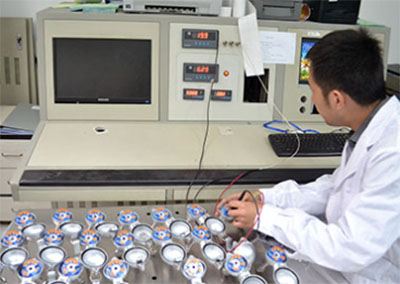
[Beijing, Recent] As food safety standards become increasingly stringent, how can food processing enterprises ensure that every critical monitoring device on their production lines is trustworthy? When the accuracy of temperature sensors directly impacts product quality and consumer health, what criteria should companies use to evaluate and select suppliers? Recently, the well-known food enterprise Jindi Sweet Chestnut made a second purchase from Beijing Kunlun Zhongda Sensor Technology Co., Ltd. Unlike the initial purchase, this order was not for new equipment or production line expansion but specifically for procuring spare sensors for existing equipment. This seemingly ordinary "replenishment" action conveys a deeper logic regarding the food industry's supply chain reliability: only products proven through practical application and demonstrated stability can earn customers' repeated trust and proactive backup.
The "Sensing Line of Defense" Behind Food Safety: Why Are Food Enterprises Particularly Cautious in Selecting Sensors?
"In the food industry, due to factors directly related to consumers' physical health, extra caution is exercised in selecting equipment and instruments, including sensor products." The perspective of Jindi Sweet Chestnut's equipment manager articulates a consensus across the industry. In critical process stages such as baking, steaming, sterilization, and refrigeration, minor temperature deviations can lead to microbial exceedances, texture changes, or nutrient loss, thereby triggering quality and safety risks. Therefore, temperature sensors used in these stages require not only high accuracy and rapid response but also must maintain exceptional stability and consistency over long-term operation, while withstanding challenges such as humidity, oil contamination, or regular cleaning inherent in food processing environments.
Jindi Sweet Chestnut's initial purchase was precisely based on a thorough understanding and strict assessment of these risks. They needed not the cheapest product but a solution capable of operating reliably, accurately, and over the long term on their production line. The temperature sensors provided by Kunlun Zhongda were tested under such high standards in actual working conditions.
From "Trial" to "Backup": How Does Repeat Purchasing Become the Highest Level of Trust Endorsement?
"Because we have used them, we feel more assured." Jindi Sweet Chestnut's repurchase logic is concise yet powerful. In industrial procurement, initial collaborations are often based on external information such as technical specifications, price, and brand reputation. However, decisions for second and subsequent purchases are grounded in tangible product performance records and user experience.
The sensors from the first purchase underwent tests of production rhythms, impacts from environmental changes, and validation over time on the production line. Did their performance match the specified parameters? Was the signal consistently stable? Were they easy to maintain and compatible with existing systems? Answers to all these questions were recorded in the equipment's operation logs and daily feedback from operators. When Jindi Sweet Chestnut decided to purchase "spare parts" for these already operational sensors, it signified their affirmation of the existing products' performance. This "backup" action essentially adds "insurance" to an established trust relationship, aiming to ensure production continuity and avoid risks such as entire line shutdowns or batch scrap due to unexpected failure of a single sensor. This serves as more compelling proof of product reliability and supplier value than any advertising.
Two Decades of Deep Expertise and a Win-Win Philosophy: How to Build Sustainable Customer Relationships?
Jindi Sweet Chestnut's choice is not coincidental. It is built upon Kunlun Zhongda's over two decades of technical accumulation in the temperature sensing field. The company has long focused on the research, development, and manufacturing of high-precision temperature sensors, modular temperature sensors, and gas temperature probe sensors, serving numerous large domestic enterprises. This focus has resulted not only in optimized product performance but also a profound understanding of the unique needs of various industries, including food, pharmaceuticals, and chemicals.
More importantly, the company's R&D and service teams, built on the principle of "win-win," consistently strive to become technical partners to clients rather than mere equipment suppliers. They provide not only "high cost-effective" products that meet national standards but also compatibility advice and full lifecycle support based on an understanding of clients' production processes. This collaborative model ensures that every successful application becomes a cornerstone of long-term trust.
Conclusion: Trust Is the Sole Currency of Repeat Purchases
In the food industry, where reliability requirements are nearly rigorous, Jindi Sweet Chestnut's second purchase serves as an instructive market lesson for all sensor suppliers: true competitiveness ultimately manifests in customers' repeated choices. When an enterprise is willing to establish safety stock for your product, they are purchasing not merely a physical entity but also recognition of past performance and anticipation of future stability. Through its reliable products and pragmatic services, Kunlun Zhongda has earned this precious trust, which may well be the core reason it can consistently serve large enterprises in a highly competitive market. This endorsement from the food industry will also inspire the company to continue upholding quality standards, strengthening the technological foundation of precise measurement for a broader range of consumer-oriented industrial fields.
View more from YouTube.
How is Pharmaceutical Storage Safety Ensured? The Choice of Core Sensors for Remote Environmental Monitoring Systems
How Are Sensor Challenges in Oil Mist Lubrication Systems Solved? Why Did Langrunde Ultimately Choose Kunlun Zhongda After Multiple Suppliers?
Related Article

Results indicate that fluoride ion electrode in the system offers fast response and high accuracy, effectively reducing chemical costs and enhancing process automation to ensure compliant industrial wastewater discharge.
Application of Fluoride Ion Electrodes in Semiconductor Industry Wastewater Treatment
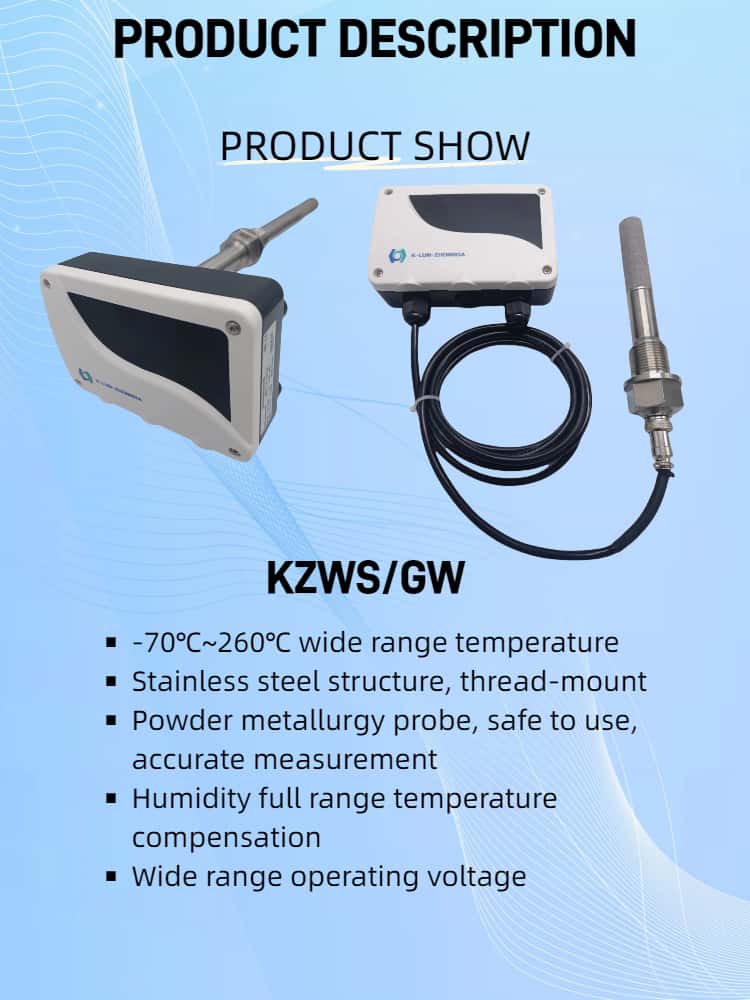
The Kunlun Zhongda high temperature and humidity transmitters are the key hardware foundation for transitioning wood drying kilns from experience-based drying to precision drying. The high temperature adaptability, anti-condensation design, and industrial grade stability directly determine the intelligence level of the drying process and the quality of the final product.
Application of Kunlun Zhongda High Temperature and Humidity Transmitter in Wood Drying Kilns

The deep value of screw pump temperature sensors lies not in single point measurement but in a four-in-one system including transient protection, stator smart algorithm, triangular fusion diagnostics and SIL functional safety, which enable most component suppliers to upgrade to system solution providers.
Applications of Temperature Sensors in Screw Pumps

From passive alarm to proactive prediction, from single-point measurement to multi-parameter fusion, that is the technical foundation for the shift from "scheduled maintenance" to "predictive maintenance" by using temperature sensors in multistage high pressure pumps.
Application of Temperature Sensors in Multistage High Pressure Pumps