
Customizing Temperature for Clients for 20 Years: How Kunlun Zhongda Captured a Farm with a Single Sensor
author: jennie
2026-01-28
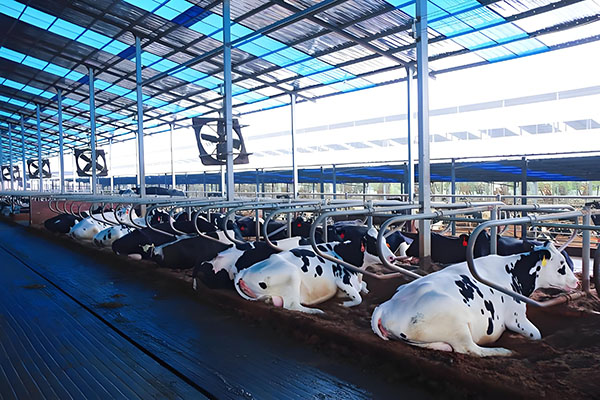
Walking into the hardware and electrical market near Tianning Temple in Beijing's Xicheng District feels like stepping back to the early 2000s. Salespeople behind counters tap on calculators, and the air is thick with the scent of metal and machine oil. It was in this seemingly traditional setting that in 2010, a Beijing agricultural farm seeking a technological breakthrough pushed open a door that would change its production management approach—the sales counter of Kunlun Zhongda.
"We weren't just looking for a supplier, but a technical partner who could understand the 'language of the farm.'" Recalling the decision back then, the farm's technical manager still remembers it vividly. At the time, they faced a common industry challenge: standard temperature sensors on the market couldn't adapt to the farm's complex and variable environment—humidity, dust, significant temperature fluctuations, and physical impacts from animal activity. Conventional sensors either quickly lost accuracy or had significantly shortened lifespans.
"Most sensor manufacturers told us, 'This is an industry-wide problem; there's no solution,'" the manager admitted. "But when Kunlun Zhongda's engineers heard this, their first response was, 'Let's go to the site together.'"
I. The Core of Farm Environmental Monitoring: The Answer Is on Site
This site visit revealed the true value of customization. Instead of staying in the office reviewing parameters, Kunlun Zhongda's technical team went deep into the farm, recording actual working conditions in feed workshops, brooding rooms, and ventilation systems: installation points on metal roofs with day-night temperature differences exceeding 15°C, humid air containing ammonia, and wall-mounted sensors needing frequent cleaning…
"Problems are found on-site, and solutions are born on-site." The engineer in charge of the project at Kunlun Zhongda explained. The team didn't simply recommend existing products. Instead, based on the principle of "dual-bridge arm temperature compensation technology," they redesigned a "non-standard" temperature sensor: the housing was treated with an enhanced anti-corrosion coating to withstand dampness, the probe structure was reinforced for shock resistance, and the thermal conduction module was optimized for temperature measurement on metal surfaces.
This is the core value of Farm Environmental Monitoring—farm environment monitoring cannot rely on "universal products"; it must go deep into the site and adapt to local conditions.
II. The Advancement of Industrial Sensor Customization: From Monitoring to Protection
But that wasn't enough. During a follow-up visit, the engineers noticed that during extreme winter lows, while the sensor worked fine, nearby pipes were still at risk of freezing and cracking. "The client didn't mention it, but the risk was there." The team proactively suggested adding intelligent heating components. When the system detected ambient temperatures nearing freezing and pipes in a non-flow state, it would automatically activate localized heating, upgrading passive monitoring to active "monitoring + protection" management.
In the first winter after this "farm-specific temperature control switch" was deployed, equipment failure rates in the relevant areas of the farm dropped by 70%, and energy loss data was accurately measured by zone for the first time. Trust was built through these tangible numbers.
This is the power of Industrial Sensor Customization—not just producing according to parameters, but deeply understanding the customer's real scenarios, proactively identifying risks the customer hasn't even noticed, and delivering solutions that exceed expectations.
III. The Growth of a Chinese Sensor Manufacturer: From a Single Sensor to a Complete System
The collaboration didn't stop at a single product. As the farm expanded, Kunlun Zhongda tailored an integrated transmitter system combining temperature and pressure monitoring, linking scattered data points into a visual network. And when Kunlun Zhongda's R&D team made a breakthrough in IoT-embedded technology in 2018, launching a new generation of intelligent controllers, this farm was among the first to test it.
"We delivered a prototype still in internal testing to the farm," revealed Kunlun Zhongda's product manager. "They dared to use it; we dared to provide it. This kind of trust was built bit by bit over more than a decade." The intelligent controller ultimately enabled integrated control across three major scenarios at the farm: feed fermentation temperature chains, multi-parameter incubation environments, and wastewater treatment processes, consolidating management of multiple independent systems onto one platform.
From a single customized sensor to a transmitter system, and then to an intelligent control platform, the evolution of this farm's partnership with Kunlun Zhongda mirrors the transformation of a Chinese Sensor Manufacturer from "standardized supply" to "scenario-based customization."
IV. From the Farm to Broader Industrial Sites
Today, Kunlun Zhongda has extended this deep customization capability to diverse fields such as Muyang Group, Beijing Subway, Jianlong Group, and MCC Group. Yet, the core principle remains unchanged: "Problems are on-site, innovation is on-site, value is on-site."
In Beijing Subway's tunnel monitoring systems, customized sensors must handle vibration and electromagnetic interference; in Jianlong Group's steelmaking workshops, sensors must remain stable next to thousand-degree heat; in MCC Group's overseas projects, equipment must adapt to extreme conditions from tropical humidity to desert dryness… Each scenario is a new test paper.
"Many think sensors are standard components, but what truly impacts the final outcome is often the 5% of non-standard details," summarized Kunlun Zhongda's technical director. "The farm's story teaches us that what clients ultimately pay for is not a cold component, but a solution that precisely addresses their pain points."
V. Conclusion: The Deepest Moat of Technology Is Built on the Last Mile Walked Alongside the Client
Today, as digitalization and intelligentization sweep across all industries, the sensor company that started from a hardware counter in Tianning Temple has long since moved its "scenario labs" deep into mines, speeding subway trains, and production lines in overseas industrial parks. And perhaps the starting point of all these stories can be traced back to that moment in 2010, when someone dared to say, "We'll customize it," for a single sensor.
In an era that advocates standardized scale effects, Kunlun Zhongda has proven over two decades the value of a Chinese Sensor Manufacturer: the deepest moat of technology is often built on the last mile walked alongside the client. Whether it's Farm Environmental Monitoring in agricultural settings or Industrial Sensor Customization for industrial needs, Kunlun Zhongda always adhere to "site-first" philosophy, solving customers' most authentic problems with customized solutions.
View more from YouTube.
From "Replacement" to "Surpassing": The 20-Year Overtaking Journey of a Chinese Sensor Enterprise
Reverse Engineering to Overcome International Standards Barriers: How Kunlun Zhongda Conquered Swiss HCT Sensor Replacement Needs Through Four Iterations
Related Article
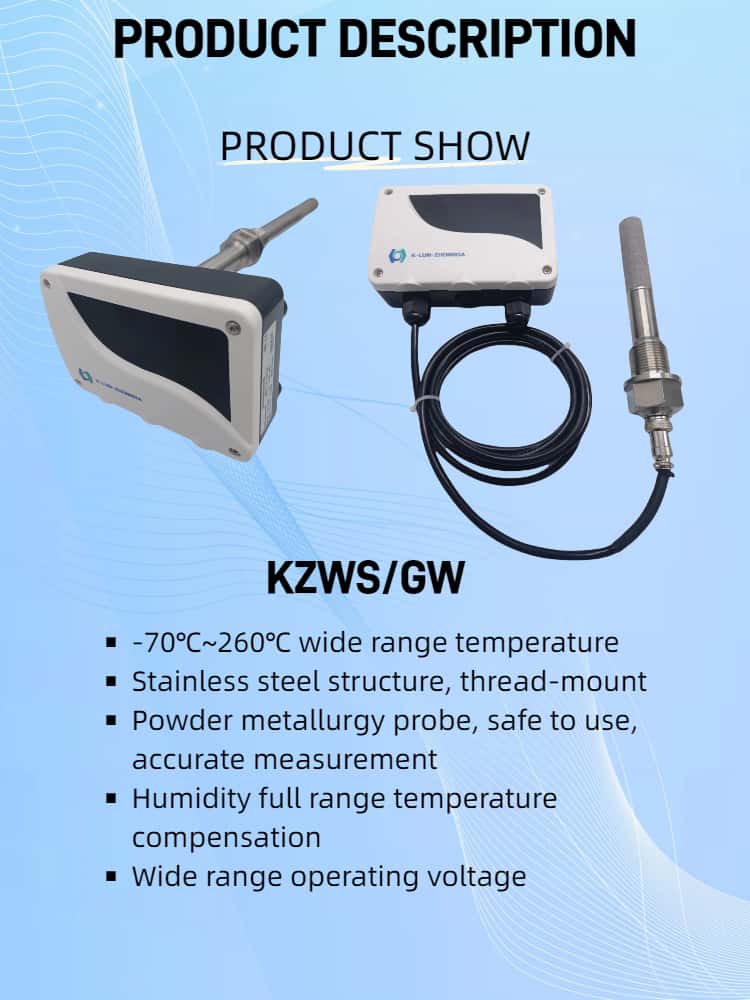
The Kunlun Zhongda high temperature and humidity transmitters are the key hardware foundation for transitioning wood drying kilns from experience-based drying to precision drying. The high temperature adaptability, anti-condensation design, and industrial grade stability directly determine the intelligence level of the drying process and the quality of the final product.
Application of Kunlun Zhongda High Temperature and Humidity Transmitter in Wood Drying Kilns

The deep value of screw pump temperature sensors lies not in single point measurement but in a four-in-one system including transient protection, stator smart algorithm, triangular fusion diagnostics and SIL functional safety, which enable most component suppliers to upgrade to system solution providers.
Applications of Temperature Sensors in Screw Pumps

From passive alarm to proactive prediction, from single-point measurement to multi-parameter fusion, that is the technical foundation for the shift from "scheduled maintenance" to "predictive maintenance" by using temperature sensors in multistage high pressure pumps.
Application of Temperature Sensors in Multistage High Pressure Pumps

The value of temperature sensor monitoring lies not in "knowing the current temperature" but in "predicting what it will become",from passive alarm to proactive prediction, this is the technical foundation of the shift from scheduled to predictive maintenance.
Application of Temperature Sensors in Centrifugal Pumps