
Intelligent Sensing Empowers Modern Agriculture: How Kunlun Zhongda Infuses "Digital Vitality" into Beijing's Ecological Park
author: jennie
2026-01-23
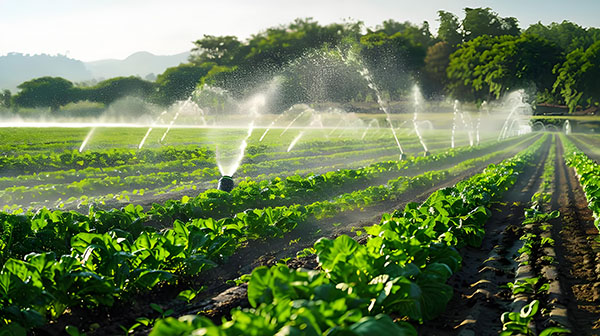
In a newly planned ecological park in Beijing's Mentougou District, an intelligent irrigation system is quietly operating—flow sensors monitor the moisture needs of every inch of soil in real time, pressure sensors precisely control pipeline pressure, and the data curves displayed on the touchscreen fully capture the ecological pulse of the entire park. This is not just another implementation of a modern agricultural project but a landmark case demonstrating the deep integration of industrial sensor technology into smart agriculture.
The beginning of the story is highly symbolic: when the ecological park's construction team was planning the irrigation system, they faced not only equipment selection challenges but also the task of integrating industrial precision control concepts into agricultural production scenarios. After extensive evaluations, they ultimately chose Beijing Kunlun Zhongda Sensor Technology Co., Ltd. What attracted the customer was not just product specifications but also the company's over two decades of accumulated system integration capabilities in the field of industrial automation.
"The uniqueness of agricultural scenarios lies in the dual challenges of environmental complexity and reliability requirements," stated the Technical Director of Kunlun Zhongda's Agricultural Division. "The irrigation system for an ecological park must simultaneously cope with outdoor temperature fluctuations, dusty and humid environments, and ensure 24/7 uninterrupted operation." To address this, the company dispatched a specialized team of three senior engineers. After an on-site survey, they proposed a three-tier "sensing-control-management" solution.
I. Ecological Park Intelligent Irrigation: How Industrial-Grade Sensors Adapt to Agricultural Scenarios
The core innovation of this solution lies in combining the precision of industrial-grade sensors with the practicality of agricultural scenarios. In the Ecological Park Intelligent Irrigation system, flow sensors feature special anti-corrosion coatings and anti-clogging designs, enabling long-term stable operation in irrigation water containing trace amounts of sediment. Pressure sensors incorporate overload protection mechanisms to avoid the impact of water hammer effects on measurement accuracy. Even more noteworthy is the touchscreen interface of the integrated system—the engineers specifically developed a visual data display mode that is easy for agricultural operators to understand, transforming complex sensor data into intuitive soil moisture trend charts and irrigation efficiency analysis reports.
This is the core value of Ecological Park Intelligent Irrigation—ecological park intelligent irrigation is not simply about moving industrial sensors onto farmland, but about optimizing sensors according to the specific needs of agricultural scenarios to achieve both precise irrigation and water-saving efficiency. The successful operation of this system provides a replicable technical model for the promotion of Ecological Park Intelligent Irrigation in more ecological parks.
II. Smart Agriculture Sensors: Practical Experience Accumulated from 78 Agricultural Projects
The installation and debugging process itself served as an on-site lesson in technical optimization. During the installation of the Smart Agriculture Sensors, the engineers discovered that the originally designed installation location was affected by temperature interference due to direct sunlight. After relocating them to the shaded side of the pipeline and adding thermal insulation covers, measurement stability improved by 40%.
This "installation as optimization" service model is precisely the crystallization of practical experience accumulated by Kunlun Zhongda across 78 agricultural projects.
"Our 78th agricultural client is not just a number," pointed out the company's Market Director. "It represents a microcosm of China's transition from traditional experience-based farming to data-driven cultivation." According to statistics, the ecological park using this Smart Agriculture Sensors system is expected to reduce water consumption by 30%, increase fertilizer utilization by 25%, and decrease system failure rates by 60%.
This is the core value of Smart Agriculture Sensors—smart agriculture sensors are not isolated technological units but, through deep integration with agricultural scenarios, form a replicable and verifiable digital cultivation methodology. Kunlun Zhongda is transforming the data and experience accumulated from these 78 agricultural projects into the corporate standard "Technical Specifications for Agricultural Intelligent Irrigation Sensors," with Smart Agriculture Sensors serving as the core carrier of this standard.
III. Industrial Sensor Agricultural Applications: Technology Migration from Industry to Agriculture
Behind this is the systematic output of Kunlun Zhongda's two decades of technological accumulation. The company's industry-academia-research collaboration mechanism with several domestic agricultural universities quickly translates the practical needs of the agricultural sector into directions for sensor technology improvements. For example, the high-temperature and humidity sensor developed specifically for agricultural environments was created after collaborative research with agricultural experts on greenhouse climate control needs, with its high-temperature and high-humidity resistance performance improved by 50% compared to industrial standard products.
Industry observers point out that the case of Industrial Sensor Agricultural Applications reveals a new trend in the integration of smart manufacturing and smart agriculture: when industrial sensor companies can deeply understand the particularities of agricultural production and organically combine reliability, ease of use, and cost control, they can find new development opportunities amid the advancement of the rural revitalization strategy. Particularly under the backdrop of the "14th Five-Year Plan" emphasizing smart agriculture development, this cross-industry technological integration is creating substantial market growth.
This is the demonstrative significance of Industrial Sensor Agricultural Applications—industrial sensor applications in agriculture are not simply technology transplantation but, through deep understanding of the specific needs of agricultural scenarios, combining industrial-grade precision control concepts with the practical realities of agricultural production to achieve true technology implementation. Kunlun Zhongda's Industrial Sensor Agricultural Applications practice is exploring a replicable technological path for the industry.
The deeper significance lies in the establishment of technical standards. Kunlun Zhongda is transforming the data and experience accumulated from its 78 agricultural projects into corporate standards. These practical data may serve as important references for future industry standards. As the project manager of the ecological park stated, "What they brought is not just equipment but a replicable and verifiable digital cultivation methodology."
Conclusion: When the Precision of Industrial Civilization Meets the Depth of Agricultural Heritage
With the successful operation of the intelligent irrigation system at the Beijing ecological park, Kunlun Zhongda's list of agricultural clients is expanding nationwide. From the black soil of Northeast China to the highland farms of Yunnan, Industrial Sensor Agricultural Applications is planting the seeds of digitalization across China's vast fields. This technological migration not only enhances agricultural production efficiency but, more importantly, is transforming the production relationships in Chinese agriculture. When farmers begin making decisions based on Smart Agriculture Sensors data rather than ancestral experience, a quiet agricultural revolution has already begun.
In today's era where digitalization is sweeping across all industries, the collaboration between Kunlun Zhongda and the Beijing ecological park reveals a simple truth: the most advanced technology is not necessarily the most complex but rather that which truly understands application scenarios and solves practical problems. When the precision of industrial civilization meets the depth of agricultural heritage, what emerges is not only economic benefits but also a modern model of harmonious coexistence between humanity and nature.
View more from YouTube.
From On-site Insight to Value Delivery: How Kunlun Zhongda Customizes Sensor Solutions for Pharmaceutical Steam Systems
Quality Breaks the Game: How Jiuding Metallurgy's Choice Interprets the "Second Supplier" Strategy in Industrial Supply Chains
Related Article
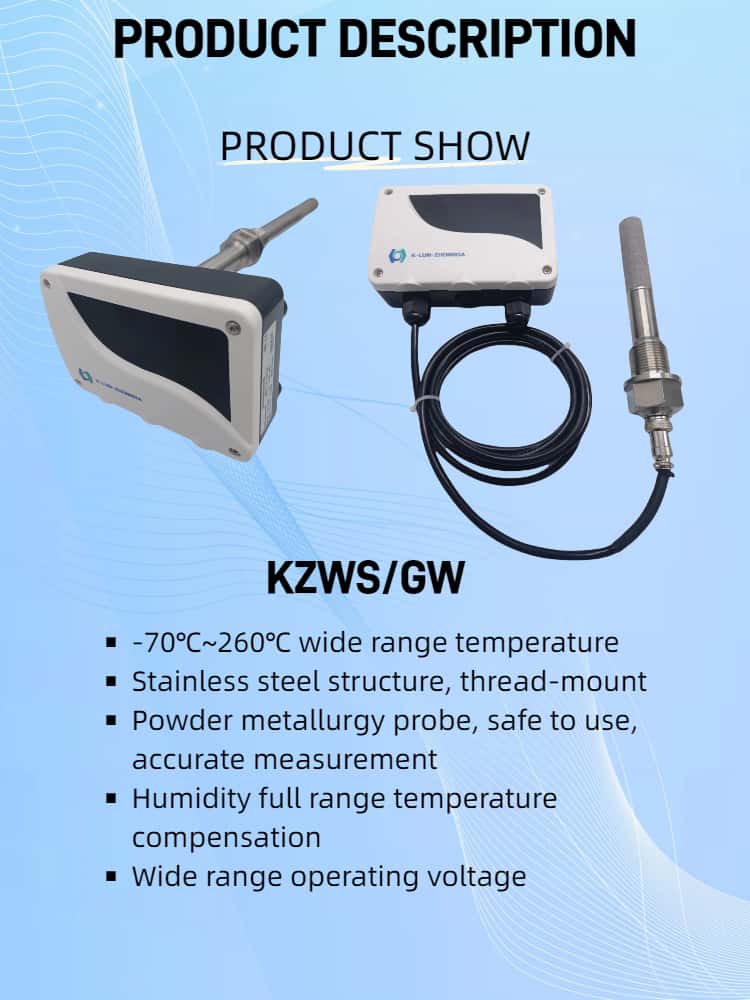
The Kunlun Zhongda high temperature and humidity transmitters are the key hardware foundation for transitioning wood drying kilns from experience-based drying to precision drying. The high temperature adaptability, anti-condensation design, and industrial grade stability directly determine the intelligence level of the drying process and the quality of the final product.
Application of Kunlun Zhongda High Temperature and Humidity Transmitter in Wood Drying Kilns

The deep value of screw pump temperature sensors lies not in single point measurement but in a four-in-one system including transient protection, stator smart algorithm, triangular fusion diagnostics and SIL functional safety, which enable most component suppliers to upgrade to system solution providers.
Applications of Temperature Sensors in Screw Pumps

From passive alarm to proactive prediction, from single-point measurement to multi-parameter fusion, that is the technical foundation for the shift from "scheduled maintenance" to "predictive maintenance" by using temperature sensors in multistage high pressure pumps.
Application of Temperature Sensors in Multistage High Pressure Pumps

The value of temperature sensor monitoring lies not in "knowing the current temperature" but in "predicting what it will become",from passive alarm to proactive prediction, this is the technical foundation of the shift from scheduled to predictive maintenance.
Application of Temperature Sensors in Centrifugal Pumps