
A New Chapter for Smart Granaries: Kunlun Zhongda Leads the All-Digital Revolution in Grain Condition Monitoring
author: jennie
2026-02-04
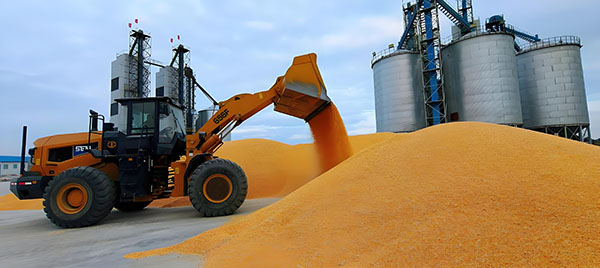
Within the grand challenge of ensuring national food security, achieving precise and intelligent grain condition monitoring has always been a core issue in storage management. The pain points of traditional analog systems—complex wiring, susceptible signal attenuation, and weak anti-interference capability—are being solved by an innovative technological solution. The "Grain Condition Testing Digital System Solution" recently launched by Beijing Kunlun Zhongda Industrial & Trading Co., Ltd., with its all-digital, network-based architecture and exceptional stability, provides a future-oriented sensory neural center tailored for modern granaries.
I. System Core: A Paradigm Shift from Analog to Digital – The Innovative Application of the Digital Temperature Sensor
The core breakthrough of this solution lies in its complete abandonment of traditional analog signal transmission. The system utilizes the classic Digital Temperature Sensor – the DS18B20 digital temperature sensor from Dallas Semiconductor, with a measurement range from -55°C to +125°C and an accuracy of ±0.5°C within the common ambient temperature range of granaries. More critically, the temperature data collected by the sensor is output directly as a "1-Wire" digital signal.
This transformation brings revolutionary advantages:
-
Wiring Revolution: A single three-core cable (the "1-Wire bus") can connect up to 64 sensors in series, with a transmission distance extending to 200 meters, greatly simplifying the complex cable maze inside the silo and reducing installation difficulty and material costs
-
Lossless Signal: Digital signals are almost unaffected by attenuation during transmission, ensuring data consistency and high fidelity from the deepest corners of the silo to the monitoring center, fundamentally guaranteeing system accuracy
-
Powerful Expansion: The core AEM6003 acquisition module can automatically identify and manage up to 256 digital sensors and communicate with the host computer via an RS-485 network. A single computer can easily manage 128 modules, easily meeting the monitoring needs of super-large granaries
The Digital Temperature Sensor adopted in this solution is the core component for achieving Grain Pile Temperature and Humidity Online Monitoring, providing a solid data foundation for subsequent data analysis and management decisions.
II. Architectural Highlights: Building a Stable and Reliable Distributed Sensing Network – Flexible Deployment of the Temperature and Humidity Probe
The solution constructs a clear, robust two-level digital network architecture:
-
Management & Decision Layer (Host Computer): Runs custom configuration software, provides an intuitive human-machine interface, and is responsible for centralized data processing, graphical display, alarm triggering for limit exceedances, and historical data analysis, offering decision support for managers
-
Network Aggregation Layer (RS-485 Bus): Employs the industrial standard RS-485 communication with a transmission distance of up to 1.2 kilometers. It is equipped with isolated converters featuring over-voltage, over-current, and lightning surge protection, effectively resisting complex electrical interference at the granary site and ensuring reliable communication links
-
Field Perception Layer (1-Wire Bus & Sensors): This is the system's "peripheral nerves." Driven by the AEM6003 module, it connects distributed DS18B20 temperature measurement cables and AEM6901E Temperature and Humidity Probe via the "1-Wire" bus. The modules are designed for explosion-proof and fumigation-proof operation and can be installed directly in harsh field environments
Specifically addressing the different structures of warehouse-style and vertical silos, the solution offers flexible sensor deployment strategies. Using the dedicated AEM6120 branch connector, the wiring challenges for multi-point, multi-layer monitoring in warehouse-style silos can be elegantly solved like building a tree network, ensuring signal integrity while making installation and maintenance unprecedentedly convenient.
The Temperature and Humidity Probe, as a key component of the perception layer, works together with the Digital Temperature Sensor to complete the Grain Pile Temperature and Humidity Online Monitoring task, ensuring real-time, accurate collection of temperature and humidity data inside the grain pile.
III. Profound Impact: Injecting Core Momentum into Granary Intelligence – The Value of Grain Pile Temperature and Humidity Online Monitoring
The significance of Kunlun Zhongda's solution far exceeds an update of hardware equipment. It lays the crucial data foundation for the comprehensive digital transformation of granaries.
-
Aiding Precise Grain Preservation: High-precision, high-density real-time temperature and humidity data enable managers to more accurately judge the condition of grain piles, promptly identify local heating, condensation, and other hazards, and guide operations such as aeration and cooling, thereby scientifically reducing storage losses and improving preservation quality
-
Empowering Smart Decision-Making: Stable, continuously acquired historical data can be analyzed through algorithmic models, providing a scientific basis for predicting grain condition changes, optimizing storage processes, and achieving energy savings and consumption reduction, propelling storage management from "experience-driven" to "data-driven"
-
Enhancing Operational Efficiency: The system's low-power design, remote monitoring capabilities, and minimal long-term maintenance requirements (modules automatically identify sensors) significantly reduce the long-term operational costs and manual labor intensity for granaries, improving overall management efficiency
Through the deployment of the Grain Pile Temperature and Humidity Online Monitoring system, granary managers can monitor temperature and humidity changes inside the grain pile in real time, promptly detect anomalies, and take measures to minimize losses.
Leveraging its profound technical expertise in the sensor field, Beijing Kunlun Zhongda's Grain Condition Testing Digital System Solution not only addresses current engineering pain points but also, with its open standards, modular design, and powerful expansion capabilities (easily integrating control and other systems), opens interfaces for future integration into broader IoT platforms and granary big data systems.
At a time when food security strategy is increasingly vital, such technological innovations are quietly solidifying the "digital defense line" of the national granary from the infrastructure level, leading the grain storage industry towards a new era of greater intelligence, reliability, and efficiency.
View more from YouTube.
Trust Forges Eternal Partnership: Kunlun Zhongda Wins Back Key Client with "Platinum Resistance Temperature Sensors," Interpreting the True Essence of Service
A New Era in Pharmaceutical Safety: Kunlun Zhongda Humidity and Temperature Sensors Infuse Professional Expertise into Remote Monitoring Systems
Related Article
The Kunlun Zhongda high temperature and humidity transmitters are the key hardware foundation for transitioning wood drying kilns from experience-based drying to precision drying. The high temperature adaptability, anti-condensation design, and industrial grade stability directly determine the intelligence level of the drying process and the quality of the final product.
Application of Kunlun Zhongda High Temperature and Humidity Transmitter in Wood Drying Kilns

The deep value of screw pump temperature sensors lies not in single point measurement but in a four-in-one system including transient protection, stator smart algorithm, triangular fusion diagnostics and SIL functional safety, which enable most component suppliers to upgrade to system solution providers.
Applications of Temperature Sensors in Screw Pumps

From passive alarm to proactive prediction, from single-point measurement to multi-parameter fusion, that is the technical foundation for the shift from "scheduled maintenance" to "predictive maintenance" by using temperature sensors in multistage high pressure pumps.
Application of Temperature Sensors in Multistage High Pressure Pumps

The value of temperature sensor monitoring lies not in "knowing the current temperature" but in "predicting what it will become",from passive alarm to proactive prediction, this is the technical foundation of the shift from scheduled to predictive maintenance.
Application of Temperature Sensors in Centrifugal Pumps