
The Extreme Challenge of -200°C: Kunlun Zhongda's High-Precision Temperature Sensor Safeguards the "Fifth Largest Plastic"
author: jennie
2026-04-17
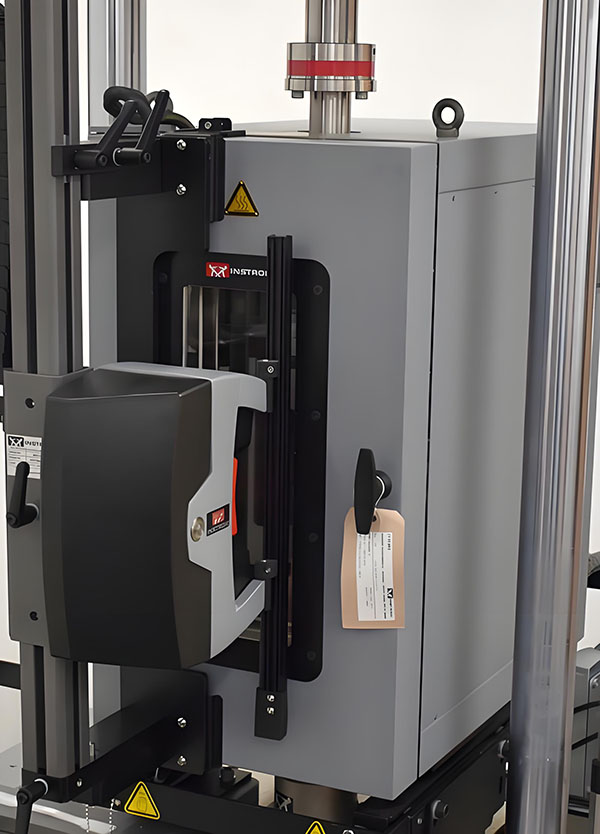
In the field of temperature sensors, high temperatures are like a "mountain of fire," while low temperatures are an "ice throne." When measurement requirements drop from conventional above-zero ranges down to the cryogenic region of -200°C, while maintaining a high precision of 0.1°C, this is no longer a task that ordinary products can handle.
This is where a specialized cryogenic temperature sensor proves its worth. For applications involving liquid nitrogen environments, only a dedicated liquid nitrogen temperature sensor can deliver the accuracy and stability required. And when it comes to advanced material research, precise polymer material temperature monitoring is essential for ensuring product quality and process consistency.
Today, a local Beijing client presented such an "extreme challenge" to Kunlun Zhongda.
Requirement: Polyurethane Medium, -200°C Low Temperature, 0.1°C High Precision
The medium the client needs to measure is polyurethane. This is an emerging organic polymer material, widely used in many fields of the national economy due to its excellent physical and chemical properties, earning it the reputation of the "fifth largest plastic." However, certain production or testing stages of polyurethane require precise temperature monitoring in extremely low-temperature environments – making polymer material temperature monitoring a critical success factor.
The client's requirements were very clear:
-
Measurement Temperature: As low as -200°C
-
Measurement Accuracy: ±0.1°C
Such a combination of parameters falls into the high-precision and cutting-edge category in the temperature sensor field. Conventional platinum resistors undergo significant changes in their thermal response characteristics and signal output at low temperatures like -200°C. Achieving 0.1°C accuracy imposes extremely stringent requirements on the selection of sensing elements, packaging processes, and signal processing algorithms. For any cryogenic temperature sensor, this level of precision at such extreme temperatures represents the pinnacle of engineering.
Response: Non-Standard Product, Non-Standard Solution
Upon receiving the client's requirements, Kunlun Zhongda's technical team quickly got involved. Since this is not a conventional standard product for Kunlun Zhongda and the price is relatively high, the technical team did not rush to provide a quotation. Instead, they engaged in in-depth technical discussions with the client.
"Although the price is high, what the client needs is a reliable solution, not just a low-priced product," said Kunlun Zhongda's project manager. As a strategic emerging material, every piece of data in the production and R&D process of polyurethane is crucial. Providing a high-precision cryogenic temperature sensor capable of stable and accurate measurement at -200°C is itself strong support for the client's technological innovation.
The client's application also involves liquid nitrogen environments, making a reliable liquid nitrogen temperature sensor an integral part of the solution. Liquid nitrogen at -196°C presents unique challenges for sensor sealing, condensation prevention, and signal integrity – all of which Kunlun Zhongda's technical team is equipped to address.
At present, the client has clarified the core performance indicators – a measurement range of -200°C and an accuracy requirement of 0.1°C. However, details such as the specific product shape, installation method, and probe dimensions are still being closely communicated between the technical teams of both sides.
Progress: Customizing Product Shape Based on Actual Working Conditions
Since the client's project is a brand-new application scenario, the sensor's shape cannot be based on existing standard products. Kunlun Zhongda's technical personnel need to tailor the sensor's shape and structure based on factors such as the actual working conditions, installation space, and interface method at the client's site – ensuring optimal polymer material temperature monitoring performance.
"We need to ensure that the sensor not only 'measures accurately' but also 'fits for installation' and 'lasts in use'," the technician explained. In an ultra-low temperature environment of -200°C, whether for general cryogenic applications or specific liquid nitrogen temperature sensor requirements, the sensor's sealing, anti-condensation properties, and signal transmission stability are all challenges that must be overcome.
Outlook: Full of Confidence, Embracing the Challenge
Despite the high parameter requirements and the difficulty of customization, Kunlun Zhongda's technical team is full of confidence in completing this task.
"We have already designed and produced countless temperature sensors for special working conditions for our clients – from high-temperature, high-humidity environments of 260°C, to specialized temperature measurement for nuclear power plant reactors, and now to ultra-low temperature measurement of -200°C. Whether the client needs a cryogenic temperature sensor, a liquid nitrogen temperature sensor, or precise polymer material temperature monitoring, Kunlun Zhongda's technical boundaries are constantly expanding," the project manager said.
Conclusion: "Meeting All Your Needs" is not a Slogan, but an Action
From high temperatures to low temperatures, from standard products to non-standard customization, Kunlun Zhongda has always been driven by "high, new, and cutting-edge" technology, committed to solving customers' temperature measurement challenges under various complex working conditions.
If you are looking for a reliable cryogenic temperature sensor, a durable liquid nitrogen temperature sensor, or a high-precision polymer material temperature monitoring solution for your next project, Kunlun Zhongda has the expertise and experience to deliver.
Beijing Kunlun Zhongda, dedicated to the R&D and production of high-precision temperature sensors, low-temperature temperature sensors, and platinum thermal resistors for over 20 years. Whether you need to measure high temperatures of 2000°C or low temperatures of -200°C, whether your application scenario is aerospace or new material R&D, we are willing to work with you to turn the "impossible" into the "possible."
If you are also struggling with ultra-low temperature, high-precision temperature measurement for polyurethane, liquid nitrogen, superconductivity, or other fields, why not follow this Beijing client's example and give Kunlun Zhongda an opportunity for technical communication? We believe that professional dialogue is the beginning of solving all challenges.
The "Endurance Battle" of Furnace Temperature Measurement: Why Did a Zhejiang Client Give Up Low Prices and Choose Kunlun Zhongda's K-Type Sheathed Thermocouple?
Five Years of Understanding, One Order: The "Refrigerator Agreement" Between a Guangdong Long-Time Client and Kunlun Zhongda
Related Article

Results indicate that fluoride ion electrode in the system offers fast response and high accuracy, effectively reducing chemical costs and enhancing process automation to ensure compliant industrial wastewater discharge.
Application of Fluoride Ion Electrodes in Semiconductor Industry Wastewater Treatment
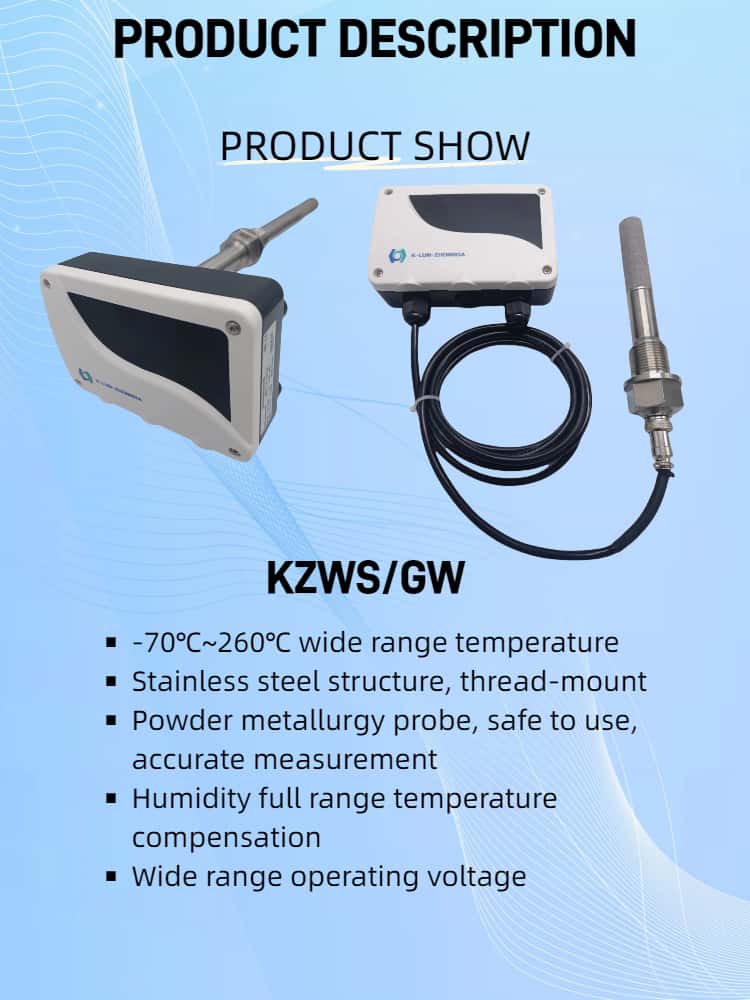
The Kunlun Zhongda high temperature and humidity transmitters are the key hardware foundation for transitioning wood drying kilns from experience-based drying to precision drying. The high temperature adaptability, anti-condensation design, and industrial grade stability directly determine the intelligence level of the drying process and the quality of the final product.
Application of Kunlun Zhongda High Temperature and Humidity Transmitter in Wood Drying Kilns

The deep value of screw pump temperature sensors lies not in single point measurement but in a four-in-one system including transient protection, stator smart algorithm, triangular fusion diagnostics and SIL functional safety, which enable most component suppliers to upgrade to system solution providers.
Applications of Temperature Sensors in Screw Pumps

From passive alarm to proactive prediction, from single-point measurement to multi-parameter fusion, that is the technical foundation for the shift from "scheduled maintenance" to "predictive maintenance" by using temperature sensors in multistage high pressure pumps.
Application of Temperature Sensors in Multistage High Pressure Pumps