
Thermocouple Temperature Sensor Company: Precision Temperature Measurement, Leading Industry Innovation and Development
author: jennie
2026-06-02
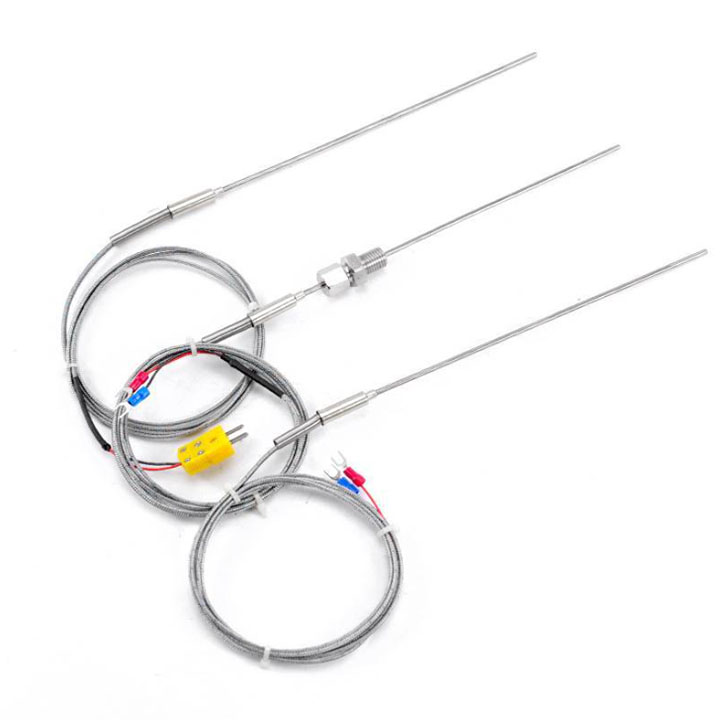
In many scenarios of industrial production and scientific research, accurate temperature measurement and control are key factors in ensuring process safety, improving product quality, and achieving efficient operation. Among numerous temperature measurement technologies, the thermocouple temperature sensor plays an indispensable role due to its unique principle and wide applicability. Some companies specializing in this field are committed to providing precise and reliable temperature measurement solutions through continuous technological deepening and application innovation, thereby promoting technological progress in related industries.
The basic working principle of a thermocouple is based on the Seebeck effect, where two conductors of different materials are connected at both ends to form a circuit. When there is a temperature difference between the two junctions, an electromotive force is generated in the circuit, creating a thermoelectric current. By measuring this electromotive force, the temperature at the measuring junction (hot junction) can be calculated. This temperature measurement method has advantages such as simple structure, easy manufacturing, wide temperature measurement range, fast response speed, good mechanical strength, and the ability to withstand relatively high temperatures and pressures.
However, every technology has its applicable boundaries and challenges. To better understand the value of thermocouple temperature sensor companies, we can briefly compare them with several other common temperature measurement technologies:
-
Comparison between thermocouple and RTD (such as platinum resistance Pt100): RTDs work based on the characteristic that the resistance of metal conductors changes with temperature. In the medium temperature range (especially -200°C to +600°C), RTDs typically provide higher measurement accuracy and stability, but their high-temperature resistance is generally inferior to certain types of thermocouples (such as Type B and Type S), and they may be more fragile in high vibration or impact environments. Thermocouples have advantages in ultra-high temperature measurement (up to 1800°C or even higher) and fast response scenarios, with a more rugged structure and better adaptation to harsh industrial environments.
-
Comparison between thermocouple and infrared thermometer: Infrared temperature measurement is a non-contact method, suitable for measuring the surface temperature of moving objects, hard-to-reach targets, or extremely high-temperature surfaces. However, its measurement results are easily affected by factors such as surface emissivity, ambient light, dust, and steam, and are typically used for surface temperature trend judgment or situations where contact is impossible. Thermocouples are contact temperature sensors, measuring the actual temperature at the sensor contact point. The data is direct and reliable, making them the first choice for most industrial process control and internal equipment temperature monitoring.
-
Comparison between thermocouple and integrated chip temperature sensor (such as DS18B20): These digital sensors are small in size, have simple interfaces, and offer acceptable accuracy, making them widely used in consumer electronics and general industrial control. However, their operating temperature range is usually narrow (commonly -55°C to +125°C), and they cannot cope with harsh environments such as high temperature, high pressure, or strong corrosion. Thermocouples, with diverse material combinations and appropriate protective sheaths, can work stably for long periods under various complex and harsh conditions.
From the above comparisons, it can be seen that the core advantages of thermocouple technology lie in its wide temperature measurement range, strong environmental adaptability, and reliable direct contact measurement capability. The value of an excellent thermocouple temperature sensor company revolves around how to innovate and enhance these advantages while overcoming some of the inherent challenges of thermocouple technology. These challenges mainly include: small thermoelectric potential signals, the need for cold junction compensation, and long-term stability affected by material uniformity and environmental factors.
So, how do such companies achieve "precision temperature measurement and lead industry innovation and development" through their own efforts? The path is mainly reflected in the following aspects:
I. Advancement in Materials Science and Manufacturing Processes
The accuracy, stability, and lifespan of a thermocouple fundamentally depend on the purity and uniformity of its thermocouple wire materials, as well as the insulation and protection between the wires. Professional companies will:
-
Strictly control material sources: Select high-purity specific alloy materials to ensure that the thermocouple wires have standard and stable thermoelectric characteristics.
-
Optimize wire drawing and annealing processes: By precisely controlling the wire drawing process and heat treatment, ensure uniform wire diameter, stable crystal structure, and reduce internal stress, thereby improving the consistency and repeatability of the thermocouple.
-
Innovate insulation and protection technology: Use high-purity magnesium oxide powder for tight filling and advanced metal sheath welding technology to manufacture durable sheathed thermocouples. This structure is not only vibration-resistant and impact-resistant but also, by selecting different sheath materials (such as stainless steel, Inconel, tantalum, etc.), can withstand extreme conditions like corrosion and high pressure, effectively isolating the fragile wire from harsh environments.
II. Improvement of Signal Processing and System Integration Capabilities
Having a good sensing probe alone is not enough. Accurately converting the weak thermoelectric potential signal into a usable temperature reading requires powerful signal processing technology.
-
High-precision cold junction compensation technology: Thermocouples measure the temperature difference between the hot junction and the cold junction (reference junction). Companies develop or adopt more precise cold junction compensation circuits and algorithms to monitor temperature changes at the junction box or instrument end in real time and perform automatic correction. This is a key step in ensuring on-site measurement accuracy.
-
Low-noise amplification and high-resolution analog-to-digital conversion: Design dedicated low-drift, low-noise signal conditioning circuits for the millivolt-level signals output by thermocouples, combined with high-resolution AD converters, to ensure that even small potential changes are accurately captured.
-
Smart transmission and digital communication: Integrate the sensing probe with the signal transmitter to directly output standard 4-20mA current signals or digital signals (such as HART, Profibus, Modbus, etc.), enhancing anti-interference capability, facilitating integration into industrial control systems, and enabling remote monitoring and diagnosis.
III. Customized Solutions for Complex Application Scenarios
Standard products cannot meet all needs. Companies with strong innovation capabilities can deeply understand the special challenges of different industries and provide customized temperature measurement solutions.
-
Extreme environment adaptation: Design thermocouples with special structures, materials, and installation methods for special occasions such as high-temperature furnaces, vacuum environments, strong electromagnetic fields, and high-speed rotating bodies (such as engine turbines).
-
Multi-point and average temperature measurement: Develop multi-point thermocouples or surface average temperature thermocouples for measuring the average temperature of large pipeline cross-sections, different depths in reactors, or large planar surfaces, providing better data for process optimization.
-
Fast response requirements: Significantly improve response speed by reducing the size of the thermocouple junction and selecting thinner-walled protective sheaths to meet the monitoring needs of rapidly changing temperature processes.
In China, a number of enterprises are steadily developing along the above paths. For example, Shenzhen Ligan Technology Co., Ltd., as one of the companies specializing in the field of temperature sensing, its business covers the R&D and production of thermocouples and related products. Such companies typically focus on starting from the customer's specific application environment, providing technical support ranging from sensor selection and structural design to system integration. Through accumulated industry application experience, they help users solve practical problems such as difficult temperature measurement point installation, high signal interference, and short sensor life, effectively harnessing the potential of thermocouple technology in actual production.
IV. Broader Significance of Promoting Industry Development
The innovative efforts of thermocouple temperature sensor companies have an impact radiating to many industrial fields:
-
Improving energy utilization efficiency: In industries such as metallurgy, chemicals, and power generation, precise temperature measurement is the foundation for optimizing combustion control, improving thermal efficiency, and reducing energy consumption. More reliable and durable thermocouples reduce unplanned downtime and enhance continuous production capability.
-
Ensuring production safety and product quality: In petrochemicals and natural gas processing, accurate monitoring of pipeline and reactor temperatures is core to preventing overtemperature and overpressure and ensuring safety. In industries such as semiconductor manufacturing, food processing, and material heat treatment, strict temperature curve control directly determines product performance and qualification rates.
-
Promoting process innovation and R&D: In cutting-edge fields such as new material synthesis, aerospace testing, and new energy battery R&D, extreme temperature conditions are often involved. Providing stable and precise temperature measurement tools is crucial support for scientific experiments and process exploration in these fields.
The "precision temperature measurement" pursued by thermocouple temperature sensor companies goes far beyond simply providing an instrument or a probe. It is a systematic project involving comprehensive capabilities ranging from materials, processes, and circuits to application knowledge.
"Leading industry innovation and development" is reflected in their continuous efforts to solve temperature measurement pain points, providing a solid data foundation for process optimization, safety assurance, and technological progress across various industrial fields. Today, as industrial automation and intelligence continue to deepen, the requirements for measuring temperature, a key physical quantity, will only increase. Companies specializing in thermocouple technology, with their continuous innovation around reliability, accuracy, and applicability, will continue to play an important role in the fabric of industrial production.
Technical Iteration and Domestic Substitution Trend of Pressure Sensors and Pressure Transmitters
Steadfast at 200°C: A Sichuan Long-Time Client's Three-Year Repeat Purchase Proves the Hardcore Strength of Kunlun Zhongda's Temperature and Humidity Sensor
Related Article
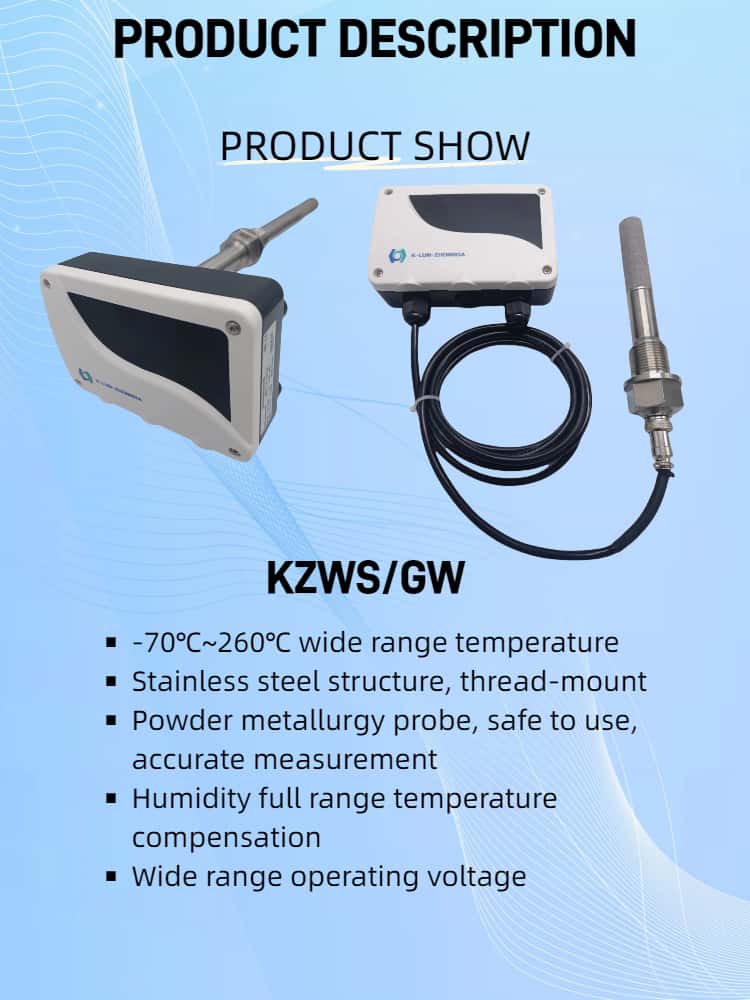
The Kunlun Zhongda high temperature and humidity transmitters are the key hardware foundation for transitioning wood drying kilns from experience-based drying to precision drying. The high temperature adaptability, anti-condensation design, and industrial grade stability directly determine the intelligence level of the drying process and the quality of the final product.
Application of Kunlun Zhongda High Temperature and Humidity Transmitter in Wood Drying Kilns

The deep value of screw pump temperature sensors lies not in single point measurement but in a four-in-one system including transient protection, stator smart algorithm, triangular fusion diagnostics and SIL functional safety, which enable most component suppliers to upgrade to system solution providers.
Applications of Temperature Sensors in Screw Pumps

From passive alarm to proactive prediction, from single-point measurement to multi-parameter fusion, that is the technical foundation for the shift from "scheduled maintenance" to "predictive maintenance" by using temperature sensors in multistage high pressure pumps.
Application of Temperature Sensors in Multistage High Pressure Pumps

The value of temperature sensor monitoring lies not in "knowing the current temperature" but in "predicting what it will become",from passive alarm to proactive prediction, this is the technical foundation of the shift from scheduled to predictive maintenance.
Application of Temperature Sensors in Centrifugal Pumps