Application of Pipe Temperature Sensors in AI Electric Equipment
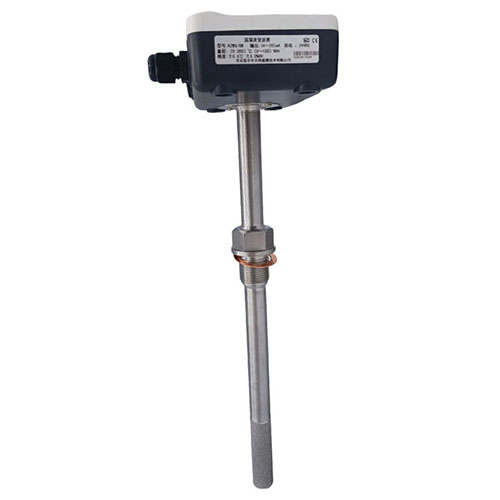
Pipe temperature sensors are sensing devices specifically designed for installation on industrial pipelines to monitor the temperature of the media flowing inside in real time. Compared to general purpose temperature sensors, their defining characteristic is the pipe mounted adaptation structure,securing the sensing element reliably onto the pipe via flanges, threads, ferrules, welding, or surface mounting, while ensuring seal integrity and thermal transfer efficiency.
Pipe temperature sensors are the most widely deployed temperature monitoring devices in process industries like petrochemical, power, pharmaceutical, food, heating, ventilation, air conditioning, accounting for 40% to 55% of total industrial temperature sensor usage.
Pipe temperature sensors are evolving from "passive measurement instruments" into the "core sensing front end" of AI electric equipment. When temperature data feeds into AI electrical systems, sensors no longer merely "report temperature" but participate in autonomous decision making, predictive maintenance, and adaptive control of electrical equipment.
AI electric equipment represents the next evolution of power system hardware — transformers, switchgear, motors, drives, and cable systems embedded with edge AI processors. Pipe temperature sensors serve as the critical thermal boundary input for these AI systems, providing real time data on cooling medium temperature, flow distribution, and thermal gradient across pipe networks.
In conventional equipment, pipe temperature sensors trigger fixed threshold alarms. In AI equipment, the same pipe temperature sensors data feeds machine learning models to achieve predict, optimize, and decide, transforming temperature from a passive indicator into an active control variable.
Conventional pipe temperature sensors do one thing which convert temperature into a 4 to 20mA analog signal for the host system. Smart pipe temperature sensors embed micro processors, digital communication, self-diagnostic algorithms, andedge computing capability based on this foundation, making each sensor an**autonomous sensing node within a distributed AI system. This is a shift from Thermometer to Intelligent Node.
The key distinction is that ordinary "smart" pipe temperature sensors achieve digitalization and self-diagnostics, however, the "AI-ready" smart pipe temperature sensors further provide high sampling rates, time synchronization, edge computing, and data quality flags, the latter "AI-ready" smart pipe temperature sensors will be the minimum input threshold for reliable AI model operation. The self-diagnostic capability is the core value distinguishing smart pipe temperature sensors from conventional sensors. It is also the prerequisite for AI systems to trust smart pipe temperature sensor data.
Pipe temperature sensors are the corner stone component of process industry temperature monitoring, from insertion to surface mount, from Pt100 to distributed fiber optic, from analog signals to smart self-diagnostics, the technological evolution has always revolved around one core proposition which achieving accurate, reliable, and safe temperature perception under extreme conditions. As industrial IoT and predictive maintenance deepen, pipe temperature sensors are evolving from "passive measurement instruments" to "proactive health management nodes", each pipe temperature sensor serving as a tactile endpoint in the pipeline system's neural network.
The convergence of pipe temperature sensors and AI electric equipment is transforming temperature from a "passive display value" into an "active decision variable." Pipe temperature sensors not only answer "how hot is it now" but also tell the AI system "what to do next." The core logic is that every temperature data point contributes a branch to the AI decision tree, and every pipe segment provides a thermal boundary condition for the equipment's digital twin. Enterprises that first master the capabilities of "high-precision sensing + edge intelligence + AI integration" will occupy the commanding heights of the intelligent electrical equipment value chain. And it all begins with a single self-diagnosing pipe temperature sensor which is the most humble component in the cabinet, yet the sensory foundation upon which the entire AI architecture stands.
The essence of smart pipe temperature sensors is completing the micro-cycle of "sense → diagnose → predict→ recommend" within the sensor body itself. It is no longer merely a collector of temperature data, but an autonomous node in the distributed intelligence architecture of AI electric equipment which have self-diagnosing, self-calibrating, self-inferring, and self-tagging data quality. When hundreds of smart pipe temperature sensors units are deployed across transformer, switch gear, motor, variable frequency drive, and cable which form a self-organizing, self-diagnostic, self-optimizing temperature sensing neural network. Each smart pipe temperature sensor is a tactile nerve ending in this network, and edge AI serves as the ganglion within those endings. The ultimate outcome of this transformation is not a "better thermometer," but "temperature perception that thinks". The temperature is no longer measured and then forgotten, but is perceived and participates in decision-making.
Application of High Temperature and Humidity Transmitters in Industrial Pumps
Pump Temperature Sensor Application on Various Pumps in Downstream
Related Article