Application of High Temperature and Humidity Transmitters in Industrial Pumps
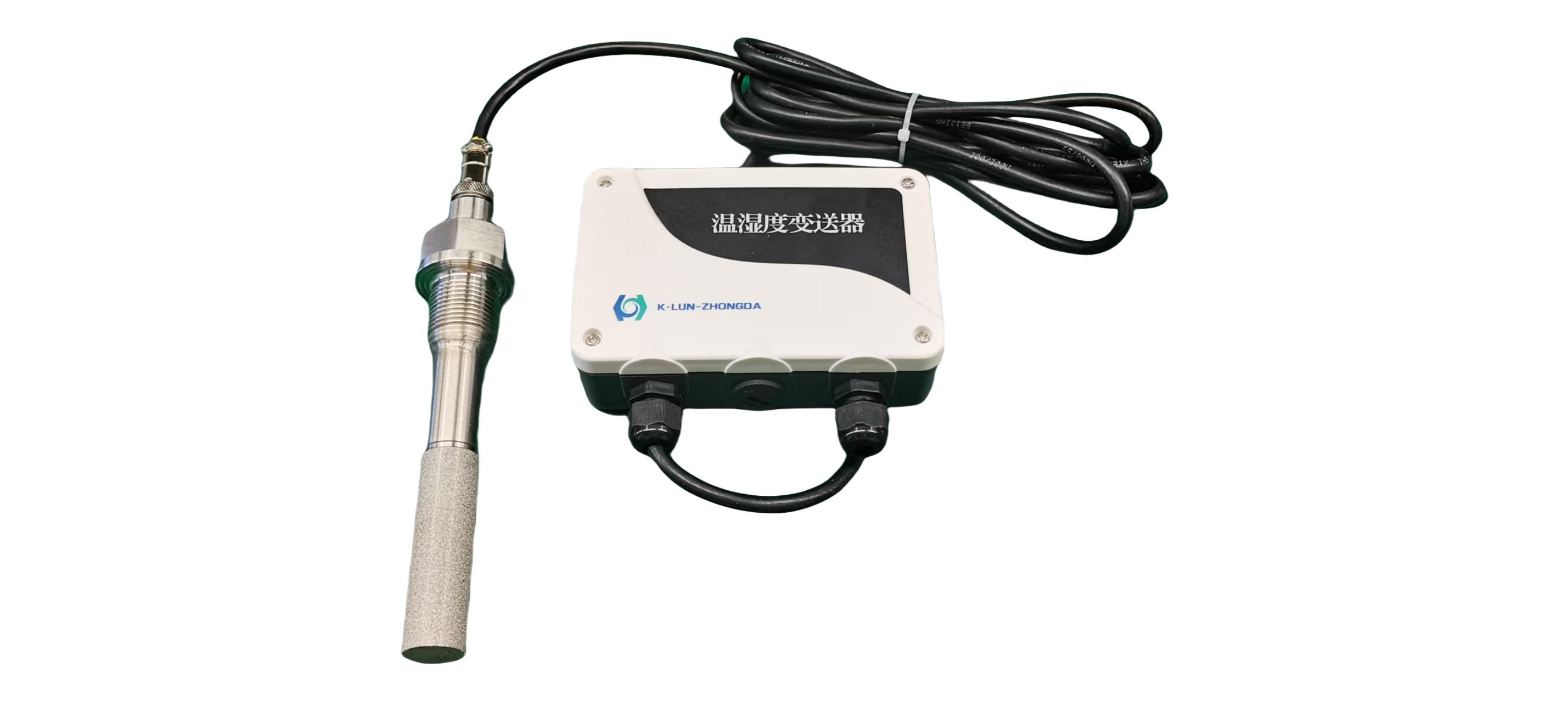
Industrial pumps are known as the "heart of industry," and their reliable operation directly determines plant safety and continuity. Temperature and humidity are two key operating parameters. Temperature reflects equipment health like bearings, motor, seals, while humidity reflects environmental safety like electrical condensation, seal leakage, corrosion risk. High temperature and humidity transmitters unify these two parameters in a single sensor, enabling not only dual dimension "environment and equipment" monitoring, but also serving as the data core for predictive maintenance, dehumidification control loops, and performance optimization.
Why High Temperature and Humidity Transmitters Is the Key Qualifier for Industrial Pump Scenarios
Industrial pump environments span frigid outdoor installations, high temperature pump rooms, humid underground pump stations, corrosive chemical pump zones, and explosion proof oil and gas stations. An ordinary temperature and humidity transmitter doesn't just "lose accuracy" in these settings, but it "fails outright" eg. sensor condensation, circuit board aging, humidity element drift, and condensation short-circuit.
Why Industrial Pumps Need High Temperature and Humidity Transmitters
Temperature and humidity monitoring in industrial pumps through high temperature and humidity transmitter is triple necessity of safety, efficiency, and longevity. Approximately 60% of pump failure modes are temperature related, and about 15% are linked to electrical failures caused by excessive ambient humidity.
Dew point monitoring is the highest-value derivative function of high temperature and humidity transmitters in industrial pump scenarios. When pump room temperature drops from 35°C to 20°C, if the dew point is above 20°C, moisture will condense on electrical equipment surfaces. A high temperature and humidity transmitter that measures both temperature and humidity can output real time dew point through built in algorithms, issuing warnings 1hours to 2 hours before condensation occurs, triggering ventilation or heating systems.
Six Application Dimensions of High Temperature and Humidity Transmitters in Pumps
1 Bearing health monitoring by high temperature and humidity transmitters
Industrial pump failure statistics show approximately 40% to 50% of unplanned downtime originates from bearing faults, and bearing faults show temperature trend changes 2 to 8 weeks before complete failure. Two temperature sensors individually are just "temperature values," but differenced they become a "bearing symmetry diagnostic index." High temperature and humidity transmitters can capture these precursors through continuous monitoring of bearing housing surface temperature or indirectly through seal chamber temperature.
2 Motor winding protection by high temperature and humidity transmitters
A single high temperature and humidity transmitter has more diagnostic value than two separate temperature and humidity sensors, because it directly locates the risk quadrant in the matrix.
3 Mechanical seal condition monitoring by high temperature and humidity transmitters
Mechanical seals are the second largest failure source for pumps around 25% to 30%. Seal failure is typically preceded by temperature anomalies.
Unique value of high temperature and humidity transmitter as "leak detector" is that traditional leak detection relies on pressure sensors or visual inspection, but pressure sensors only detect seal flush pressure changes indirectly, and visual inspection has long cycles once daily. A high temperature and humidity transmitter installed near the seal chamber can detect leaks within 30 to 120 seconds through humidity spike, especially sensitive to volatile media like steam, light hydrocarbons.
4 Cavitation and flash Warning by high temperature and humidity transmitters
Cavitation is the most insidious damage mechanism in centrifugal pumps, when pumped fluid pressure drops below saturation vapor pressure in the impeller low pressure zone, localized boiling occurs, and bubble collapse in the high pressure zone generates microjets that erode impeller and casing. Cavitation will cause billions of dollars in annual pump repair costs globally.
Temperature differential and vibration combined diagnosis are the gold standard for cavitation detection. Temperature differential reflects cavitation's thermodynamic effect, vibration reflects cavitation's mechanical effect. Using either metric alone risks false alarms, combined use can raise diagnostic confidence above 90%. High temperature and humidity transmitters can monitor it and give a cavitation and flash warning.
5 Pump room environmental monitoring by high temperature and humidity transmitters for electrical safety
Temperature and humidity are unevenly distributed within large pump rooms, high temperature near hot pump bodies, high humidity in dead corners, thermal stratification at ceiling. A single transmitter cannot represent the entire room. The zoned deployment is needed.
Electrical cabinets are the most sensitive equipment in pump rooms, internal condensation can directly cause malfunction, contactor short circuit, and variable frequency drive explosion. In cabinet micro high temperature and humidity transmitters are the last line of defense.
A typical industrial pump simultaneously deploys 2 to 3 high temperature and humidity transmitters for ambient, motor cavity and junction box, and 2 to 4 pipe temperature sensors for process inlet&outlet, bearing, cooling water, forming a dual dimension "ambient and process" temperature monitoring network.
6 Predictive maintenance and AI optimization by high temperature and humidity transmitters
In remaining useful life prediction inputs, temperature data contributes approximately 50% to 60% of prediction weight, humidity data about 15% to 20%, with the remainder from vibration or current etc. which means high temperature and humidity transmitters accuracy directly impacts remaining useful life prediction reliability.
Summary
The application of high temperature and humidity transmitters in industrial pumps goes far beyond "measuring temperature and humidity." In the complete picture, it simultaneously assumes six roles: the "electrocardiogram" of bearing health, the "countdown" of motor insulation, the "leak detector" of mechanical seals, the "thermodynamic fingerprint" of cavitation, the "guardian" of pump room environment, and the "data core" of predictive maintenance. A high temperature and humidity transmitter, through these roles, amplifies its value from a "hundred-dollar sensor" to a "system-level critical component determining pump station safety, efficiency, and maintenance cost."
The highest value of high temperature and humidity transmitters in industrial pumps lies not in how accurately they measure, but in what decisions their data can drive from "temperature limit alarms" to "dew point dehumidification savings," from "humidity spike leak detection" to "temperature trend bearing life prediction", this is the complete path of high temperature and humidity transmitters transforming from "cost centers" to "value centers."
In the world of industrial pumps, temperature is the thermometer of equipment health, humidity is the alarm of environmental safety, and dew point is the countdown to condensatio. The high temperature and humidity transmitters holds all three keys. It's not just a "temperature and humidity measuring device," but a pump's "health monitor" and a pump station's "safety controller".
Application of Temperature Sensors in Centrifugal Pumps
Application of Pipe Temperature Sensors in AI Electric Equipment
Related Article